Veerendra Heggade breaks silence on Dharmasthala allegations, calls charges “baseless, hurtful”
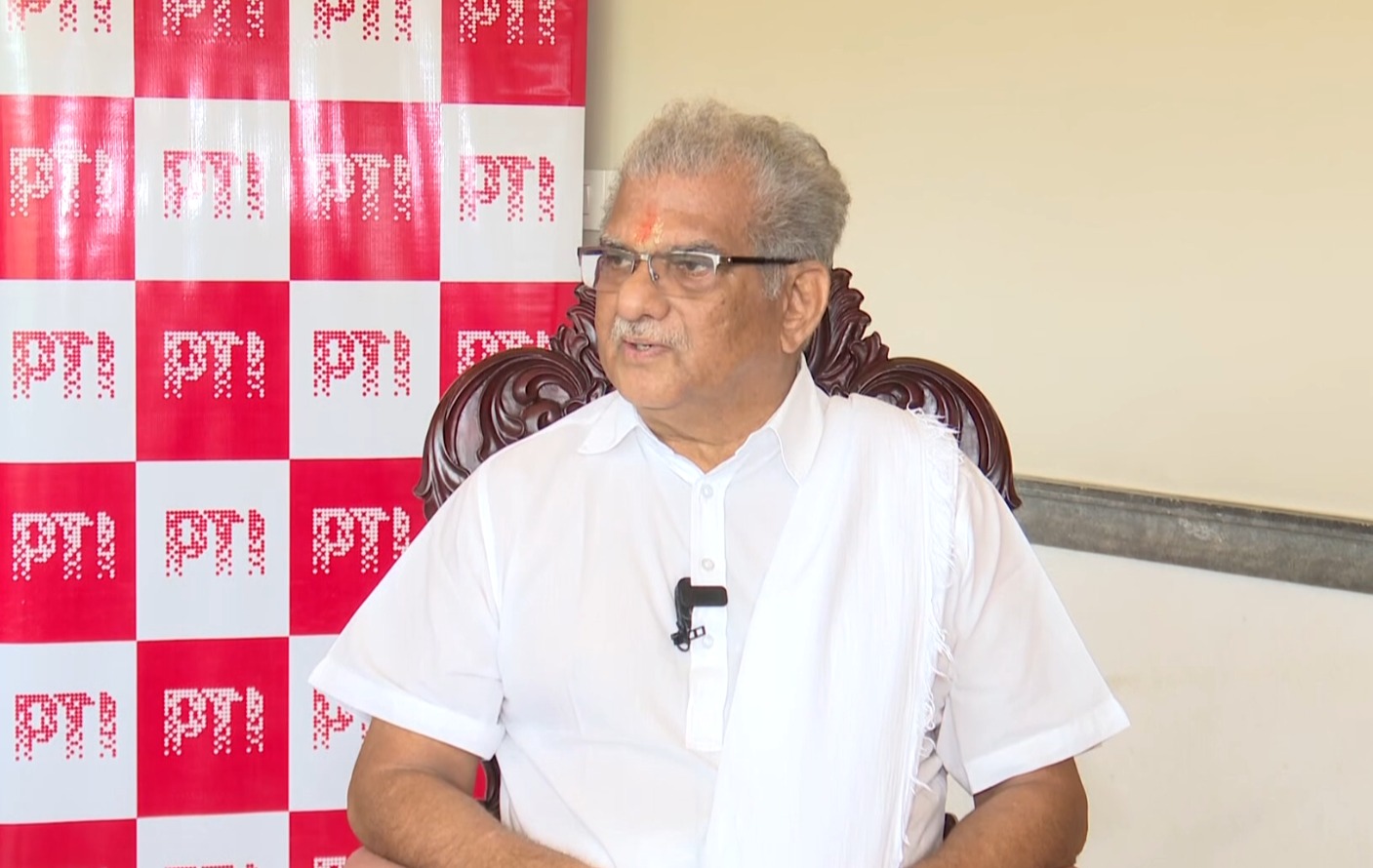
Dharmasthala: Dharmadhikari of Dharmasthala, Dr. Veerendra Heggade, has denied allegations of mass burials and other charges levelled against him and the Dharmasthala institution, calling them “totally baseless” and “morally wrong”. Speaking in an exclusive interview with PTI, Heggade said the campaign against Dharmasthala was driven by jealousy and aimed at damaging the temple’s reputation and the trust of devotees.
On Allegations and SIT Probe
Heggade said the allegations had deeply hurt him and his devotees, who continue to place immense faith in the temple. He welcomed the government’s decision to set up a Special Investigation Team (SIT), saying only a fair inquiry could clear the confusion created by false propaganda. “SIT was welcomed by us from the very beginning. If everything is investigated properly, truth will come out and doubts will be cleared,” he said.
He added that Dharmasthala had fully cooperated with every investigation in the past, including a Central Bureau of Investigation (CBI) inquiry held 13 years ago. “We have never hidden anything. All our institutions, records and practices are open to enquiry,” he said.
On Family’s Role and Property Allegations
Responding to questions about his family’s involvement in temple affairs, Heggade clarified that responsibilities were shared. His brothers manage different aspects one oversees educational institutions in Bengaluru, another handles administration at Dharmasthala including the free food programme, guest facilities and cleanliness. “Other brothers are independent, and my sister is married and settled in Dharwad,” he said.
On the real estate angle often raised in connection with the controversy, he firmly denied that the family had large holdings in Dharmasthala. “Institution subsidiaries own the properties. My family owns very little property here and there. All documents are proper and on record,” he explained.
Campaign Against Dharmasthala
Heggade said an organised campaign had been running against Dharmasthala since 2012, aimed at curbing the growth and popularity of the institution. “We are involved in temple renovation, rural development and other service activities. This has irked some people, who don’t want the institution to grow,” he said.
He cited examples of social work, including rejuvenation of 980 tanks across Karnataka, scholarships for students and financial support for farmers. “Instead of acknowledging these works, false allegations are made just to tarnish the name of the institution,” he remarked.
On Mass Burial Claims and Justice for Sowjanya
Referring to the most recent allegations of secret burials, Heggade said such claims were “impossible”. He explained that in rare cases where devotees passed away in Dharmasthala such as by drowning in the river the panchayat and police were immediately informed. “The recent masked man’s claims have collapsed. He has not been able to prove anything. It shows the entire story was cooked up,” he said.
On the 2012 Sowjanya rape and murder case, which continues to be linked to Dharmasthala by some campaigners, Heggade maintained that the institution had no role in the crime. “We were the ones who immediately informed the police and government. Allegations on my family members were made when they were not even in India,” he clarified. He added that dragging Dharmasthala into the case was unjust, though he too wanted justice for Sowjanya.
On Social Media, Kantara and Conspiracies
Heggade expressed concern over the role of social media in spreading conspiracies. He said unverified claims and YouTube content had misled many youngsters. “Social media is very powerful. It disturbed the minds of youth and diverted them from faith and temple traditions,” he said.
He also pointed out that some campaigners even tried to use the popularity of the Kannada film Kantara to push their agenda. “We were totally taken aback when such social media questions were thrown at us. A movie was connected to our story and even brought up in the High Court. We are totally innocent about it, but social media has that kind of influence today,” he explained.
At the same time, he noted that while Dharmasthala does extensive development work, the institution has never sought publicity. “We do it as duty to Lord Manjunatha. Unfortunately, social media highlights only negatives, not the good works,” he said.
Support Across Political Lines
Heggade said attempts to give the controversy a political colour were misleading. “BJP leaders came in support, but leaders from Congress and JDS have also visited us. This is not political. It is only an attempt to defame the institution and my name,” he stressed. He welcomed statements by Deputy Chief Minister D.K. Shivakumar and Chief Minister Siddaramaiah, both of whom assured that conspiracies would be exposed and anyone guilty would be punished. “What matters now is action, not just statements,” Heggade said.
Faith of Devotees Remains Strong
Despite the storm of allegations, Heggade said the temple’s daily activities and traditions had continued without disruption. “There is no change in devotees’ faith. Rituals, offerings, and customs are being carried out as always. Maybe some youngsters are influenced by false propaganda, but overall the faith remains as strong as ever,” he said.
He also dismissed the idea that being a Jain heading a Hindu temple was controversial. “In this district, many Hindu temples are managed by Jain families. It is an age-old tradition and never a matter of concern,” he said.
Heggade said he hoped the SIT investigation would conclude soon to avoid further confusion. “We wish for a permanent solution. We have exposed everything to SIT. Delay only creates more disturbance,” he said. Expressing confidence in public support, he added, “Everywhere people are saying Dharmasthala has to be protected. With both public and government aware of the truth, this conspiracy will end.”
Let the Truth be known. If you read VB and like VB, please be a VB Supporter and Help us deliver the Truth to one and all.
Siddaramaiah, I will abide by Cong high command decision on leadership issue, says Shivakumar
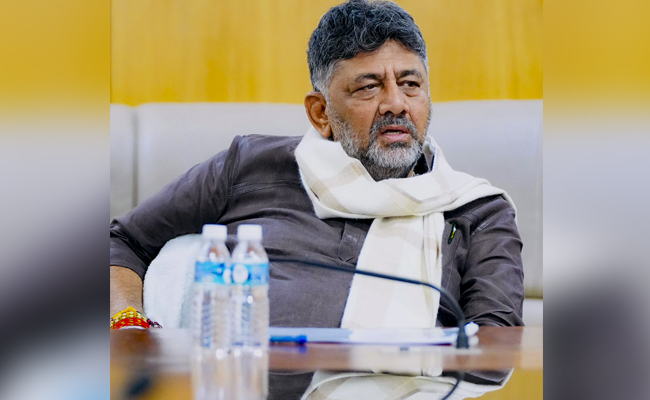
Bengaluru (PTI): Karnataka Deputy Chief Minister D K Shivakumar on Sunday said both he and Chief Minister Siddaramaiah will abide by any decision takeb by the Congress high command on the leadership issue in the state.
Speaking to reporters after returning from Delhi, the Congress state president said, he has full faith in the party leadership and that it would take an approapriate decision at the appropriate time.
The remarks comes amid speculations within the party and political circles about a possible leadership change and cabinet reshuffle after May 4, when the results for assembly elections in four states and one union territory, along with bypolls to two assembly segments in the Karnataka are announced.
"I will not speak about political issues before the media. I have already said that when the time comes you will get to know. So I will not tell you," Shivakumar said in response to a question on discussions with the Congress high command during his Delhi visit over the last couple of days.
He asserted that there are no issues within the party, and whatever has been already decided will take place accordingly.
Responding to a question on senior Minister Satish Jarkiholi's reported statement about internal differences, the Deputy CM said, "nothing like that, they (high command) will do what they have to do at the appropriate time."
"There are no issues, we have faith in our party, they will do what they have to," he added.
Asked about the issue of leadership change as the government is about to complete three years in office, Shivakumar said, "... I have never discussed this issue. The CM and I have both said that we will accept whatever and whenever the high command decides, and we will abide by it."
He declined to comment when asked whether any "good news" can be expected by his birthday on May 15.
The leadership tussle within the ruling party has intensified amid speculation about a possible change of chief minister after the Congress government completed the halfway mark of its five-year term on November 20, 2025. The speculation has been fuelled by the reported "power-sharing" arrangement between Siddaramaiah and Shivakumar at the time of government formation in 2023.
Responding to a question on the BJP's criticism against the Congress government over its decision on internal reservation for Scheduled Castes, alleging injustice to several communities and questioning its intent behind the revised quota formula, Shivakumar said the BJP could not do anything on internal reservation while in power, but the Congress has kept its promise.
"We have found a solution and tried to do justice to all sections among SCs. We have fulfilled the promise made and every one should go together," he said.
Shivakumar warned his party workers against erecting flex banners for his birthday on May 15.
"For May 15, I want to tell everyone that no one should put up flex banners or advertisements for my birthday. If flex are installed I will ensure that cases are registered by authorities against those responsible, whether they are party workers or followers....no one should put such things on roads, this is my personal request," he said, adding that he has asked commissioners of the city corporations to register cases and impose heavy fines.