Veteran Kannada writer H.S. Venkateshamurthy passes away at 80
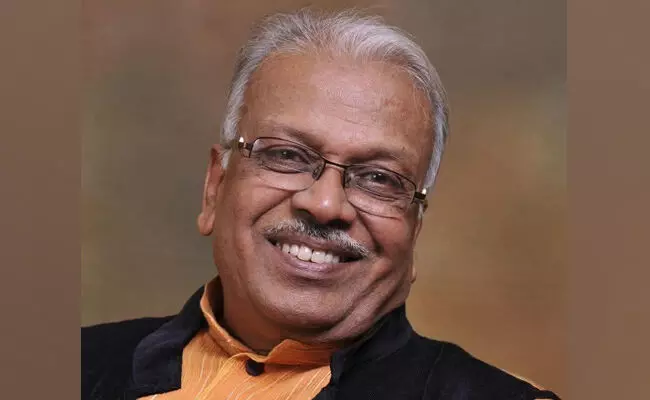
Bengaluru: Veteran Kannada writer, acclaimed poet, playwright, and academic Dr. H.S. Venkateshamurthy passed away on Friday at the age of 80. He had been admitted to the hospital due to age-related ailments and breathed his last early this morning, according to medical sources.
Born on June 23, 1944, in the village of Hodigere in Channagiri Taluk of Davangere district, he was the son of Narayana Bhat and Nagaratnamma. Dr. Venkateshamurthy completed his Master's degree in Kannada from Bangalore University and went on to serve as a Kannada professor at St. Joseph’s Commerce College, Bengaluru, for nearly three decades.
Widely known by his initials HSV, he was a towering figure in Kannada literature, celebrated for his contributions as a poet, dramatist, and critic. He earned his Ph.D. for the seminal thesis Kathana Kavanagalu in Kannada and authored over 100 works in Kannada.
His notable poetry collections include Parivritta, Baagilu Badiyuvajana, Saugandhika, and Muvattu Malegaala. His celebrated plays include Hejjegalu, Ondu Sainika Vruttanta, and Agnivarna.
HSV also made significant contributions to Kannada cinema and television. He penned songs and dialogues for several popular films like Chinnari Mutha, Kotreshi Kanusu, America America, Maitri, and Kirik Party. His title songs for TV serials such as Mukta and Mahaparva became household hits.
He is survived by his wife, four sons, and a wide circle of admirers and relatives.
Dr. H.S. Venkateshamurthy’s demise marks the end of an era in Kannada literature and culture.
Let the Truth be known. If you read VB and like VB, please be a VB Supporter and Help us deliver the Truth to one and all.
Edgy Real Madrid president Florentino Pérez calls for new elections at club and seeks another term
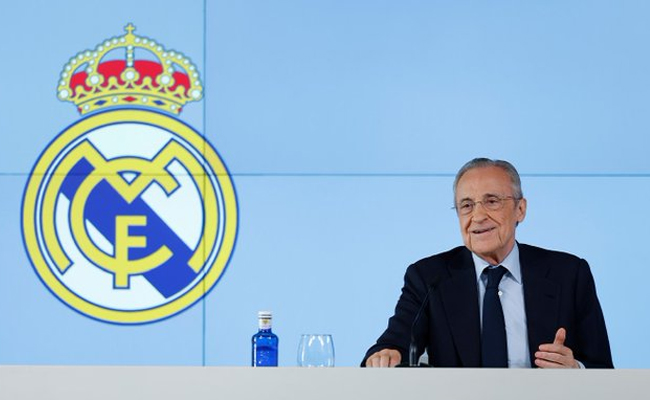
Madrid (AP): An edgy Real Madrid president Florentino Pérez confronted journalists in a rare news conference on Tuesday and claimed he was the victim of an “organized campaign” to unseat him.
Pérez called for new club elections and told his opponents to present themselves and challenge him and his board of directors.
Usually calm and soft-spoken, Pérez appeared agitated and got into discussions with journalists during the hastily scheduled news conference at the club's training center, two days after Madrid lost 2-0 at Barcelona and saw its Catalan rival clinch its second straight Spanish league title.
“I made this decision because of this absurd situation of campaigns against me,” the 79-year-old Pérez said. “The results haven't been the greatest, but that has happened other times before. But they are taking advantage to attack me.”
He said the campaign against him was being “orchestrated by bad journalists and non journalists.”
“Some journalists and people want to destroy Real Madrid,” he said. “I'll always defend the interest of the Madrid members.”
The president spoke after a meeting of the club's board of directors.
Madrid has endured a second consecutive season without a major trophy, despite having France star Kylian Mbappé in the squad.
Pérez did not speak about the team's results, saying his appearance was solely to defend Madrid club members from attacks. He did not want to talk about a potential coaching change when asked about the possibility of José Mourinho returning next season.
Pérez said the leak of the fighting between players during training last week — which led to Federico Valverde and Aurélien Tchouaméni being fined 500,000 euros ($586,000) each — was worse than the actual fight itself.
“It's not the first time that players fight with each other,” Pérez said. “It happens almost every season. But someone leaked it for the first time. And we know who it was. It should have stayed within the club.” He gave no further details.
Pérez dismissed rumors that he was tired of the job, or sick, saying they had been spread by his detractors.
“They said I have cancer and that it was terminal," he said. “It was the most undignified thing that has ever happened to me. They said I didn't go out, that I couldn't walk.”