Vidhana Soudha to Open for Public Tours from June 1
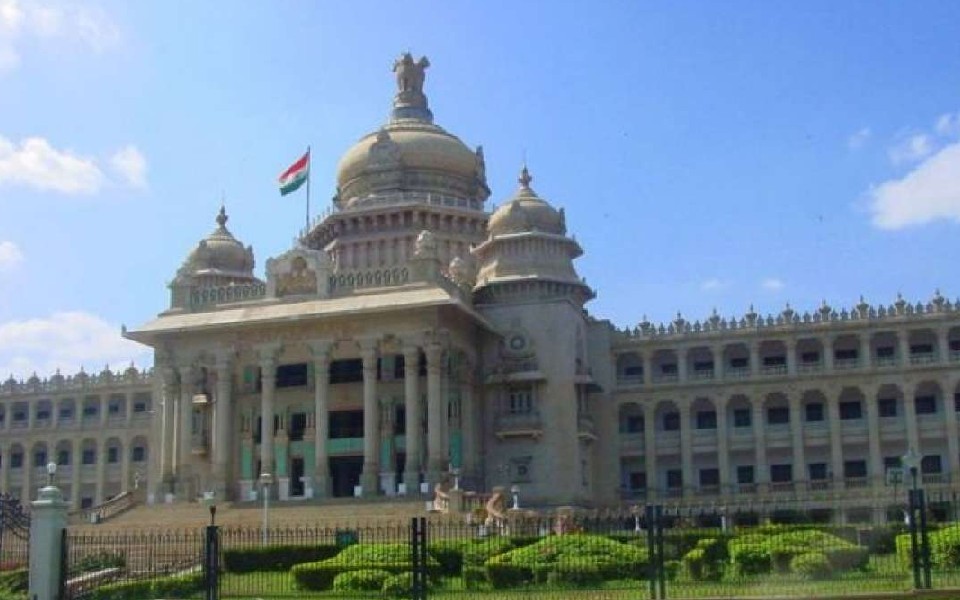
Bengaluru, May 25 (PTI): The Vidhana Soudha guided walking tours, a first-of-its-kind experience that invites the public to step inside Karnataka’s seat of legislative power, were launched on Sunday.
The initiative by the Department of Tourism (DoT) and Karnataka State Tourism Development Corporation (KSTDC), in coordination with the Speaker's Office–Karnataka Legislative Assembly, the Department of Personnel and Administrative Reforms (DPAR), and the Vidhana Soudha security division, will be open to the public from June 1.
The tours will be conducted on the 2nd and 4th Saturdays, and all Sundays of every month, from 8 am to 5 pm (as per the time slots listed on the KSTDC website), officials said.
An introductory ticket price of Rs 50 has been fixed for individuals aged 16 and above, while children aged 15 and below can book tickets for free.
At the launch, Speaker U T Khader said, "The Vidhana Soudha guided walking tour is a unique initiative designed to immerse citizens in the rich legacy of Karnataka’s democratic heritage. These tours stand as a testament to our commitment to transparency, civic engagement, and the preservation of our historical narrative."
Karnataka Minister for Law & Parliamentary Affairs, Legislation and Tourism, H K Patil, said, "Vidhana Soudha is the living story of our State’s democratic journey. Opening its corridors to the public is a celebration of transparency, heritage, and civic pride." The guided walking tour offers exclusive insights into the building’s historical significance, architectural marvels, and key areas within the complex. Each group will be accompanied by a trained tour guide and a Tourist Mitra (tourist police).
The 90-minute guided tour will be conducted in Kannada and English, covering an approximate distance of 1.5 km on foot.
Each slot will accommodate 30 participants on a first-come, first-served basis, and officials expect to host over 300 guests each day.
However, State BJP President B Y Vijayendra criticised the move, claiming the state government is facing "financial distress" and has now resorted to charging visitors to enter Vidhana Soudha.
"Chief Minister Siddaramaiah is unable to mobilise resources for guarantee schemes or development. MLAs aren’t receiving funds for their constituencies, and as a result, the government is taking all sorts of decisions," he told reporters here.
Let the Truth be known. If you read VB and like VB, please be a VB Supporter and Help us deliver the Truth to one and all.
Ordinance issued to increase number of Supreme Court judges from 34 to 38
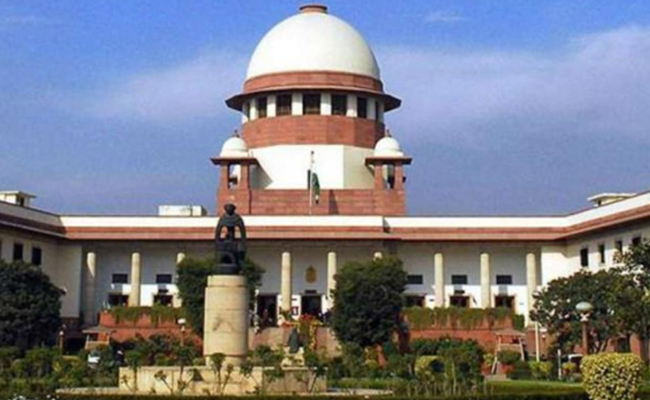
New Delhi (PTI): The government has promulgated an ordinance to increase the strength of the Supreme Court from the present 34 judges to 38, including the Chief Justice of India.
The law ministry notified the ordinance on Saturday, which amended the Supreme Court (Number of Judges) Act, 1956, to increase the sanctioned strength of the top court.
So far, the sanctioned strength of the top court was 34, including the Chief Justice of India (CJI). Now, the number of judges has been increased by four, taking the sanctioned strength to 38.
The top court will now have 37 judges, other than the CJI.
With the apex court having two vacancies at present, and the ordinance coming into force immediately, the Supreme Court Collegium will now have to recommend six names for appointment as judges in the top court.
A bill will be brought in the Monsoon Session of Parliament to convert the ordinance – an executive order – into a law passed by Parliament.
The Union Cabinet had cleared a draft bill on May 5 to increase the number of apex court judges.
The strength of the Supreme Court was last increased from 30 to 33 (excluding the CJI) in 2019.
The Supreme Court (Number of Judges) Act, as originally enacted in 1956, put the maximum number of judges (excluding the CJI) at 10.
This number was increased to 13 by the Supreme Court (Number of Judges), Amendment Act, 1960, and to 17 by another amendment to the law.
The Supreme Court (Number of Judges) Amendment Act, 1986, augmented the strength of judges from 17 to 25, excluding the CJI.
A fresh amendment in 2009 further increased the strength from 25 to 30.
Article 124(3) of the Constitution lists the qualifications required to become a Supreme Court judge.
An Indian citizen who has either served as a high court judge for at least five years, or as an advocate for 10 years, or is a distinguished jurist, can be appointed to the top court.
The strength of the Supreme Court is increased based on the recommendations of the CJI, who writes to the Union law minister. After consulting the finance ministry, the Department of Justice under the law ministry moves the Cabinet with a draft bill.