Will collectively strive to bring BJP back to power in Karnataka, says Bommai
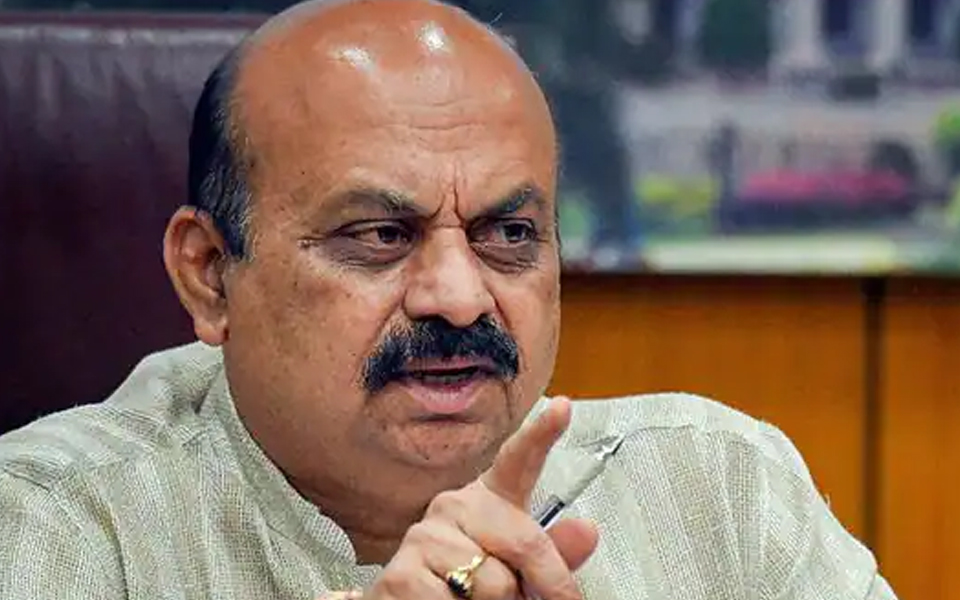
Hubballi (K'taka), Dec 29 (PTI) Seemingly relieved with the backing from executive body of the Karnataka BJP and national leadership, amid speculations about leadership change, Karnataka Chief Minister Basavaraj Bommai on Wednesday said he along with other leaders will collectively strive to bring the party back to power in the 2023 assembly polls.
During the two-days BJP state executive meeting that began here on Tuesday, party's National General Secretary in-charge of Karnataka Arun Singh, Union Minister Pralhad Joshi, and several leaders are said to have thrown their weight behind Bommai, and warned action against those in the party, indulging in such speculations.
"I thank the BJP leadership, state unit president, office bearers, and the state executive members for showing confidence in our government and motivating us to move forward," Bommai said.
Speaking to reporters here, he said, he along with other leaders will strive collectively to fulfill the expectations of the leadership regarding further strengthening and organizing the party, effective coordination between the party and the government, facing the political challenges and upcoming election together.
"From the beginning itself the high command has been very clear, the clarity that is there at their level has been expressed here by Arun Singh. It is kind of a reconfirmation," he said in response to a question on backing from the high command, despite some opposition from some quarters.
There have been rumours for some time now about a leadership change in the state and Bommai's possible exit from the top job ahead of the assembly polls in 2023.
There have also been speculations regarding Bommai's health, concerning his knee ailment, forcing him to clarify on Tuesday that he has the strength to work tirelessly for 365 days without any rest.
"I have decided to work a minimum of 15 hours a day...." he had said.
Bommai took oath as the Chief Minister on July 28, succeeding his mentor and state BJP strongman B S Yediyurappa.
Let the Truth be known. If you read VB and like VB, please be a VB Supporter and Help us deliver the Truth to one and all.
Ordinance issued to increase number of Supreme Court judges from 34 to 38
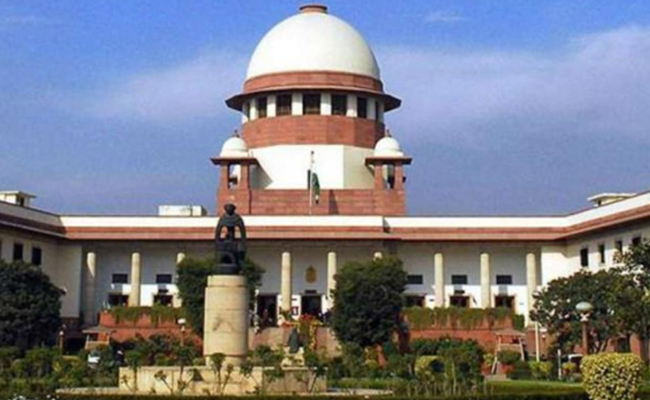
New Delhi (PTI): The government has promulgated an ordinance to increase the strength of the Supreme Court from the present 34 judges to 38, including the Chief Justice of India.
The law ministry notified the ordinance on Saturday, which amended the Supreme Court (Number of Judges) Act, 1956, to increase the sanctioned strength of the top court.
So far, the sanctioned strength of the top court was 34, including the Chief Justice of India (CJI). Now, the number of judges has been increased by four, taking the sanctioned strength to 38.
The top court will now have 37 judges, other than the CJI.
With the apex court having two vacancies at present, and the ordinance coming into force immediately, the Supreme Court Collegium will now have to recommend six names for appointment as judges in the top court.
A bill will be brought in the Monsoon Session of Parliament to convert the ordinance – an executive order – into a law passed by Parliament.
The Union Cabinet had cleared a draft bill on May 5 to increase the number of apex court judges.
The strength of the Supreme Court was last increased from 30 to 33 (excluding the CJI) in 2019.
The Supreme Court (Number of Judges) Act, as originally enacted in 1956, put the maximum number of judges (excluding the CJI) at 10.
This number was increased to 13 by the Supreme Court (Number of Judges), Amendment Act, 1960, and to 17 by another amendment to the law.
The Supreme Court (Number of Judges) Amendment Act, 1986, augmented the strength of judges from 17 to 25, excluding the CJI.
A fresh amendment in 2009 further increased the strength from 25 to 30.
Article 124(3) of the Constitution lists the qualifications required to become a Supreme Court judge.
An Indian citizen who has either served as a high court judge for at least five years, or as an advocate for 10 years, or is a distinguished jurist, can be appointed to the top court.
The strength of the Supreme Court is increased based on the recommendations of the CJI, who writes to the Union law minister. After consulting the finance ministry, the Department of Justice under the law ministry moves the Cabinet with a draft bill.