Win in Karnataka will be 'super booster dose' for Congress: Jairam Ramesh
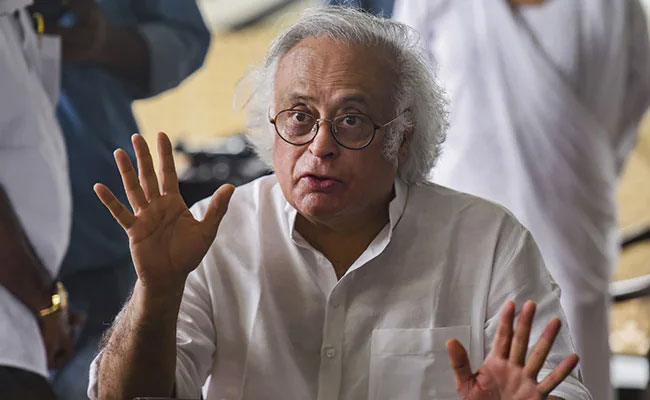
New Delhi (PTI): A win in the Karnataka polls will be a "super booster dose" for the Congress electorally going forward after the Bharat Jodo Yatra revitalised the party organisationally, senior leader Jairam Ramesh has said.
The Congress general secretary (in-charge communications) said that while the 2024 general elections are still some months away, the outcome in Karnataka would definitely impact the crucial assembly polls later this year in states such as Rajasthan, Chhattisgarh and Madhya Pradesh.
"A win (in Karnataka polls) will be a super booster dose for the Congress. It will strengthen the Congress as we go to the polls in Telangana, Rajasthan, Chhattisgarh, Madhya Pradesh and Mizoram," Ramesh, who is on the campaign trail in Karnataka, told PTI.
"I don't want to look to 2024 but I would look at 2023 and for that it (win in Karnataka) would be a super booster dose for the Congress," the former Union minister said.
While the Bharat Jodo Yatra revitalised the Congress ideologically and organisationally, a victory in Karnataka would revitalise it electorally, Ramesh said.
"Don't be surprised if we retain Chhattisgarh, Rajasthan and come back to Madhya Pradesh as we had the mandate there before we were betrayed by Mr (Jyotiraditya) Scindia and his colleagues and the government was stolen from the Congress," he said.
In Telangana, Ramesh opined, the fight is between the Congress and the BRS, and the BJP is just creating a lot of hype.
"So electorally, for 2024 it is too early to say but I would say, for 2023, the elections that would come, this victory for the Congress in Karnataka will be a super booster dose," he asserted.
Ramesh claimed there was a "very strong current" in favour of the Congress in Karnataka.
"It is not just an undercurrent, there is an over current and I am in an area which is supposed to be a BJP bastion, which is the coastal area, and there is a widespread sentiment for a change," he told PTI over phone.
Ramesh said people have seen through the BJP propaganda about "good governance" over the last four years of its regime.
"So, I think we are headed for a clear majority in the assembly. I don't agree with the assessment that it is going to be a hung verdict. I think it is going to be a clear majority for the Congress," he said.
Noting that Karnataka is the only state in the South that the BJP has a government in, Ramesh said there is no prospect of the BJP coming to power in Kerala, Tamil Nadu or Telangana "and so it is banking on Karnataka".
"You see the type of high profile campaigning Prime Minister Narendra Modi is going to be undertaking in the good part of next 12-13 days, along with Amit Shah, Rajnath Singh, Yogi Adityanath and several cabinet ministers. The entire government and the entire BJP is focusing on Karnataka," he said.
Ramesh said this time the Congress campaign has been very strategic on 'vocal for local'.
"People are seeing this. It is a positive and constructive campaign by the Congress. I can tell you having spent 22 days in October in seven districts in Karnataka during the Bharat Jodo Yatra, it was very evident from October that the time for a change was there and Rahul Gandhi was able to capitalise on that mood or that sentiment," he said.
The entire Congress party and the organisation got a booster dose from the Bharat Jodo Yatra and we are seeing the consequences of that in this election, Ramesh said.
Asked about the prime minister's campaign blitz in Karnataka, Ramesh said the BJP can do whatever "carpet bombing" they want but there are enough local issues the Congress has raised and given guarantees to different sections of society, which will ensure its success.
Voting will take place in the state on May 10 and the results will be out on May 13.
Let the Truth be known. If you read VB and like VB, please be a VB Supporter and Help us deliver the Truth to one and all.
Real Madrid fines Valverde and Tchouaméni half a million euros each for altercation
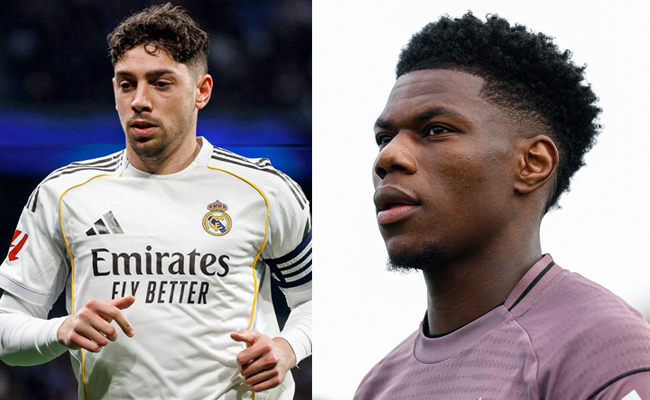
Barcelona (AP): Real Madrid slapped players Federico Valverde and Aurélien Tchouaméni with half-a-million-euro ($588,000) fines on Friday for their altercation during practice.
The massive fines came a day after the midfielders tussled when the team trained. Valverde said in a post on social media on Thursday that no punches were thrown. But Valverde knocked his head on a table and he suffered a small cut that required a brief hospital visit.
On social media, Valverde initially called it a “meaningless fight” with a teammate and said “everything has been blown out of proportion."
His employers, however, considered it a significant enough breach of team discipline to nail both Valverde and Tchouaméni with fines that bite even the bank account of a top soccer player. The half-a-million euro penalties reflect the reputational damage the club was enduring in a chaotic end to a disappointing season.
In a statement, the 15-time European champion said its disciplinary action was concluded after both players expressed to the club “their complete remorse for what happened and apologized to one another.”
Madrid added they also apologized to their teammates, the coaching staff and club supporters, as well as showing their willingness to accept whatever disciplinary action the club deemed “opportune.”
Tchouaméni was back training with Madrid on Friday, two days before they play at Barcelona in a clasico. Madrid has to win otherwise Barcelona will be crowned La Liga champion.
After being notified of the fine, he posted a public apology to the club and its fans on social media.
“What happened this week in training is unacceptable,” Tchouaméni wrote. "I say this while thinking about the example we are expected to set for young people, whether in football or at school.
“Above all, I am sorry for the image we projected of the club.”
Valverde was not at practice due to the head knock.
Both players are set to play in the World Cup next month, with Tchouaméni playing for France and Valverde for Uruguay.
Chaotic end to a poor season
===================
The run-in between the players, who for seasons have played side by side in Madrid's midfield, came after they argued this week in previous training sessions. But tempers boiled over on Thursday. Spanish media was rife with reports that the players previously disagreed over the club's decision to let coach Xabi Alonso go after just months on the job.
It was not the only altercation involving Madrid players during training this week. Álvaro Carreras confirmed he was in a “minor” incident with a teammate. Spanish media said he and fellow defender Antonio Rüdiger got into a scuffle.
Álvaro Arbeloa, the coach who was promoted from Madrid's reserve team when Alonso was fired in January, will face tough questions on what went wrong inside the changing room when he gives a press conference on Saturday ahead of the clasico at Camp Nou.
Madrid is facing a second consecutive campaign without a major trophy amid rumors in the Spanish media that club president Florentino Pérez is considering bringing back Jose Mourinho to straighten out his underperforming team.