Yediyurappa says will put pressure on BJP high command to appoint oppn leader, state chief
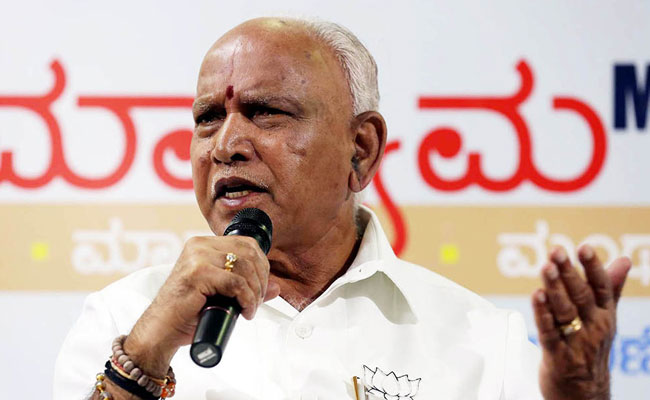
Bengaluru (PTI): Veteran BJP leader B S Yediyurappa on Thursday acknowledged that there is a delay in naming the leader of opposition in the Karnataka Legislative Assembly and the new state party president, and said he would make all efforts to exert pressure on the party high command to make these appointments.
The BJP, which is the principal opposition party in the state, has not yet appointed its legislature party leader, who will also play the role of the leader of opposition in the assembly. The previous assembly session in July was held without a leader of opposition present.
"There has been a delay in the appointment of the opposition leader, I have requested to do it at the earliest. I will do all that I can to put pressure to make the appointment at the earliest before the assembly session (likely in December)," the BJP central parliamentary board member told reporters here.
"On the state president too, our demand is that appointment should be done at the earliest, whoever it is. We will try to get it done at the earliest," he said.
The saffron party is facing intense criticism from the ruling Congress for its inability to make an appointment to the post.
The BJP leadership is also yet to take a call on who should replace Nalin Kumar Kateel, who has completed four years as the party state president.
Kateel, a three-time Lok Sabha member from Dakshina Kannada, was appointed state unit chief in August 2019 for a three-year term. He was given an extension last year in view of the impending elections.
Speaking to reporters, Yediyurappa also attacked the Siddaramaiah-led Congress government, accusing it of failure on all fronts, and said the CM and party leaders were blaming the central government and criticising Prime Minister Narendra Modi "unnecessarily for everything", to hide their own failures.
As he has said before, the former chief minister warned of statewide agitations against the go, accusing it of indulging in rampant corruption and failing in managing the drought and the power crisis.
Six months since the Congress came to power, the government is not moving ahead as it has "no air in its wheels", Yediyurappa said.
The Congress that came to power with lots of promises is struggling to fulfill its assurances, and Siddaramaiah seems to have lost control over the party and the government, he alleged.
Other than the scheme providing free bus transport to women in the state, other guarantee schemes (pre-poll promises of the Congress) have not been properly fulfilled, he claimed. The Gruha Lakshmi scheme -- providing Rs 2,000 to every woman head of the family -- has not reached even half of the beneficiaries, he added.
"Efforts are being made to mobilise resources only to fulfill free schemes and all development works have completely come to a standstill," Yediyurappa alleged.
Not even a single minister, including the chief minister, has visited the drought affected region to assess the ground situation, he said, adding that the government is "so bankrupt that of the Rs 2 crore that had to be released as MLA grants, only Rs 50 lakh has been cleared so far".
At a time when farmers are suffering due to drought, they are being made to bear the cost of power for agri pumpsets, he said, adding that the Congress promised to provide free power but has substantially increased the power tariff.
The government's "corruption" has been exposed during the recent IT raids, Yediyurappa said. "It is proved that this is a government of loot. More than Rs 100 crore recovered during the raids have shown their true colours," he alleged.
Pointing out that the leadership tussle between Siddaramaiah and Deputy Chief Minister D K Shivakumar and their respective camps have reached a peak, Yediyurappa claimed that all's not well in the ruling party.
Referring to the visits of Congress National General Secretaries K C Venugopal and Randeep Singh Surjewala to the state, he said, "The state government has become an ATM for the Congress. To fix collection targets, they are visiting the state."
"To put a brake to the deputy chief minister's irksome ways, dinner meetings have begun within the ruling dispensation," he said pointing at the dinner meetings attended by Siddaramaiah along with a couple of ministers at Home Minister G Parameshwara's residence, which had led to a lot of speculations about a possible reshuffle in leadership positions.
Accusing the government of failing in managing the drought and power crisis, as well as the Cauvery issue, the senior leader said they are instead blaming the Centre for everything.
"Having forgotten to respond to the needs of the people, the ruling party and its leaders are attacking the opposition. This is a mockery of democracy," he said. "To hide their failures there is a conspiracy by the chief minister and his party leaders to blame the central government for everything, by raising issues that are rubbish, false and half truth."
Without doing petty politics, the government should rush to provide relief to those affected, he said, as he asked the CM to go to Delhi and make efforts to get drought relief instead of indulging in blame games with the Centre and criticising the PM, which "may hamper" the state.
"The Siddaramaiah government has been a failure on all fronts," Yediyurappa said. If the government "continues in this way", the BJP may have to launch a big agitation.
He also said that there would be a slight delay in his drought study tour in certain parts of the state, due to some pressing engagement in Shivamogga.
Regarding allegations by Congress that the BJP was trying to lure its legislators with allurements, Yediyurappa said, "these are irresponsible comments. If there is any evidence, let them get it investigated."
On the Ministry of Home Affairs providing Z category security cover to him, Yediyurappa said there is no need for additional security and he has already requested the home minister to continue the earlier arrangements.
"Because of the security, people are not able to come near me. I'm someone who is amidst people, so I have requested the home minister," he said.
On questions about the BJP-JD(S) alliance and whether the partnership is only for the Lok Sabha polls or it would continue for the legislative council polls too, he said it is left to the central leadership to decide.
Let the Truth be known. If you read VB and like VB, please be a VB Supporter and Help us deliver the Truth to one and all.
Manjeshwar: A.K.M. Ashraf wins by 31,193 votes
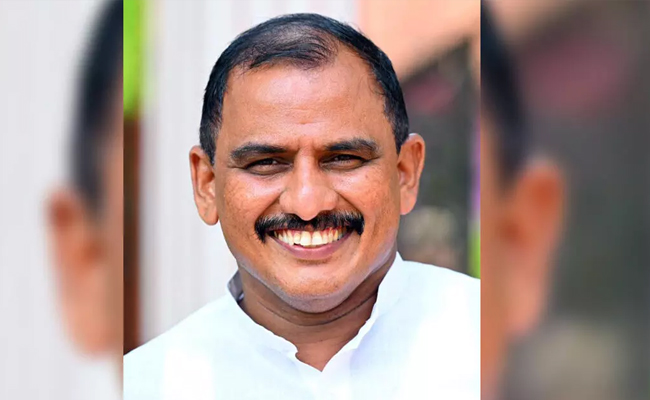
Kasaragod: UDF candidate A.K.M. Ashraf has won the Manjeshwar Assembly seat in Kerala and is set to return to the Assembly.
He led from the start of counting and kept increasing his margin, finally winning by 31,193 votes.
Ashraf got 96,367 votes, while BJP’s K. Surendran got 65,174 votes. LDF candidate K.R. Jayanand finished third with 20,365 votes.
In the last election, Ashraf had won by just 745 votes against Surendran, but this time he significantly increased his lead.