Leaked WhatsApp messages of ABVP group shows students discussing Muslim genocide, mass conversion
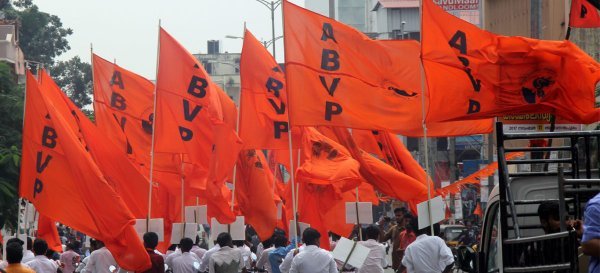
New Delhi: A leaked WhatsApp chat of Akhil Bharatiya Vidyarthi Parishad (ABVP) the students’ wing of BJP is doing rounds on social media platforms where the student activists can be seen discussing the genocide of Muslims in the country.
The chat is purported from the ABVP WhatsApp group of Delhi Technological University (DTU). The group is named “ABVP DTU Freshers”, the screenshots of the chat and messages show a number of members of this group discussing genocide and mass conversion of the Muslims.
One of the members in the chat has suggested that exploding a bomb or “other accident” be plotted in a Muslim-dominated area to “exterminate most Muslims”, while another has suggested “buying or kidnapping” Muslim women to run “Bhagwa love jihad”.
Another person who was part of the conversation stated that a mass genocide or mass sterilization of Muslims should be plotted and carried out to give back to the Muslim community. The same user has also opined that Hindu Mahasabha or other right-wing Hindutva groups should start a course on “hot to marry Muslim girls and convert them to Hindu”.
How ABVP Planned Attack on Muslims. Leaked WhatsApp messages of ABVP group from Delhi Technological University. pic.twitter.com/8R4cM5vGol
— Ahmed Khabeer احمد خبیر (@AhmedKhabeer_) December 7, 2022
Let the Truth be known. If you read VB and like VB, please be a VB Supporter and Help us deliver the Truth to one and all.
Allen, Raghuvanshi, Green power KKR to 29-run win over GT
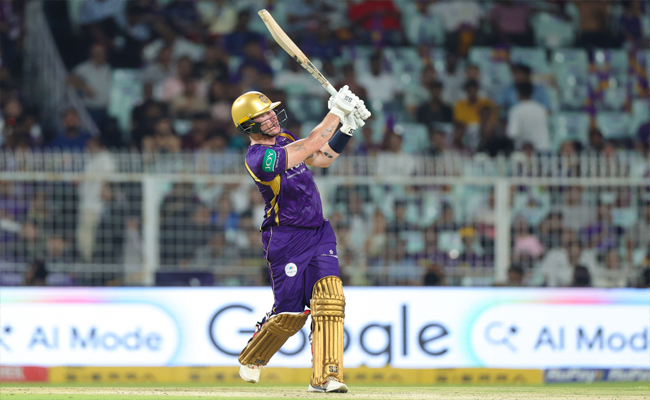
Kolkata (PTI): Finn Allen blasted a 35-ball 93, while Angkrish Raghuvanshi hit an unbeaten 44-ball 82 as Kolkata Knight Riders kept their playoff hopes alive with a 29-run win over Gujarat Titans in the IPL match here on Saturday.
Sent in to bat, Allen went on a six-hitting spree, smashing 10 maximums and four boundaries to add 95 off 41 balls with Raghuvanshi (82).
Raghuvanshi then shared another 108 off 53 balls with Cameron Green (52 not out) to power KKR to a challenging 247 for 2.
In reply, GT could manage 218-4, riding on skipper Shubman Gill's 49-ball 85 and a 35-ball 57 from Jos Buttler. Opener Sai Sudarsan was retired hurt but returned to make a 28-ball 53 not out.
Sunil Narine (2/29) claimed two wickets and Saurabh Dubey snapped one for KKR.
For GT, Mohammed Siraj (1/50), Sai Kishore (1/38) were the wicket-takers.
Brief Score:
KKR: 247 for 2 in 20 overs (Finn Allen 93, Angkrish Raghuvanshi 82 not out, Camero Green 52 not out; Mohammed Siraj 1/50).
GT: 218 for 4 in 20 overs (Shubman Gill 85, Sunil Narine 2/29).