Mohammed Zubair calls out Amit Malviya for sharing fake claim on Rahul Gandhi selfie
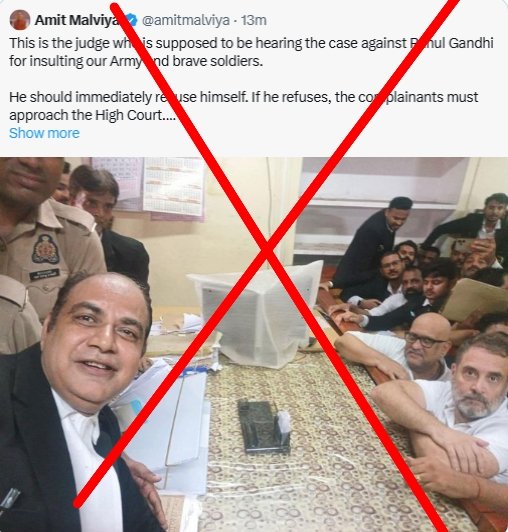
Lucknow, July 15 – A photograph of Congress leader Rahul Gandhi taken inside a Lucknow courtroom has sparked a wave of misinformation, after BJP IT Cell head Amit Malviya and others falsely claimed that the man taking a selfie with Gandhi was the judge hearing his case. The man in the image has now been identified as Advocate Syed Mahmood Hasan, not a member of the judiciary.
The image was taken on Tuesday at the Special MP-MLA Court in Lucknow, where Rahul Gandhi appeared in connection with a 2018 defamation case filed by BJP leader Vijay Mishra. The case relates to remarks Gandhi allegedly made against Union Home Minister Amit Shah. During the hearing, Special Judge H.R. Yadav granted him bail.
After the proceedings, several people including lawyers took photos with Gandhi inside the court premises. One of those images, featuring Advocate Syed Mahmood Hasan taking a selfie, was shared by multiple social media users — including BJP IT Cell chief Amit Malviya — who falsely claimed the man was the judge presiding over the case.
The misleading narrative raised serious concerns about judicial impartiality, and was widely amplified by IT cell accounts and influencers. However, the claim was swiftly debunked by fact-checkers and media outlets.
Fact-checker Mohammed Zubair of Alt News took to X (formerly Twitter) to counter the misinformation. Sharing screenshots of Malviya’s tweet, Zubair wrote:
"BJP IT cell head @amitmalviya deleted this tweet after it was pointed out that he was an advocate Syed Mahmood Hasan and not a Judge. Other IT cell members are yet to delete."
BJP IT cell head @amitmalviya deleted this tweet after it was pointed out that he was an advocate Syed Mahmood Hasan and not a Judge. Other IT cell members are yet to delete. pic.twitter.com/YLi8g76c0b
— Mohammed Zubair (@zoo_bear) July 15, 2025
Advocate Syed Mahmood Hasan, a resident of Barabanki and practicing lawyer at the Lucknow District Court since 2006, also clarified his identity. “I had gone to meet Rahul Gandhi. I am not a judge, I am just a lawyer,” he told local media. “I admire him and simply took a selfie, like many others present.”
Legal experts and civil society members have criticised the deliberate spread of such false claims, pointing out the damage it causes to public trust in judicial institutions. The court's bail order, passed by Judge H.R. Yadav, had no connection to the viral photograph or the advocate involved.
Despite the clarification and Malviya deleting his tweet, many others from BJP's digital ecosystem continue to circulate the misleading post without correction.
Critics say this incident is part of a larger pattern of political disinformation and underlines the need for stronger moderation and accountability on social media platforms.
Let the Truth be known. If you read VB and like VB, please be a VB Supporter and Help us deliver the Truth to one and all.
ED arrests Punjab minister Sanjeev Arora in fresh PMLA case
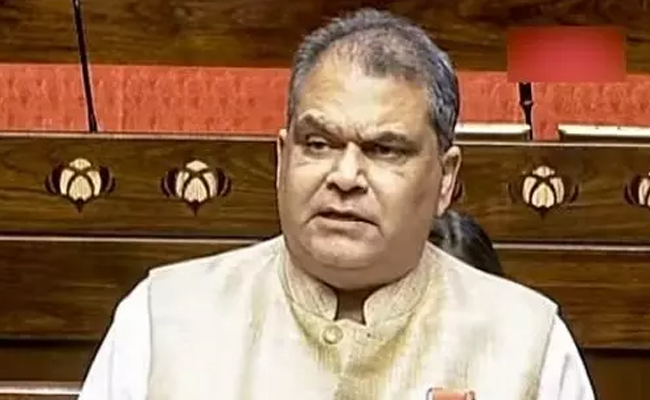
New Delhi/Chandigarh (PTI): The Enforcement Directorate on Saturday arrested Punjab industries minister Sanjeev Arora in a fresh money laundering case against him and some entities allegedly linked to him, officials said.
Arora was taken into custody under the Prevention of Money Laundering Act (PMLA) after raids were conducted at his official residence in Chandigarh since early morning, they added.
Officials claimed Arora (62) was "non-cooperative" during the probe. He is expected to be produced before a local court on Saturday, where the agency will seek his custody for a detailed interrogation.
The ED carried out the searches at five premises across north India as part of the action.
The raids also covered two premises in Delhi and that of a company named Hampton Sky Realty Ltd in Gurugram's Udyog Vihar.
The searches were launched after the central agency registered a fresh case under the criminal sections of the Prevention of Money Laundering Act (PMLA), the officials said.