Old video of Rahul Gandhi's warning goes viral as Delhi HC calls second wave of COVID as 'Tsunami'
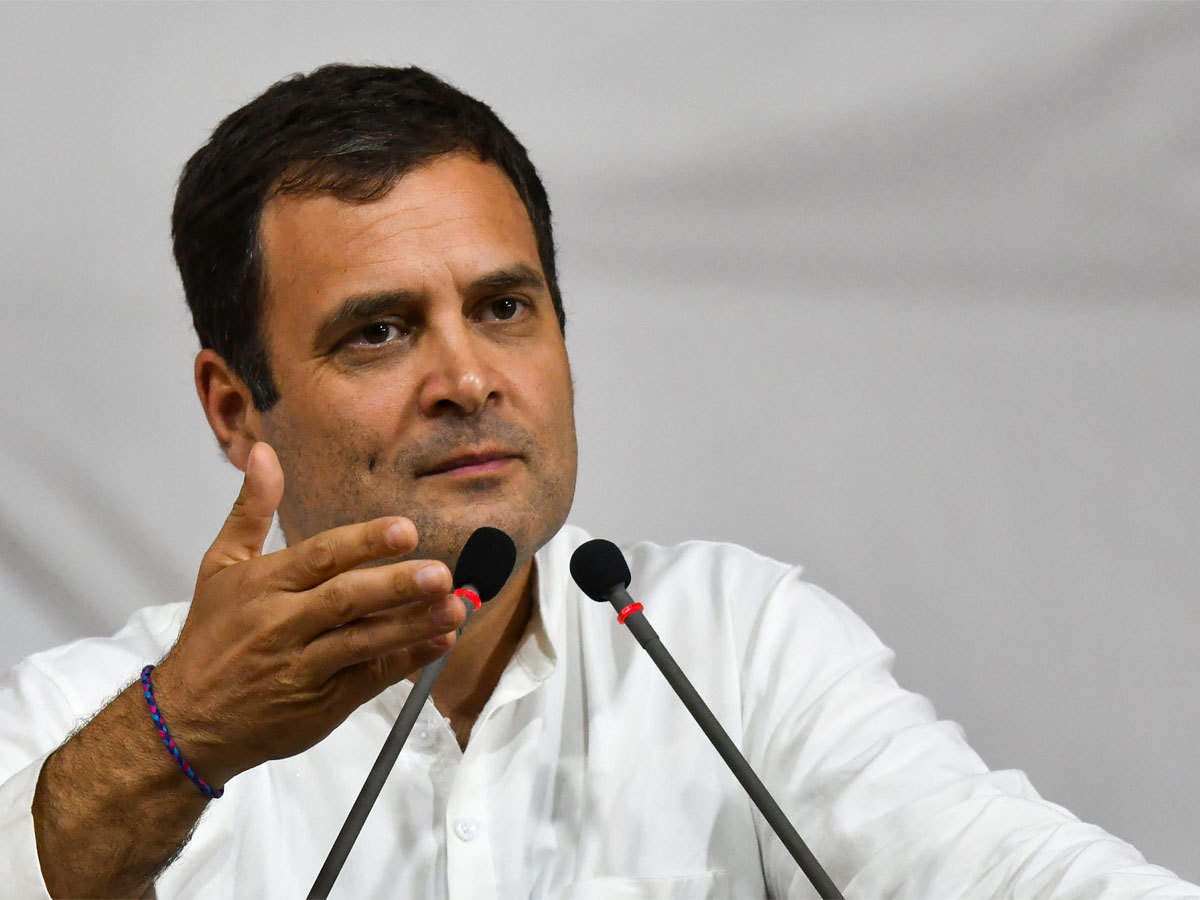
New Delhi: An old video of former Congress President Rahul Gandhi went viral on micro-blogging site Twitter on Saturday after the Delhi High Court referred to the second wave of COVID-19 as ‘Tsunami’.
In the video that is purportedly dated March 17, 2020, the former Congress chief can be seen saying that he has been warning the government about the ‘Tsunami’ of COVID-19 that was coming and how people will face the worst crisis in months to come.
“I have been warning the government a massive Tsunami is coming. I am saying again and again. Nobody is listening to me. I am sorry to say our people are going to go through unimaginable pain in the next six months” Rahul can be seen saying on the video.
On Saturday, Delhi High Court while hearing a case on surging case of COVID, observed “We’re calling it wave, it’s actually tsunami.
Twitter users then reminded the government about the warning Rahul Gandhi had given at least a year ago and added that it failed the country by being unprepared for the situation that was looming on the country.
It also slammed the Right-Wing social media users who mocked Rahul Gandhi for his comments.
Soon, ‘Tsunami’ was one of the top trending words on Twitter India.
Here are some of the tweets from the campaign.
NOTE: The claims made in the tweets embedded below or the ideas presented in them are those solely of the users. Vartha Bharati does not guarantee the authenticity of any of the claims or does not necessarily endorse, support the ideas, views posted by any of the users.
Remember 17 March, 2020⤵️@RahulGandhi - A massive Tsunami is coming. I have been warning the Gov again and again.
— Deepak Khatri | दीपक खत्री ?? (@Deepakkhatri812) April 24, 2021
After 1 Year
24 April, 2021 ( Delhi High Court) - We're calling it a wave. It'e actually Tsunami
Visionary @RahulGandhi ji #COVID19 #COVIDEmergency2021 pic.twitter.com/DTGkMkszh0
17 March , 2020 (Rahul Gandhi) - A massive Tsunami is coming. I have been warning the Gov again and again.
— folitically (@Folitically) April 24, 2021
After 1 year
24 April, 2021 ( Delhi High Court) - We're calling it a wave. It'e actually Tsunami.
Visionary @RahulGandhi ji pic.twitter.com/R1zgX3haGm
Rahul Gandhi in March 2020 warned the govt of Covid Tsunami but the media,BJP cabinet ministers& trolls mocked him.? pic.twitter.com/oto7ZQG7U5
— Prashant.Patel (@PPatel108) April 24, 2021
Once a wise man had said , Tsunami is coming . Today Delhi High Court said the Same.
— Karma_Bites_Back ☆ (@Vikas_Kaha_Hai) April 24, 2021
But few Indians dint believe him.
The Name of that wiseman is Rahul Gandhi ?#ModiMadeDisaster #indianeedoxygen #India#CovidIndia #Delhi #OxygenCrisis #Gujarat #Kerala #Mumbai #TamilNadu pic.twitter.com/zHUdukD8ir
I have been warning the government, that a massive Tsunami is coming :- @RahulGandhi (17/03/2020)
— Prajeesh Preman (@Prajeeshcpreman) April 24, 2021
We're calling it wave, it's actually tsunami: Delhi HC on surging COVID cases (24/04/2021)
Tsunami is coming... @RahulGandhi warned last year https://t.co/aVhJQDAJ2z
— Pandian Inbasagaran பாண்டியன் இன்பசாகரன் (@pandiansvce) April 24, 2021
Sh. Rahul Gandhi saw it coming in March last year when we had less than 100 cases.
— Anshuman Sail (@AnshumanSail) April 24, 2021
Today, India has 1.66 crore cases and more than 189000 deaths. pic.twitter.com/qlVogl6GrY
Once a wiseman said, “COVID19 is a tsunami. A big tsunami is coming.”
— Licypriya Kangujam (@LicypriyaK) April 24, 2021
Everyone mocked at him.
Today the Court tell the same, “COVID19 is not a wave. It’s a huge Tsunami”.
Yes, its a Tsunami. And the Emperor is silent. https://t.co/XMQmZPtP5Y
— Rejimon Kuttappan (@rejitweets) April 24, 2021
.@RahulGandhi in March 2020: "A Tsunami is coming".
— Saral Patel (@SaralPatel) April 24, 2021
Delhi High Court, April 2021: "We are calling it a wave, but it's a Tsunami." pic.twitter.com/yusVrJ5B4I
This is what Rahul Gandhi warned in March 2020 - a tsunami. https://t.co/99XMmumDN5
— Ravi Nair (@t_d_h_nair) April 24, 2021
Now we know who the real Pappu is. It’s a tsunami! pic.twitter.com/S0mEJuTF8J
— Sri Krishna A ??️? (@srikri_a) April 24, 2021
Shri @RahulGandhi ji warned many times about forthcoming tsunami but our govt. remained deaf that time.
— Neeraj Kundan (@Neerajkundan) April 24, 2021
Now people are realising it's horrible tsunami.
Who is responsible ? @narendramodi@drharshvardhan https://t.co/FoJvdbA2oq
Rahul Gandhi had said the same thing exactly an year ago. But entire Modi government and RW system made fun of him. Today, Delhi HC used the same phrase - Tsunami.
— amey tirodkar (@ameytirodkar) April 24, 2021
I hope, at least now we will realise Modi government's incompetence. https://t.co/jDCSTUKtFm
Rahul Gandhi said Tsunami will come and the Govt is not prepared.
— Bhavika Kapoor ✋ (@BhavikaKapoor5) April 24, 2021
People will have to face catastrophe.
How accurate he was ?#COVIDEmergency2021 #COVID19India
Hence proved, Mr @RahulGandhi was right in warning Modi Govt about Corona Tsunami. But Govt ignored, mocked him. Sad! https://t.co/6X0wN3a0nK
— Salman Nizami (@SalmanNizami_) April 24, 2021
Shri @RahulGandhi
— Om (@ItsYourOm) April 24, 2021
ji had told in march 2020..
"Tsunami is going to hit our economy in coming weeks, Govt needs to take measures"
pic.twitter.com/Fq8nENFyN5
"A massive tsunami is coming. India should be preparing itself not just for Covid-19 but for the economic devastation that is coming. Our people are going to go through unimaginable pain in the next six months"
— Rachel Hunter (@RainbowRaven_) April 24, 2021
@RahulGandhi said on 17th March 2020 pic.twitter.com/K0eQsD4RMY
Let the Truth be known. If you read VB and like VB, please be a VB Supporter and Help us deliver the Truth to one and all.
Allahabad HC orders probe into 'reinstatement' of teacher in UP's Barabanki
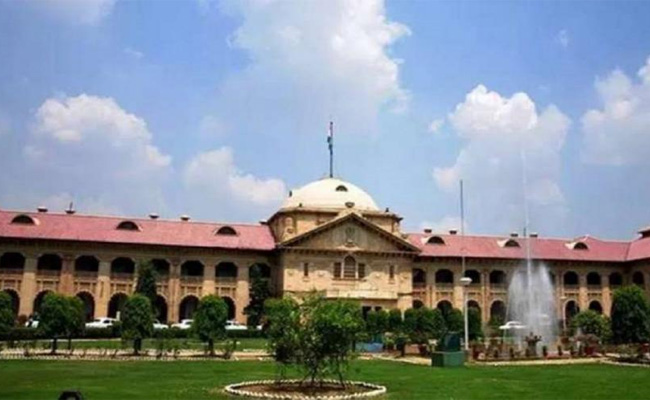
Lucknow (PTI): The Lucknow Bench of the Allahabad High Court on Friday ordered a probe by the special task force (STF) into alleged irregularities in the rejoining of a teacher at City Intermediate College in Barabanki, observing that the reinstatement appeared to be prima facie illegal.
The court also directed the recovery of the salary paid to the teacher during the disputed period.
A bench of Justice Rajeev Singh passed the order on a petition filed by the college management committee. The court expressed doubts over the roles of the District Inspector of Schools (DIOS), Barabanki, the college principal and the teacher concerned and hence, directed a detailed inquiry into the matter.
Taking note of alleged manipulation of records and misleading submissions, the court ordered the immediate transfer of the Barabanki DIOS to ensure a fair probe. It also directed the initiation of disciplinary proceedings against the then joint director of education of the Ayodhya division.
In its order, the court found that the teacher, Abhay Kumar, was initially appointed as an assistant teacher in 2018 but joined an Eklavya Model Residential School in Chhattisgarh as a lecturer in June 2024 without obtaining permission from the management. His subsequent request to retain the lien was rejected.
Despite this, he was allowed to rejoin the Barabanki College in September 2025 on the directions of the joint director of education and the DIOS, and was even paid the salary for October 2025. The court termed the rejoining "wholly illegal" and lacking any legal basis.
The bench also expressed concern over lapses in communication within the education department and directed the Uttar Pradesh chief secretary to ensure that official orders are communicated through email and WhatsApp as well, to prevent disputes.
The matter is next listed for hearing on May 28 when a compliance report is sought.