1st ODI: Arshdeep, Avesh skittle South Africa out for 116
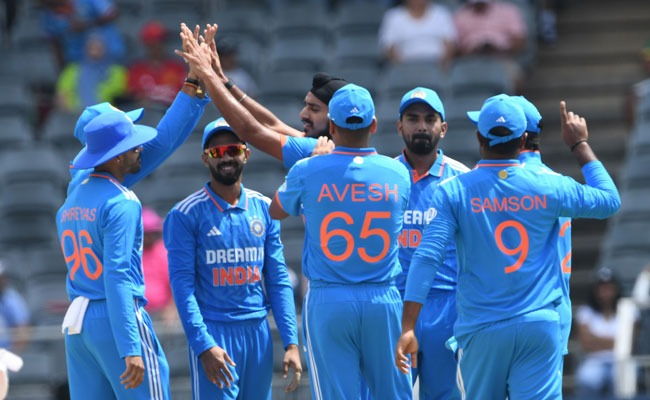
Johannesburg (PTI): Arshdeep Singh bowled a magical spell before ending with a five-wicket haul while Avesh Khan looked menacingly quick as India's fringe pacers rattled South Africa for a paltry 116 in the first ODI here on Sunday.
Playing their first 50 over game post the World Cup final, it seemed that Arshdeep (5/37 in 10 overs) and Avesh (4/27 in 8 overs) had picked up a cue from their seniors Mohammed Shami and Jasprit Bumrah as a quality Proteas batting line-up were made to look like novices on a track that offered a lot of help.
It was Arshdeep's first five-wicket haul in ODIs and the Punjab left-armer would certainly feel good having drawn a lot of flak for his inconsistency in the shortest format.
In their last encounter at Kolkata's Eden Gardens, South Africa were bowled out for 83 under lights on a slow deck but never would have Aiden Markram envisaged that he and his men would be bullied at the 'Bull Ring' which has been a safe haven for them in white ball cricket. Their innings lasted only 27.3 overs.
Only three players-- skipper KL Rahul, wrist spinner Kuldeep Yadav and middle-order batter Shreyas Iyer, who played the World Cup final are a part of this current playing eleven, and India's back-up pacers gave a good account of themselves.
The two Indian pacers pitched it up and ensured that most of the South African batters stayed rooted to the crease and both in fact were on hat-tricks with dismissals off successive deliveries.
Arshdeep would get more credit as he blew away the top-order within the first Powerplay with four wickets and then left it to Avesh, who bowled fast and full, hurrying the batters for pace.
In between, Avesh would slip in the occasional short ball for the tail-enders, who were in two minds whether to go on the front-foot or back-foot.
It started with Reeza Hendricks (0), who dragged a delivery that was angled across the right-hander back onto the stumps and the dangerous Rassie van de Dussen (0) must have expected an away-going one but got one that darted back from middle-stump.
Tony de Zorzi (28 off 22 balls), chanced his arms and Mukesh Kumar (0/35 in 6 overs), who had an off-day, went for a few before Arshdeep showed his variation by digging one short and the ball ballooned for skipper Rahul to complete an easy catch.
However the wicket that completely broke the home team's back was Heinrich Klaasen's (6) dismissal, which would have even made the great Wasim Akram proud.
Arshdeep bowled one slightly back of length but flicked his wrists in a manner that it turned into a vicious in-dipper that clipped the leg stump bail, leaving the right-hander in complete daze.
The end of Powerplay didn't end Proteas' woes as skipper Markram played on, completely beaten for pace. David Miller (2) also fell prey to relentless pressure to a delivery pitched on drivable length while Wiaan Mulder and Keshav Maharaj found the speed of deliveries too hot to handle.
It was Andile Phehlukwayo, whose 33, coming in at No. 8, took the home team past 100-run mark before Arshdeep, in his second spell, complete his five-for.
Let the Truth be known. If you read VB and like VB, please be a VB Supporter and Help us deliver the Truth to one and all.
Choose faith or future: BJP alleges 'second-class treatment' of Hindus in K'natka CET row
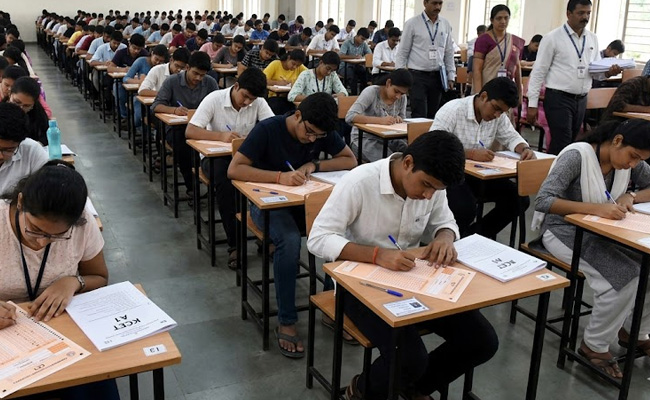
New Delhi (PTI): The BJP on Saturday accused the Karnataka Congress government of being "anti-Hindu" and following double standards after students appearing for the Common Entrance Test (CET) were allegedly asked to remove their 'janeu'.
A political row erupted after five Brahmin students were allegedly forced to remove the thread, considered sacred and worn across the torsos, at a city college in during the CET on Friday.
Students alleged that the invigilators at Madivala asked them to remove their janeu/yajnopaveetha if they wanted to write the exam.
In a video post on X, BJP national spokesperson Shehzad Poonawalla lambasted the act.
"Is it a crime to be a Hindu in Karnataka? In Karnataka, students were stopped from entering the examination hall for wearing a janeu and were given a brutal option -- choose your faith or your future. This happened last year as well," Poonawalla alleged.
ALSO READ: ECI to release exact voter turnout in TN
He accused the Karnataka government of practising double standards and engaging in appeasement politics.
"In Karnataka, we have seen the politics of appeasement. Muslim reservation, a Muslim-only budget, and quotas and contractual work for Muslims. But Hindus have to remove their sacred thread if they want to take an exam, which even the courts have, by the way, allowed," he alleged.
He accused the Congress government of adopting a similar approach in other states where it is in power, while allowing hijab and burka in classrooms.
"It has happened in various Congress-ruled states. We have seen that the Congress party advocates the right to hijab and burkha within the classroom. They say this should be allowed. Even the courts have overruled it.
"But in the case of janeu, they want it to be removed. This is not the first time this has happened. In Telangana and other states, the tilak and mangalsutra were removed. But hijab is fine. This is the kind of second-class treatment being given to Hindus," he added.
Poonawalla said the Congress should rename itself from INC to "MMC -- Muslim League Maowadi Congress" or the "Islamic National Caliphate Party".
As the controversy took a political turn, the college suspended the invigilator pending inquiry. The government also ordered a probe.
The police registered a case and detained three staff members of Krupanidhi College who were in charge of examination checking for questioning, officials said.
A similar incident took place last year in Karnataka, following which the government directed that the candidates would not be asked to remove the janeu while appearing for the CET.