1st Test: Tom Hartley hurts India on debut as England record memorable 28-run win
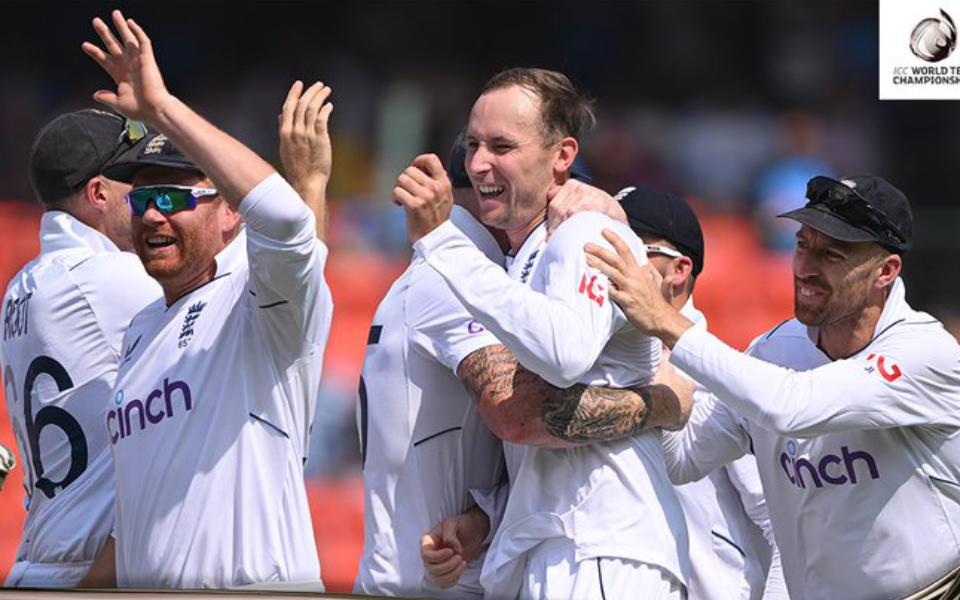
Hyderabad, Jan 28: The pushback started by incandescent Ollie Pope was given its perfect conclusion by debutant left-arm spinner Tom Hartley whose soul-ripping spell fashioned England's memorable 28-run win over India on the fourth day of the first Test here on Sunday.
India's chase of 231 went horribly south once Hartley (7/62) spun into India's top-order, igniting a rot that saw India getting bowled out for 202 in the final over of the day. England now lead the five-match series 1-0.
This is India's fourth defeat in home Tests since 2013 and India's approach during chase was in complete contrast to how Pope tackled Ravichandran Ashwin and Ravindra Jadeja with a lot of intent. The spin twins have never been lethal on surfaces which aren't exactly dustbowl and England's second innings batting show won't do their reputation any good.
Earlier, Pope's brilliant 196 took England to 420 in their second innings, and gave them a substantial lead and genuine hopes of stretching India. And England did way more than stretching the hosts.
In fact, this defeat will leave a deep burn in Indian hearts as they stumbled against a 25-year-old rookie Lancastrian with a combined experience of three international matches on a pitch that did not hide any demons.
There was appreciable turn and variable bounce but nothing this set of Indian batters could not have negated. Three dismissals showcased the travails of Indians on the day Shubman Gill (0), Yashasvi Jaiswal (15) and Shreyas Iyer (13) fell to their own ineptitudes.
Jaiswal made a half-hearted charge against Hartley and the spinner pulled back his length after spotting movement of the batter. All the left-hander could manage was to spoon a catch to Pope at silly point.
Gill followed the suit two balls later in the same over. He made a hard-handed, indecisive push at the ball after Hartley tossed one around the off-stump. Pope did the rest at silly point.
Jack Leach, who is still not 100 per cent after taking a blow on his knee while fielding, dealt another telling blow to India's aspirations.
He produced a rather regulation ball that went across the right-hander from around the stumps, and Shreyas just poked the ball to Joe Root at first slip. It was just a nothing dismissal that encapsulated India's turmoil on the day.
India could have felt a greater pinch with Iyer's dismissal as he is one of the better-equipped batter in this batting unit to negate spin.
In-form KL Rahul (22) looked all set for another impact innings, but Root pinned him on the back-foot as the batter attempted a whip on the on-side.
Rahul went upstairs after the on-field umpire gave him leg before, but the TV umpire too concurred with his distant colleague's decision.
Ravindra Jadeja challenged Ben Stokes for a quick single and the England captain found his target with a direct throw, catching the batter well short of the crease.
But the sight of him walking back with a clutched hamstring might just offer a tad concern to the Indian camp.
Skipper Rohit Sharma looked in good space but Hartley's guile had him stationed in front of the wicket when the ball thudded on to his pads.
After losing three wickets in the post-lunch session, India slipped further in the final passage losing wickets in a cluster before Ravichandran Ashwin (28) and KS Bharat (28) stemmed the slide for a while with a 58-run alliance for the eighth wicket.
Their assiduousness was a marker for some of their top-order teammates but it remained just that. A gloomy pointer.
But for getting into a position from where they can dictate the course of the match, England, resuming from 321 for six, should be indebted to Pope, who ballooned his overnight 148 to 196.
England's lead was a good 126 when play ended on Saturday, but they needed more to give a fight to India. Pope did that in the company of equally resolute Rehan Ahmed (28) and Hartley (34).
With Ahmed, Pope added 64 runs for the seventh wicket and then made 80 off 106 balls with Hartley on his side for the eighth wicket.
However, Bumrah brought India the first breakthrough of the morning session when he had Ahmed caught behind.
Ashwin's shooter ended the burgeoning Pope-Hartley alliance as the off-spinner sneaked a low-flying ball past the latter's bat to bowl him.
Pope was the last man to depart. Fittingly, Bumrah, the best of Indian bowlers, ended his stay with a slower ball that dishevelled the stumps as Pope tried a reverse scoop.
However, by then, he had also reversed the course of the Test match by then. Irrevocably.
Let the Truth be known. If you read VB and like VB, please be a VB Supporter and Help us deliver the Truth to one and all.
Allahabad HC orders probe into 'reinstatement' of teacher in UP's Barabanki
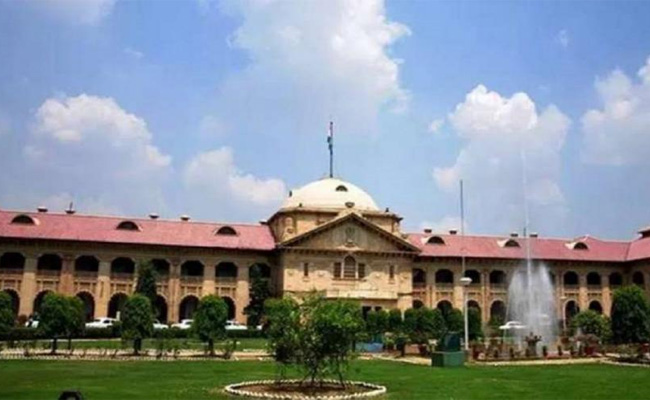
Lucknow (PTI): The Lucknow Bench of the Allahabad High Court on Friday ordered a probe by the special task force (STF) into alleged irregularities in the rejoining of a teacher at City Intermediate College in Barabanki, observing that the reinstatement appeared to be prima facie illegal.
The court also directed the recovery of the salary paid to the teacher during the disputed period.
A bench of Justice Rajeev Singh passed the order on a petition filed by the college management committee. The court expressed doubts over the roles of the District Inspector of Schools (DIOS), Barabanki, the college principal and the teacher concerned and hence, directed a detailed inquiry into the matter.
Taking note of alleged manipulation of records and misleading submissions, the court ordered the immediate transfer of the Barabanki DIOS to ensure a fair probe. It also directed the initiation of disciplinary proceedings against the then joint director of education of the Ayodhya division.
In its order, the court found that the teacher, Abhay Kumar, was initially appointed as an assistant teacher in 2018 but joined an Eklavya Model Residential School in Chhattisgarh as a lecturer in June 2024 without obtaining permission from the management. His subsequent request to retain the lien was rejected.
Despite this, he was allowed to rejoin the Barabanki College in September 2025 on the directions of the joint director of education and the DIOS, and was even paid the salary for October 2025. The court termed the rejoining "wholly illegal" and lacking any legal basis.
The bench also expressed concern over lapses in communication within the education department and directed the Uttar Pradesh chief secretary to ensure that official orders are communicated through email and WhatsApp as well, to prevent disputes.
The matter is next listed for hearing on May 28 when a compliance report is sought.