Avinash Sable becomes first Indian man to qualify for 3000m steeplechase final at Olympics
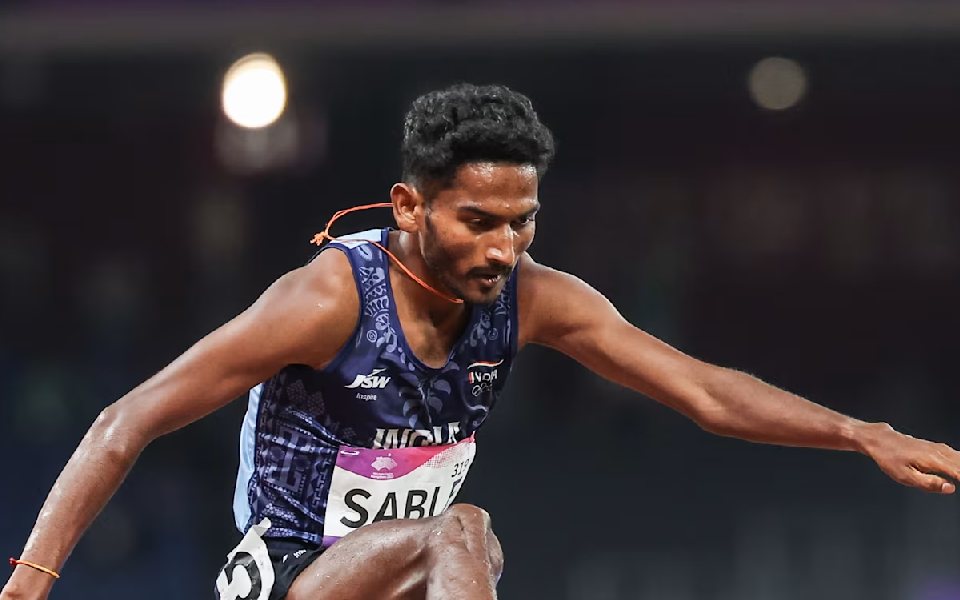
Paris, Aug 5: Avinash Sable became the first Indian man to qualify for the 3000m steeplechase final after finishing fifth in his heat but quartermiler Kiran Pahal failed to book an automatic semi-final berth in women's 400m following a seventh place finish in her heat at the Paris Olympics on Monday.
Sable, easily the most decorated track and field athlete after Neeraj Chopra in the current contingent, timed 8:15.43 minutes to finish fifth in the second heat to make it to the final round.
As per rule, the top five athletes in each of the three heats qualify for the final.
However, Sable's heat timing was well below his best effort of 8:09.91 minutes, which he had clocked at the Paris Diamond League last month.
Sable's heat was won by Morocco's Mohamed Tindouft with a timing of 8:10.62 minutes, while Samuel Firewu of Ethiopia with 8:11.61 minutes came second. Abraham Kibiwot of Kenya (8:12.02 minutes) was third, while Ryuji Miura of Japan came fourth. He clocked 8:12.41 minutes.
In fact, if one takes into account the timings of all the 15 finalists, Sable is fifth as the second heat qualifiers had the best timing. The Indian led in the first two laps but after that slowed down a bit running a more technical race with an eye to qualify for the final round. Even when he slowed down, he never was out of the leading pack which eventually remained the same.
Earlier, Kiran, who turned 24 on Monday, clocked 52.51 seconds which was well below her season's and personal best of 50.92 seconds.
World champion Marileidy Paulino of Dominica won the heat with a time of 49.42, followed by Aaliyah Butler (50.52) of USA and Susanne Gogl-Walli (50.67) of Austria.
Top three in each of the six heats advanced to semifinal. All the others -- except for DNS (Did Not Start), DNF (Did Not Finish) and DQ (Disqualified)-- moved to the repechage round to be held on Tuesday.
Pahal had made direct qualification to Paris Olympics after clocking her personal best of 50.92 seconds in the National Inter-State Championships in June,
A repechage round was introduced in Paris Olympics to all individual track events from 200m to 1500m, including the hurdles events. The new format replaced the earlier one where some athletes advanced to the semifinals through fastest times in addition to the top placings in the first round heats.
Instead, only the athletes in the top placings will get automatic qualification and all the remaining will get a second chance to qualify for the semi-finals by participating in repechage heats.
Let the Truth be known. If you read VB and like VB, please be a VB Supporter and Help us deliver the Truth to one and all.
Ordinance issued to increase number of Supreme Court judges from 34 to 38
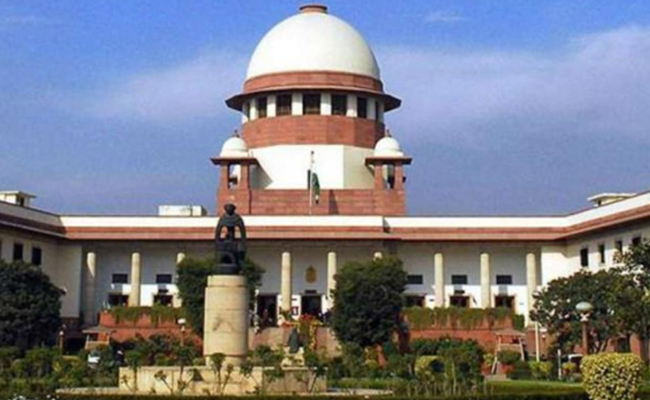
New Delhi (PTI): The government has promulgated an ordinance to increase the strength of the Supreme Court from the present 34 judges to 38, including the Chief Justice of India.
The law ministry notified the ordinance on Saturday, which amended the Supreme Court (Number of Judges) Act, 1956, to increase the sanctioned strength of the top court.
So far, the sanctioned strength of the top court was 34, including the Chief Justice of India (CJI). Now, the number of judges has been increased by four, taking the sanctioned strength to 38.
The top court will now have 37 judges, other than the CJI.
With the apex court having two vacancies at present, and the ordinance coming into force immediately, the Supreme Court Collegium will now have to recommend six names for appointment as judges in the top court.
A bill will be brought in the Monsoon Session of Parliament to convert the ordinance – an executive order – into a law passed by Parliament.
The Union Cabinet had cleared a draft bill on May 5 to increase the number of apex court judges.
The strength of the Supreme Court was last increased from 30 to 33 (excluding the CJI) in 2019.
The Supreme Court (Number of Judges) Act, as originally enacted in 1956, put the maximum number of judges (excluding the CJI) at 10.
This number was increased to 13 by the Supreme Court (Number of Judges), Amendment Act, 1960, and to 17 by another amendment to the law.
The Supreme Court (Number of Judges) Amendment Act, 1986, augmented the strength of judges from 17 to 25, excluding the CJI.
A fresh amendment in 2009 further increased the strength from 25 to 30.
Article 124(3) of the Constitution lists the qualifications required to become a Supreme Court judge.
An Indian citizen who has either served as a high court judge for at least five years, or as an advocate for 10 years, or is a distinguished jurist, can be appointed to the top court.
The strength of the Supreme Court is increased based on the recommendations of the CJI, who writes to the Union law minister. After consulting the finance ministry, the Department of Justice under the law ministry moves the Cabinet with a draft bill.