Antim Panghal likely to get three-year ban for indiscipline at Olympics: source

Paris (PTI): Wrestler Antim Panghal, who caused embarrassment to the Indian Olympic contingent by trying to facilitate her sister's entry into the athletes village through her accreditation card, is likely to be banned for three years by the IOA, a source told PTI on Thursday.
Panghal had crashed out of the Olympics after losing her opening bout in the women's 53kg category on Wednesday.
"IOA (Indian Olympic Association) officials discussed the issue that caused embarrassment to all. It is considering a three-year ban on everyone involved, including the coaches," a source in the Indian contingent told PTI.
"First, we need to ensure that she reaches home. The decision will be announced only after she reaches India," the source added.
Panghal is set to take a flight to Delhi this evening.
The IOA decided to send her and her support staff back after the disciplinary breach was brought to its notice by the French authorities.
The body, however, asserted that the ban has not yet been imposed.
"A ban has not been imposed as yet," said an IOA official.
Speaking with PTI before her flight back to India, the 19-year-old said, "I did not intend to do anything wrong. I was not well and there was confusion. All of this happened due to confusion."
Later, in a video, she admitted that she had to go to the police station but only for the verification of her accreditation card.
"It was not a good day for me. I lost. A lot is being spread about me, that's not true. I had high fever, and had taken permission from my coach to go to the hotel with my sister.
"I needed some some of my belongings which were in the Games Village. My sister took my card and asked the officials there if she could take my belongings. They took her to the Police Station for accreditation verification."
She also denied that her coaches were drunk and got into an altercation with a taxi driver over fare.
"My coaches had stayed back at the venue and when they wanted to come back, we booked a cab for them. My coaches did not have enough cash and due to the language issues, led to an argument with the taxi driver.
"Since they came to collect some Euros from the hotel room, it took some time and led to the situation. I already have had a bad time, please don't spread rumours. Please support me," she said.
Let the Truth be known. If you read VB and like VB, please be a VB Supporter and Help us deliver the Truth to one and all.
Ordinance issued to increase number of Supreme Court judges from 34 to 38
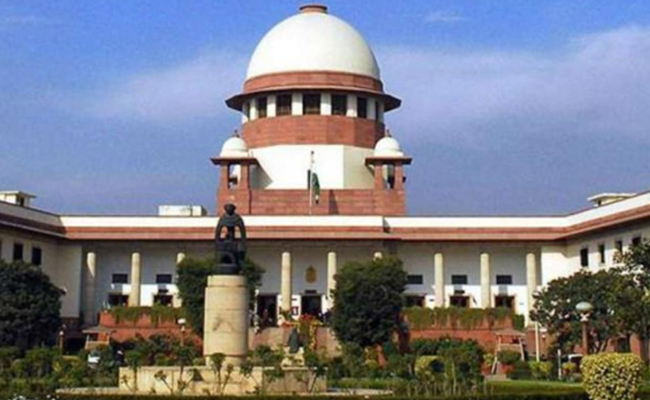
New Delhi (PTI): The government has promulgated an ordinance to increase the strength of the Supreme Court from the present 34 judges to 38, including the Chief Justice of India.
The law ministry notified the ordinance on Saturday, which amended the Supreme Court (Number of Judges) Act, 1956, to increase the sanctioned strength of the top court.
So far, the sanctioned strength of the top court was 34, including the Chief Justice of India (CJI). Now, the number of judges has been increased by four, taking the sanctioned strength to 38.
The top court will now have 37 judges, other than the CJI.
With the apex court having two vacancies at present, and the ordinance coming into force immediately, the Supreme Court Collegium will now have to recommend six names for appointment as judges in the top court.
A bill will be brought in the Monsoon Session of Parliament to convert the ordinance – an executive order – into a law passed by Parliament.
The Union Cabinet had cleared a draft bill on May 5 to increase the number of apex court judges.
The strength of the Supreme Court was last increased from 30 to 33 (excluding the CJI) in 2019.
The Supreme Court (Number of Judges) Act, as originally enacted in 1956, put the maximum number of judges (excluding the CJI) at 10.
This number was increased to 13 by the Supreme Court (Number of Judges), Amendment Act, 1960, and to 17 by another amendment to the law.
The Supreme Court (Number of Judges) Amendment Act, 1986, augmented the strength of judges from 17 to 25, excluding the CJI.
A fresh amendment in 2009 further increased the strength from 25 to 30.
Article 124(3) of the Constitution lists the qualifications required to become a Supreme Court judge.
An Indian citizen who has either served as a high court judge for at least five years, or as an advocate for 10 years, or is a distinguished jurist, can be appointed to the top court.
The strength of the Supreme Court is increased based on the recommendations of the CJI, who writes to the Union law minister. After consulting the finance ministry, the Department of Justice under the law ministry moves the Cabinet with a draft bill.