Ash Barty wins Australian Open, ends 44-year drought of Aussie champions
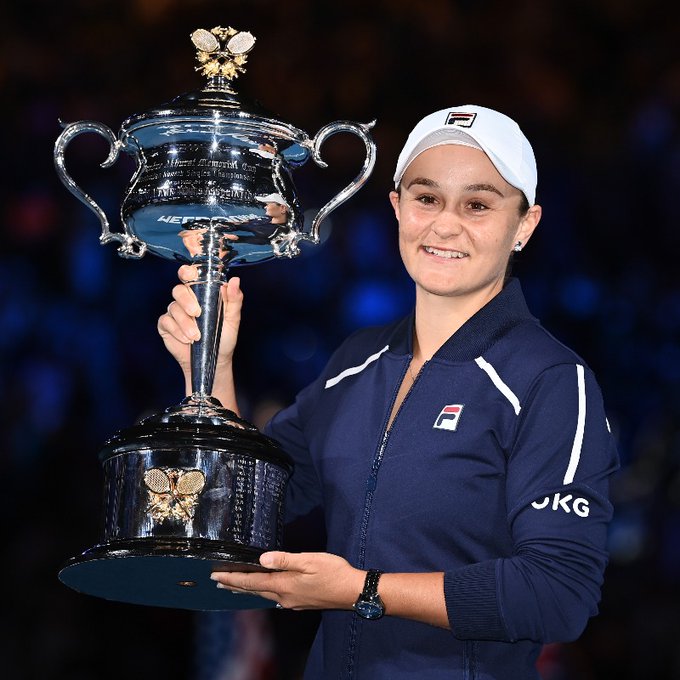
Melbourne, Jan 29: Ash Barty recovered from 5-1 down in the second set to win the Australian Open final 6-3, 7-6 (2) over Danielle Collins on Saturday, ending a 44-year drought for Australian women at their home Grand Slam tournament.
Barty was the first Australian woman into the singles final here since since Wendy Turnbull in 1980 and is now the first Australian champion since Chris O'Neil in 1978.
The top-ranked Barty now has major titles on three surfaces, adding the hard court at Melbourne Park to her win on grass at Wimbledon last year and on clay at the French Open in 2019.
This is just a dream come true for me, the 25-year-old Barty said.
I'm just so proud to be an Aussie.
Evonne Goolagong Cawley, a tennis icon with seven Grand Slam titles and a trailblazer for Indigenous athletes from Australia, was a surprise guest to present the champion's trophy to Barty, who is part of a new generation of Indigenous stars.
O'Neil was involved in the night, too, after carrying the trophy into the stadium for the pre-match ceremony.
I'm an incredibly fortunate and lucky girl to have so much love in my corner," Barty said, thanking her coach and support team, her family, the organizers and the crowd.
Barty hadn't dropped a set and had only conceded one service game through six matches, against American Amanda Anisimova in the fourth round.
The 28-year-old Collins was the fourth American to take on Barty in four consecutive rounds. Barty had beaten Anisimova, Jessica Pegula and 2017 U.S. Open runner-up Madison Keys in straight sets.
Collins had spent more than four hours longer on court than Barty in her previous six matches, having to come back from a set and break down to beat Danish teenager Clara Tauson in the third round and rally from a set down to beat Elise Mertens in the fourth.
Barty took the first set after saving a break point in the fifth game and then breaking in the next.
Not to be outdone, Collins hit back quickly with her high-intensity game, breaking Barty's serve in the second and sixth games to take a 5-1 lead.
Collins twice served for the set and twice was within two points of leveling the match and taking her first Grand Slam final to a deciding set.
But Barty launched a comeback, picking up the energy from an almost full house in Rod Laver Arena, despite government restrictions on ticket sales in the COVID-19 pandemic.
She won five of the next six games to force a tiebreaker and then took control by racing to a 4-0 lead.
As an Aussie, the most important part of this tournament is being able to share it with so many people, Barty said.
This crowd is one of the most fun I've ever played in front of. You relaxed me, forced me to play my best tennis.
Barty congratulated Collins and told her she absolutely belonged in the Top 10, adding: "I know you'll be fighting for many of these in future."
The run to the final was the best at a Grand Slam so far for Collins, who reached the semifinals in Australia in 2019 and the quarterfinals at Roland Garros.
She paid tribute to her longtime mentor Marty Schneider and her boyfriend Joe Vollen, who were in the stands for support.
Thank you for believing in me, she said, crying.
I haven't had a ton of people believing me in my career. To support me every step of the way means everything to me.
Let the Truth be known. If you read VB and like VB, please be a VB Supporter and Help us deliver the Truth to one and all.
Schools in Mizoram's nine districts closed due to rain
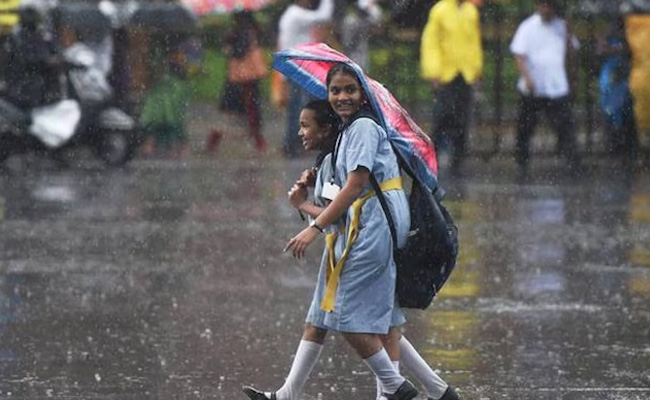
Aizawl (PTI): All schools in nine districts of Mizoram remained closed on Tuesday due to heavy rain that has been lashing the northeastern state since the day before, an official said.
School Education Director Angela Zothanpuii said administrations of nine districts, including Aizawl, Kolasib, Lunglei and Mamit, announced school closure on Tuesday as a precautionary measure for students' safety.
However, schools in the southern districts of Hnahthial and Lawngtlai remained open following a slight improvement in weather conditions there, she said.
According to the India Meteorological Department, Serchhip recorded the highest rainfall at 70.5 mm in a 24-hour period, followed by Hnahthial 55 mm, Siaha 37.5 mm, and Aizawl 36 mm.
Khawzawl district reported 30 mm of rainfall, Mamit 25.9 mm, Kolasib 25 mm, Lawngtlai 17.5 mm, and Lunglei 2.2 mm during the same period, it said.
The weather department has forecast light to moderate rainfall with thunderstorm and lightning in Mizoram on Tuesday.