BCCI recommends Bumrah, Shami, Jadeja and Poonam Yadav for Arjuna award
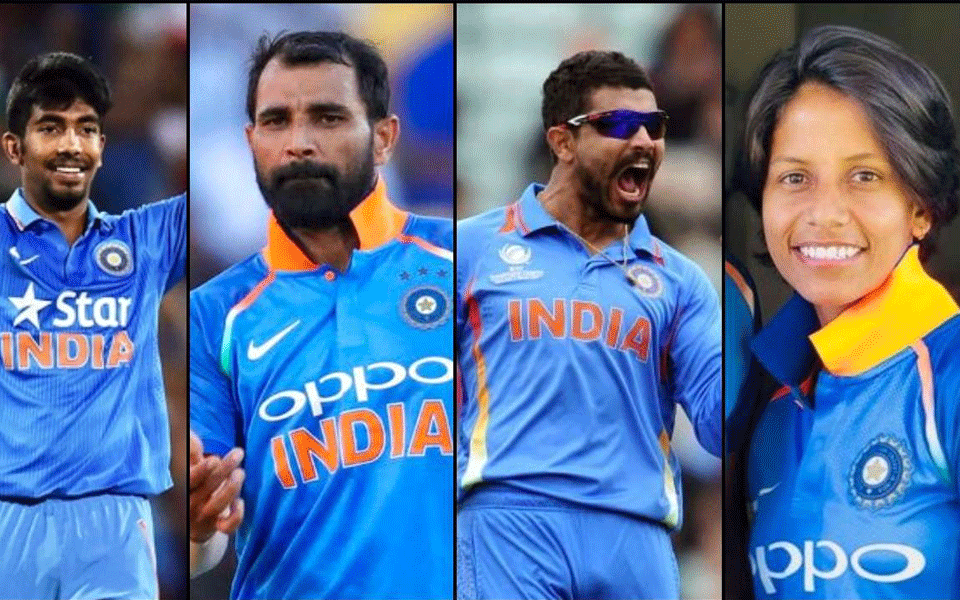
New Delhi, Apr 27: The BCCI on Saturday recommended India pacers Mohammad Shami and Jasprit Bumrah, all-rounder Ravindra Jadeja and women's team spinner Poonam Yadav for the Arjuna award.
The decision was taken during the Supreme Court-appointed CoA meeting in the capital.
The 25-year-old Bumrah, who is currently playing in the IPL for Mumbai Indians, is a regular across all three formats for India and have been recommended for the coveted award after impressive Test tour of South Africa, England and Australia. He will be spearheading India's campaign in the upcoming World Cup in the UK.
Bumrah's bowling partner Shami has been a crucial cog in the Indian bowling set up while all-rounder Jadeja has also made a comeback in the limited overs team and has been named in the 15-member squad for the World Cup in England and Wales.
India opener Shikhar Dhawan, who was recommended last year by the BCCI but was not short-listed by the awards panel, doesn't feature among the board's choice this year.
The 27-year-old leg-spinner, Poonam, is the fourth name to be nominated. She has picked up 63 wickets from 41 ODI's and 74 wickets from 54 T20 games.
Saba Karim, BCCI GM - Cricket Operations, proposed the names of all four players to the COA.
India captain Virat Kohli was bestowed with the prestigious Khel Ratna, India's highest sporting honour last year while women's team opener Smriti Mandhana got the Arjuna.
For this year, leggie Yadav was BCCI's only choice among the female players.
"There was no other deserving candidate to be honest. Most of the senior players have already got the award while it is still early days for the youngsters even though they have done well at the global stage," a BCCI official told.
Let the Truth be known. If you read VB and like VB, please be a VB Supporter and Help us deliver the Truth to one and all.
Bhojshala complex registered as 'mosque' in old revenue records: Muslim side to MP HC
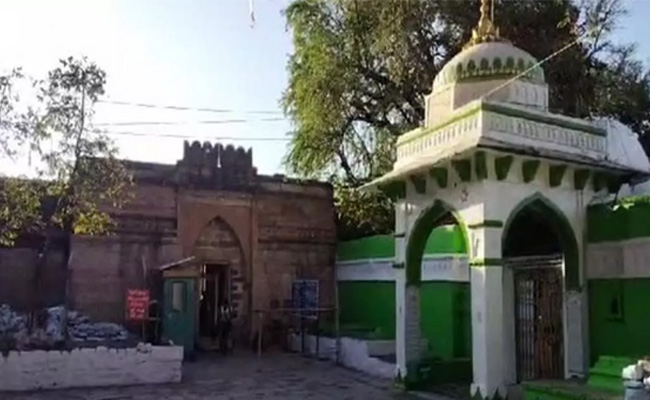
Indore (PTI): The disputed Bhojshala Temple-Kamal Maula Mosque complex has historically been registered as a 'mosque' in revenue records and available sources don't clearly mention any Saraswati temple established by then-king Raja Bhoj, the Muslim side has told the Madhya Pradesh High Court.
The Hindu community considers Bhojshala a temple dedicated to Goddess Saraswati, while the Muslim side calls the 11th-century monument Kamal Maula Mosque. The disputed complex located in Dhar district is protected by the Archaeological Survey of India (ASI).
During the hearing before the HC's Indore bench of Justices Vijay Kumar Shukla and Justice Alok Awasthi on Wednesday, Qazi Moinuddin questioned two PILs filed as intervenors in the Bhojshala case by an organisation named Hindu Front for Justice, one Kuldeep Tiwari and another individual.
Moinuddin claims to be a descendant of Sufi saint Maulana Kamaluddin Chishti and the 'Sajjadanashin' (spiritual head, guru, or successor of a Sufi shrine, khanqah, or religious site).
The PILs state that Bhojshala is actually a Saraswati temple and only Hindus should be granted the right to worship at the disputed complex.
Moinuddin's lawyer, Noor Ahmed Sheikh, claimed in the court that his client's ancestors, who are descendants of Maulana Kamaluddin Chishti, have historically held titles to the complex, and the site was also recorded as a "mosque" in government revenue records.
He contended that those associated with the management of the Kamal Maula Mosque, located within the complex, have been in "continuous and peaceful occupation" of the site for a long time.
Citing Muslim law, Sheikh argued that in the case of religious property, particularly a mosque or its related properties, officials such as the Sajjadanashin and Mutawalli (person entrusted with management, maintenance, and administration of a Waqf), and their descendants, not only have the right to intervene, but also have the right to manage and use such a structure.
Citing provisions of the Ancient Monuments Preservation Act 1904, the Muslim side's lawyer said the term "in-charge of the property" is used in this law, which makes it clear that the person or party who has been in charge of a property for a long time has rights over it.
During the hearing, Touseef Warsi, the lawyer representing the Maulana Kamaluddin Welfare Society of Dhar, claimed that Hindu parties in both PILs had made "misleading representations" regarding historical facts before the high court.
He further claimed that available historical sources do not clearly mention the existence of a Saraswati temple established by Raja Bhoj, the legendary king of the Parmar dynasty who ruled Dhar from 1010 to 1055.
The ASI, a central government agency, has adopted three different positions in the lawsuits filed regarding the Bhojshala dispute, changing its answers from time to time, and this situation raises serious questions about judicial scrutiny of the complex, Warsi submitted.
He raised objections regarding the ASI's process of scientific survey of the Bhojshala complex, carried out on the HC order in 2024, and the method of videography and requested the court to examine these objections.
The hearing in the Bhojshala case will continue on Thursday.
The HC has been regularly hearing four petitions and one writ appeal since April 6, contesting the religious nature of the monument.