Boxer Nishant Dev's Olympic debut ends in heartbreak with quarterfinal loss
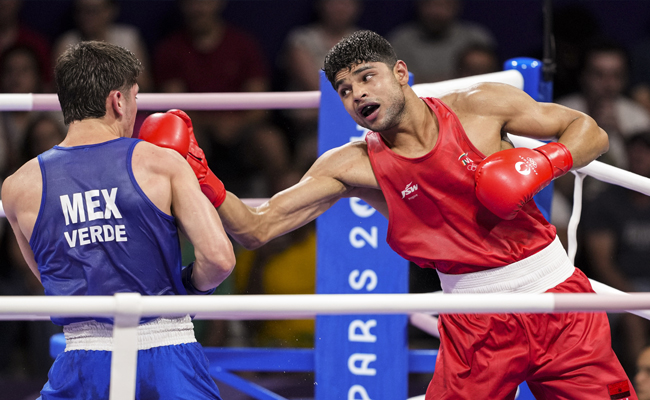
Paris (PTI): Nishant Dev's maiden Olympic campaign ended in heartbreak after a devastating split verdict defeat to Mexico's Marco Verde Alvarez in the men's 71kg quarterfinal here on Saturday.
Leading after the first round, the 23-year-old world championship bronze medallist Indian lost 1-4 to his second seed Mexican opponent in the quarterfinal at the North Paris Arena.
Nishant had defeated Alvarez in the 2021 World Championships.
Nishant was off to a flyer as Alvarez struggled to match his pace. He used his straight jabs to great effect, landing them square on the Mexican's face as well as the body to tire his opponent.
Alvarez was trailing for the most part of the round but managed to connect a lethal right hook on Nishant's face, that forced the referee to give the Indian a standing count, followed by a left in the dying minutes. But the Indian's dominant display ensured he had the bragging rights.
Nishant continued to unleash a range of punches, including a combination of hooks, while Alvarez too upped his game, connecting some vital blows. However, Nishant looked the stronger of the two as he picked the Mexican's shots.
But the judges favoured the Mexican 3-2 as Alvarez and Nishant entered the final three minutes by the narrowest of margins, leading on one card.
Alvarez landed a combination of punches to start the final round on an aggressive note. The Mexican showed more urgency as he landed an uppercut. The Indian, on the other hand, looked completely spent and while he tried to throw punches he was slow.
Alvarez acknowledged that the bout was a tough one.
"It was a tough bout, played with heart and mind. I hit on his body to open up for upper cuts. I had lost to him in 2021 world Championships. I have a lot of respect for him," Alvarez said.
"He is very technically sound boxer. My coaches asked me to play smart after I lost the first round."
Nishant is the fifth Indian boxer to exit the Olympic Games. Tokyo Olympics bronze winner Lovlina Borgohain is the only Indian boxer still in contention.
Let the Truth be known. If you read VB and like VB, please be a VB Supporter and Help us deliver the Truth to one and all.
Ordinance issued to increase number of Supreme Court judges from 34 to 38
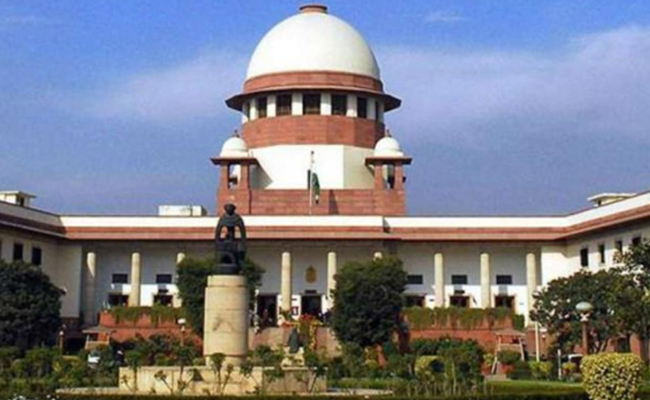
New Delhi (PTI): The government has promulgated an ordinance to increase the strength of the Supreme Court from the present 34 judges to 38, including the Chief Justice of India.
The law ministry notified the ordinance on Saturday, which amended the Supreme Court (Number of Judges) Act, 1956, to increase the sanctioned strength of the top court.
So far, the sanctioned strength of the top court was 34, including the Chief Justice of India (CJI). Now, the number of judges has been increased by four, taking the sanctioned strength to 38.
The top court will now have 37 judges, other than the CJI.
With the apex court having two vacancies at present, and the ordinance coming into force immediately, the Supreme Court Collegium will now have to recommend six names for appointment as judges in the top court.
A bill will be brought in the Monsoon Session of Parliament to convert the ordinance – an executive order – into a law passed by Parliament.
The Union Cabinet had cleared a draft bill on May 5 to increase the number of apex court judges.
The strength of the Supreme Court was last increased from 30 to 33 (excluding the CJI) in 2019.
The Supreme Court (Number of Judges) Act, as originally enacted in 1956, put the maximum number of judges (excluding the CJI) at 10.
This number was increased to 13 by the Supreme Court (Number of Judges), Amendment Act, 1960, and to 17 by another amendment to the law.
The Supreme Court (Number of Judges) Amendment Act, 1986, augmented the strength of judges from 17 to 25, excluding the CJI.
A fresh amendment in 2009 further increased the strength from 25 to 30.
Article 124(3) of the Constitution lists the qualifications required to become a Supreme Court judge.
An Indian citizen who has either served as a high court judge for at least five years, or as an advocate for 10 years, or is a distinguished jurist, can be appointed to the top court.
The strength of the Supreme Court is increased based on the recommendations of the CJI, who writes to the Union law minister. After consulting the finance ministry, the Department of Justice under the law ministry moves the Cabinet with a draft bill.