Cameron Green reveals he is suffering from irreversible chronic kidney disease

Perth, Dec 14: Australia all-rounder Cameron Green has revealed he was born with an irreversible chronic kidney disease, which at one stage put his life expectancy at 12 years.
The lanky all-rounder, who is a vital part of the Australia cricket team, said that the disease has no symptoms and is irreversible.
"My parents got told when I was born that I had chronic kidney disease, basically, there's no symptoms, it was just picked up through ultra sounds," Green told Channel 7.
"Chronic kidney disease is basically a progressive disease of your kidney's health function. Unfortunately, mine don't filter the blood as well as other kidneys."
The 24-year-old revealed that his kidney function is currently at about 60 per cent, which is stage two, with stage five needing transplant or dialysis.
"Fortunately, I'm stage two, but if you don't look after them enough, it easily goes back down. Kidneys can't get better. It's irreversible. So any way you can find to slow the progression, you basically try and do."
The condition was detected when Green's mother Tarcy had her 19-week pregnancy scan.
"At the time it was unchartered territory as such, the prognosis wasn't great. There were life expectancy issues that he might not expect to live past 12 years of age," said Green's father, Gary.
The fast-bowling all-rounder, who has featured in 24 Tests, 23 ODIs and eight T20Is since making his Australia debut in 2020, said the disease also affects his cricketing career as he is more susceptible to cramps.
"I have got to keep my salt and my protein quite low, which isn't ideal as a cricketer but around games I can pick that protein intake back up because I spend so much of it out on the ground.
"It's just about finding the best ways to look after me."
He recalled an incident during an ODI against New Zealand in Cairns last year, where he started cramping due to the disease while batting.
"There was definitely one time up in Cairns, playing Australia versus New Zealand, I think it was pretty well documented that I had a pretty long day of bowling and a pretty long bat as well, and then had a cramping episode.
"It took me a long time to realise that it was probably my kidney function that was affecting my cramping," Green said.
A shy person, Green said he had to eventually tell his teammates about the condition.
"I have told a few guys in the cricket world. The coaching staff are all over it.
"I think all the guys in the Aussie cricket team, I've told. After a few cramping episodes, I probably had to come off and tell them that it's probably more than not being professional enough because I knew in the background I was eating and drinking as much as I could to give myself the best chance," Green said.
Cameron Green has chronic kidney disease.
— 7Cricket (@7Cricket) December 14, 2023
There are five stages to it, with the fifth stage requiring a transplant or dialysis.
This is how Green - currently at stage two - manages the condition every day... pic.twitter.com/ikbIntapdy
Let the Truth be known. If you read VB and like VB, please be a VB Supporter and Help us deliver the Truth to one and all.
Noida International Airport appoints Nitu Samra as interim CEO
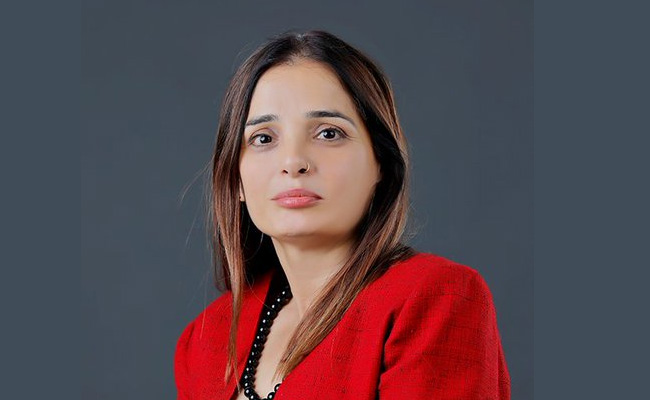
New Delhi (PTI): Noida International Airport on Friday announced the appointment of its Chief Financial Officer Nitu Samra as the interim Chief Executive Officer after authorities denied permission for foreign national Christoph Schnellmann to be at the helm.
"This change follows directions issued by the Bureau of Civil Aviation Security (BCAS) that the Chief Executive Officer of an airport in India is required to be an Indian national," NIA said in a statement.
Samra will replace Schnellmann, a Swiss national who has led Noida International Airport (NIA) as the CEO since August 2020.
The regulatory issue related to the requirement of having an Indian national as CEO has been delaying the start of commercial operations of the airport, which was inaugurated by Prime Minister Narendra Modi on March 28.
Schnellmann will join the airport's Board of Directors as Executive Vice Chairman. In this role, he will continue to support the project and its transition to operations, the statement said.
With immediate effect, NIA said Samra has been appointed as the CEO on an interim basis until the Board of Directors can conclude a formal selection process.
Samra has been serving as the CFO since October 2021 and was closely involved in the airport’s development journey, overseeing financial stewardship, governance, and strategic planning during a key phase of the project, the statement added.
NIA will be operated by Yamuna International Airport Pvt Ltd (YIAPL), a subsidiary of Zurich Airport International AG, under a public-private partnership.
Originally scheduled to commence passenger services in September 2024, NIA is being developed in four phases, along with a dedicated cargo terminal. It received an aerodrome license from the aviation regulator Directorate General of Civil Aviation (DGCA) in March.
YIAPL Chairman Daniel Bircher said that since the inauguration of the airport by the Prime Minister, the goal was to enable the start of operations as early as possible.
"This management change brings the airport into compliance with Bureau of Civil Aviation Security requirements while maintaining continuity in the airport’s leadership team. The newly structured team will support a smooth transition into operations, guided by clear and transparent governance and a strong corporate culture," he said.
On March 28, Civil Aviation Minister K Rammohan Naidu said commercial flight operations from the airport would start in the next 45 to 60 days.
Among the largest greenfield airport projects in the country, NIA will initially have a capacity to handle 12 million passengers per annum.
Once fully developed, the airport will have a total passenger handling capacity of 70 million.
The first phase of NIA has been developed at an investment of around Rs 11,200 crore. 'DXN' is the code for the airport.
The airport features a 3,900-metre runway capable of handling wide-body aircraft, along with modern navigation systems, including Instrument Landing System (ILS) and advanced airfield lighting.
The peak handling capacity in the first phase will be 30 flights per hour.
In the first phase, there will be 28 aircraft stands, and the projected cargo capacity is around 2.5 lakh tonnes.
Terminal 1 of the airport is spread across 1,37,985 square metres with 48 check-in counters. Over 40 acres of land have been earmarked for developing MRO (Maintenance, Repair and Overhaul) facilities at the airport.