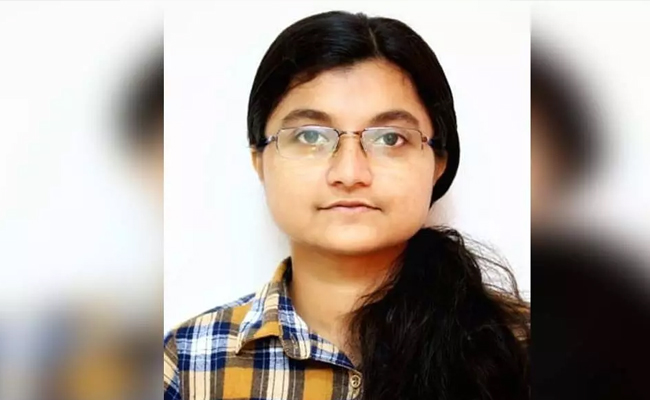
Cricketer Simi Singh hospitalised with Acute Liver Failure, awaiting Liver transplant
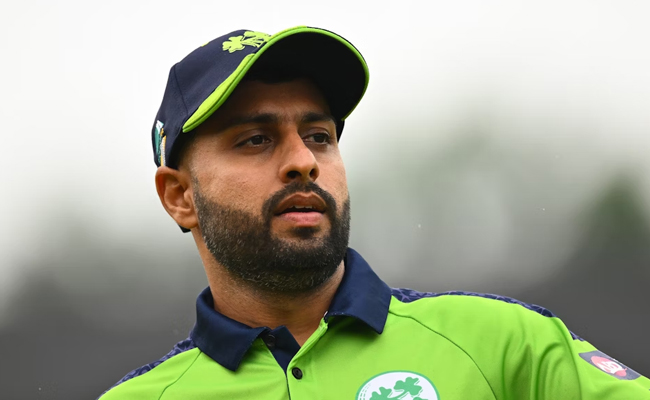
Gurugram: Indian-born all-rounder Simi Singh, who has played 35 ODIs and 53 T20Is for Ireland, is currently battling acute liver failure in the intensive care unit (ICU) of a hospital in Gurugram. The cricketer is awaiting a liver transplant, according to a report by The Times of India.
Simi Singh, originally from Mohali, had an early cricketing career representing Punjab in U-14 and U-17 divisions but did not make it to the U-19 squad. He moved to Ireland in 2006 to study hotel management and became a professional cricketer with Dublin's Malahide Cricket Club. He later went on to become one of Ireland's leading cricketers, with 39 ODI and 44 T20I wickets. In 2021, he also scored an ODI century against South Africa.
Parvinder Singh, Simi's father-in-law, revealed the details of his deteriorating health. "Around five-six months ago, Simi developed an unusual fever while he was in Dublin, Ireland. Despite several check-ups, doctors couldn't find the underlying cause and refrained from starting any treatment," Parvinder told The Times of India.
As Simi's condition worsened, the family decided to bring him to India for better medical attention. "In late June, he flew to Mohali and began treatment at PGI, Chandigarh, in early July, where doctors initially suspected tuberculosis. He was put on a TB treatment regimen, but later tests showed he was not TB positive," Parvinder said.
Despite the treatment, Simi's fever persisted. The family sought a second opinion from a private hospital in Mohali, where doctors confirmed he did not have tuberculosis but advised him to complete the six-week medication course. Simi was also given steroids, which led to further complications, including severe jaundice.
In the last week of August, Simi was readmitted to PGI Chandigarh, where doctors diagnosed him with severe liver failure. Fearing that he might slip into a coma, which would prevent the possibility of a liver transplant, the doctors recommended transferring him to Medanta Hospital in Gurugram. The family moved him there on September 3.
According to the report, Simi is now awaiting a liver transplant, with his wife, Agamdeep Kaur, having agreed to donate a portion of her liver.
Simi Singh's family and the cricketing community are hopeful for a successful transplant and recovery as he continues to receive medical care.
Let the Truth be known. If you read VB and like VB, please be a VB Supporter and Help us deliver the Truth to one and all.
345 Indian fishermen stranded in Iran return home via Armenia
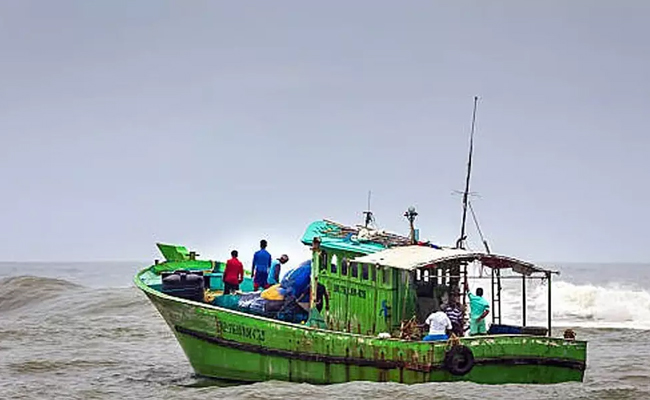
New Delhi (PTI): A group of 345 Indian fishermen, who were stranded in Iran amid escalating regional tensions, returned to India via Armenia on Saturday, officials said.
External Affairs Minister S Jaishankar thanked his Armenian counterpart Ararat Mirzoyan for assistance in return of the Indian nationals.
The Indian nationals arrived in Chennai this evening, the officials cited above said.
The circumstances that led to them being stranded in Iran were not immediately known.
"Thank FM @AraratMirzoyan and the Government of Armenia for facilitating the evacuation of Indian fishermen today from Iran, through Armenia to India," Jaishankar said on social media.
Over 1,500 Indian nationals have left Iran through land border crossings in Armenia and Azerbaijan since the start of the West Asia conflict over a month ago.
"A group of Indian fishermen, stranded in Iran, are returning home via Armenia today; their flight is expected to reach India this evening," a government statement said.
It said the Ministry of External Affairs continues to closely monitor the evolving situation in the West Asian region, with the safety, security and welfare of the Indian community being accorded the highest priority.
It also made a mention of five Indians being injured in Abu Dhabi on Friday.
According to Abu Dhabi authorities, the Indian nationals were among the 12 people injured by debris from an intercepted missile.
"In an attack in Abu Dhabi, five Indian nationals were injured; four have been discharged, one remains under treatment," the Indian government's statement said.
It said the Indian mission in Abu Dhabi is extending "full" assistance and coordinating with local authorities, adding that their flight is expected to reach India this evening.