Cristiano Ronaldo's YouTube Channel shatters records with 10 million subscribers in 24 Hours
Lisbon: Football superstar Cristiano Ronaldo has made a spectacular entry into the world of YouTube, breaking records with his newly launched channel. Within just 24 hours of its debut, the channel garnered over 10 million subscribers, setting a new milestone on the platform.
Ronaldo, known for his massive following on social media, took to his X account to announce the launch of his YouTube channel. "The wait is over. My YouTube channel is finally here! SIUUUbscribers, join me on this new journey," he wrote, inviting fans to get a closer look at his life.
The channel offers an exclusive peek into Ronaldo's life, featuring content that covers his family, fitness, nutrition, training, recovery routines, and even his business ventures. Through a series of videos, the Portuguese star shares his personal experiences, the challenges of his illustrious career, and his life with his partner, Georgina Rodríguez.
"I have always valued my strong relationship with fans on social media, and my YouTube channel will provide an even greater platform for this. Through it, people will gain deeper insights into my life, my family, and my perspectives on various topics," Ronaldo said.
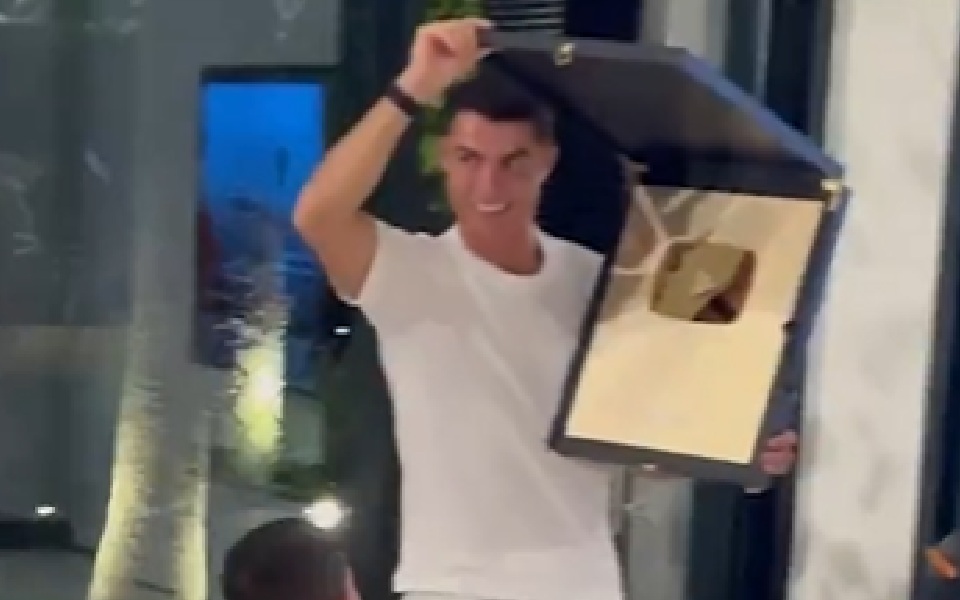
The channel's rapid success was marked by an unprecedented surge in subscribers, with more than a million joining within the first hour alone. This meteoric rise continued, with the channel reaching 10 million subscribers in just one day, earning Ronaldo the prestigious Golden YouTube Play Button.
Ronaldo celebrated the achievement with his family and posted a thank-you video to his fans. On X, he expressed his gratitude, saying, "A present for my family SIUUUbscribers! Thank you to all the SIUUUbscribers."
As of now, Ronaldo's YouTube channel boasts 14.2 million subscribers and has accumulated over 24.4 million views across 19 videos within 24 hours. His social media influence remains unmatched, with 112.5 million followers on X, 170 million on Facebook, and his continued dominance as the most-followed individual on Instagram.
A present for my family ❤️ Thank you to all the SIUUUbscribers! ➡️ https://t.co/d6RaDnAgEW pic.twitter.com/keWtHU64d7
— Cristiano Ronaldo (@Cristiano) August 21, 2024
The wait is over 👀🎬 My @YouTube channel is finally here! SIUUUbscribe and join me on this new journey: https://t.co/d6RaDnAgEW pic.twitter.com/Yl8TqTQ7C9
— Cristiano Ronaldo (@Cristiano) August 21, 2024
Let the Truth be known. If you read VB and like VB, please be a VB Supporter and Help us deliver the Truth to one and all.
PM Modi is controlled by Donald Trump, wants to do the same in TN: Rahul Gandhi
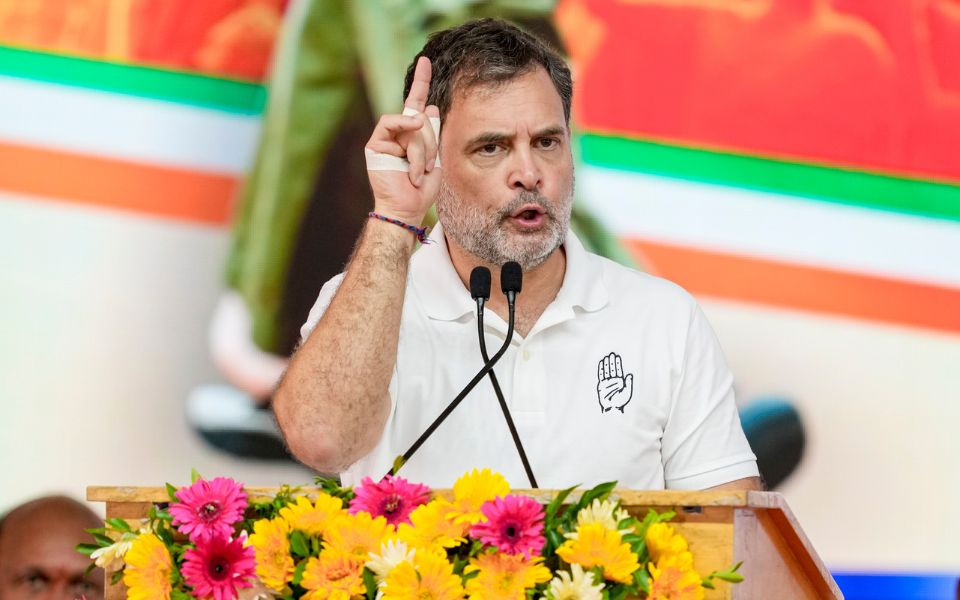
Ranipet (Tamil Nadu) (PTI): Congress leader Rahul Gandhi on Saturday alleged that Prime Minister Narendra Modi was being "controlled" by US President Donald Trump and that the PM wanted the AIADMK to capture power so that he could control Tamil Nadu Chief Minister.
Also, he claimed that the prime minister "handed out our energy security and gave away our data, besides selling our farmers and small and medium industries."
"You saw yesterday (in Parliament) the face of Prime Minister Narendra Modi completely lacking confidence," Rahul said on the delimitation bill.
"He (PM) could not even face the opposition. He was sitting sideways. And the reason is, he is controlled by the United States. He signed the India-US deal that sold our country out," Rahul said while addressing an election rally here.
He further said, "Today, if Donald Trump tells Modi to jump, Modi jumps. If Donald Trump tells Modi to lie down, Modi lies down. Why? Because Donald Trump controls Modi fully. How does he control him? He controls through the Epstein files. He controls him because he knows Modi's financial systems and understands Modi's link with Adani," the Congress leader alleged.
Just as he was being controlled by Trump, Modi wanted to do the same to the chief minister of Tamil Nadu. "That is why he wants to put AIADMK in power in TN," Rahul said.
The Union government had rejected references to PM Modi in the latest Jeffrey Epstein case files, describing it as “little more than trashy ruminations by a convicted criminal that deserves to be dismissed with the utmost contempt”.