CSK beat MI by five wickets in IPL opener

Abu Dhabi: Ambati Rayudu smashed a 48-ball 71 to guide Chennai Super Kings to a comprehensive five-wicket win over defending champions Mumbai Indians in the opening match of the 13th IPL here on Saturday.
Chasing 163 to win, Rayudu blasted six fours and three sixes in his blitering innings, while Faf du Plessis cracked 58 off 44 balls as CSK romped home with four balls to spare.
Earlier, Mumbai Indians posted a challenging 162 for nine after Chennai Super Kings skipper Mahendra Singh Dhoni won the toss and elected to bowl.
The highlight of Mumbai's innings was Saurabh Tiwary's 42 off 31 balls and Quinton de Kock's 20-ball 33 at the top.
For CSK, Lungi Ngidi (3/38) was the most successful bowler while Ravindra Jadeja (2/42) and Deepak Chahar (2/32) captured two wickets apiece and Sam Curran (1/28) and Piyush Chawla (4/21) picked one each.
Brief Score:
Mumbai Indians: 162 for 9 in 20 overs (Saurabh Tiwary 42; Lungi Ngidi 3/38, Ravindra Jadeja 2/42).
Chennai Super Kings: 166 in 19.2 overs (Ambati Rayudu 71; Faf du Plessis 58; Trent Boult 1/23).
Let the Truth be known. If you read VB and like VB, please be a VB Supporter and Help us deliver the Truth to one and all.
India calls for UNSC expansion, says lack of reform 'constrains' global body
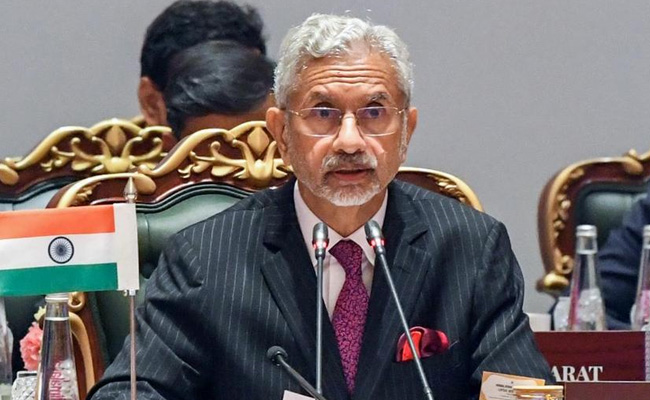
New Delhi (PTI): India on Friday strongly called for expansion of the UN Security Council with External Affairs Minister S Jaishankar saying that the effectiveness and credibility of the global body will remain "constrained" without reforming it.
Jaishankar made the remarks at a conclave of the foreign ministers of the BRICS nations in New Delhi.
"We meet at a time when the effectiveness of global governance and the credibility of multilateralism are under increasing scrutiny," he said.
"The world today is more interconnected, complex, and multipolar than when many of our current institutions were created. Yet, the structures that underpin global governance have not kept pace with these changes," he noted.
Jaishankar listed four specific points to press for reforming the key international bodies and multilateral trading systems, and asserted that the reform of the United Nations and its subsidiary bodies remains "central".
"The membership of the United Nations has expanded significantly, and its responsibilities have grown. Yet, key structures, particularly the Security Council, continue to reflect an earlier era," he said.
"Without meaningful reform, including expansion in both permanent and non-permanent categories, the effectiveness and credibility of the UN will remain constrained. Representation of Asia, Africa, and Latin America is essential," he noted.
India has been a strong contender for a permanent seat at the UN Security Council.
Elaborating his second point, Jaishankar said the time has come for serious negotiations for reform of the UN Security Council.
"BRICS itself has debated this issue deeply, especially at the Johannesburg Summit. Our outcome documents have reflected that consensus. But much more has to be done to make reform a reality," he said.
"Third, there is an urgent need to reform the international financial architecture," the external affairs minister said.
He said there is a need to reform the global financial architecture to effectively deal with various economic challenges including vulnerabilities in supply chains, pressures on food and energy security, and inequalities in accessing critical resources.
"Fourth, the multilateral trading system must be strengthened and reformed. Non-market practices, concentration of supply chains, and uncertain market access have exposed the global economy to new risks," he said.
Jaishankar said a rules-based, fair, open, and inclusive trading system, with the World Trade Organisation at its core, remains essential.
"At the same time, it must address asymmetries and reflect the concerns of developing countries," he said.