CSK score 187/8 against Rajasthan Royals in IPL

New Delhi, May 20 (PTI): Chennai Super Kings scored 187 for eight against Rajasthan Royals in their Indian Premier League match here on Tuesday.
Asked to bat first, CSK were off to a disastrous start and lost two wickets with just 12 runs on the board.
CSK were then struggling at 78 for five in the eighth over, even as opener Ayush Mhatre blazed away to a 20-ball 43.
However, Dewald Brevis (42 off 25 balls) and Shivam Dube (39 off 32) helped CSK fight back with their 59-run partnership.
Playing this match in place of Fazalhaq Farooqi, pacer Yudhvir Singh picked up 3/47 in four overs, while Akash Madhwal ended with impressive figures of 3/29.
Brief scores:
Chennai Super Kings: 187/8 in 20 overs (Ayush Mhatre 43, Dewald Brevis 42; Yudhvir Singh Charak 3/47, Akash Madhwal 3/29).
Let the Truth be known. If you read VB and like VB, please be a VB Supporter and Help us deliver the Truth to one and all.
Ordinance issued to increase number of Supreme Court judges from 34 to 38
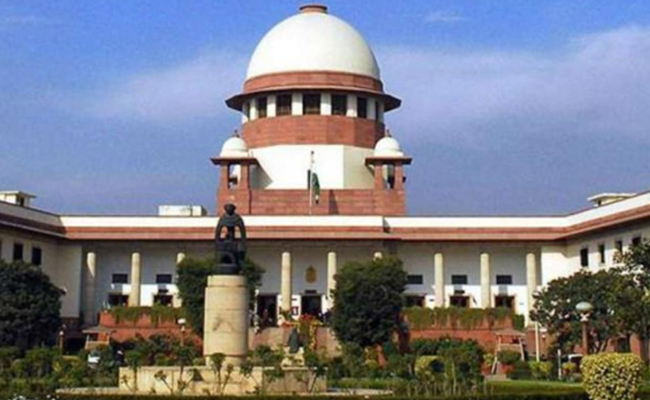
New Delhi (PTI): The government has promulgated an ordinance to increase the strength of the Supreme Court from the present 34 judges to 38, including the Chief Justice of India.
The law ministry notified the ordinance on Saturday, which amended the Supreme Court (Number of Judges) Act, 1956, to increase the sanctioned strength of the top court.
So far, the sanctioned strength of the top court was 34, including the Chief Justice of India (CJI). Now, the number of judges has been increased by four, taking the sanctioned strength to 38.
The top court will now have 37 judges, other than the CJI.
With the apex court having two vacancies at present, and the ordinance coming into force immediately, the Supreme Court Collegium will now have to recommend six names for appointment as judges in the top court.
A bill will be brought in the Monsoon Session of Parliament to convert the ordinance – an executive order – into a law passed by Parliament.
The Union Cabinet had cleared a draft bill on May 5 to increase the number of apex court judges.
The strength of the Supreme Court was last increased from 30 to 33 (excluding the CJI) in 2019.
The Supreme Court (Number of Judges) Act, as originally enacted in 1956, put the maximum number of judges (excluding the CJI) at 10.
This number was increased to 13 by the Supreme Court (Number of Judges), Amendment Act, 1960, and to 17 by another amendment to the law.
The Supreme Court (Number of Judges) Amendment Act, 1986, augmented the strength of judges from 17 to 25, excluding the CJI.
A fresh amendment in 2009 further increased the strength from 25 to 30.
Article 124(3) of the Constitution lists the qualifications required to become a Supreme Court judge.
An Indian citizen who has either served as a high court judge for at least five years, or as an advocate for 10 years, or is a distinguished jurist, can be appointed to the top court.
The strength of the Supreme Court is increased based on the recommendations of the CJI, who writes to the Union law minister. After consulting the finance ministry, the Department of Justice under the law ministry moves the Cabinet with a draft bill.