Deepika Kumari leads Indian recurve archery team to dramatic World Cup gold
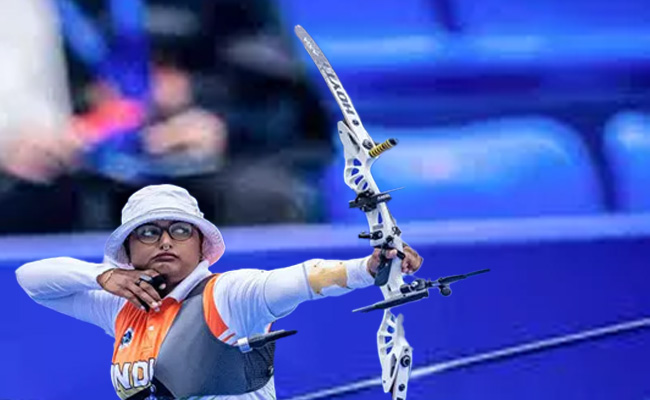
Shanghai (PTI): The Indian trio of Deepika Kumari, Ankita Bhakat and teenager Kumkum Mohod held their nerve in a tense shoot-off to beat home favourites China and clinch the women's recurve team gold medal at the Archery World Cup Stage 2 here on Sunday.
In a final marked by fluctuating fortunes, India edged past the home side 5-4 (28-26) in the shoot-off after the four-set regulation ended 4-4.
The victory was especially sweeter as India had earlier stunned record 10-time Olympic champions South Korea in the semifinals en route to their first World Cup women's team gold since 2021.
Deepika, who was also part of India's World Cup-winning teams in Guatemala City and Paris in 2021, now has seven World Cup team gold medals to her name since 2010.
It was also the Indian women recurve team's first World Cup medal in three years, its previous podium finish coming in Stage 4 in Paris in 2023 where Ankita was a member of the winning team.
India's campaign in Shanghai has thus already yielded two medals after compound archer Sahil Jadhav opened the country's account, securing a bronze on Saturday.
India also remained in contention for another podium finish later in the day with recurve archer Simranjeet Kaur set to compete in the semifinals. She is a win away from her maiden individual World Cup medal.
Travelling without a full-time national coach amid the continuing impasse over appointments, it was the vastly experienced Deepika who led from the front, constantly motivating her teammates during breaks and changeovers.
Prafull Dange, who was the designated women's recurve coach after his ward Kumkum topped the national trials, largely remained in the background as Deepika guided the side through the pressure moments against a hostile home crowd and vocal Chinese support staff.
Against a young Chinese side comprising Zhu Jingyi, Huang Yuwei and teenage archer Yu Qi, who all made their World Cup debuts only last year, India looked in control initially but nearly let the match slip after taking the opening set (54-53).
Shooting last in the Indian order, Deepika set the tone with successive 10s as India edged the first set despite Ankita (8-8) and 17-year-old Kumkum (10-8) putting up an inconsistent show.
Deepika continued her fine rhythm in the second set with another perfect 10 as India briefly held a one-point advantage (28-27) midway through the end. But China responded strongly with two 9s and a 10 in their final three arrows of the second set to post 55.
Ankita replied with a 9, but Kumkum managed only an 8, leaving Deepika needing a 10 to level the set.
The four-time Olympian, however, slipped to a 7 as India lost the set 52-55 and China drew level at 2-2.
The hosts then moved ahead in the third set. The teams were initially tied at 56, but a review upgraded China's final arrow from 8 to 9, handing them the set 57-56 and a 4-2 lead.
India appeared on the verge of defeat in the fourth set despite Deepika rediscovering her touch with two 10s. Kumkum's final arrow landed in the 7-ring as India posted a modest 54.
China required two 10s and a 9 from their last three arrows to seal the match.
Zhu and Huang delivered perfect 10s, leaving 18-year-old Yu Qi needing a 9 for victory in front of the home crowd.
But the youngster shot an 8, allowing India a dramatic escape and forcing a shoot-off.
The Indians peaked at the right moment in the decider. Ankita opened with a 9, Kumkum followed with a superb 10, and Deepika calmly delivered a 9 when only an 8 was needed to seal the title.
Let the Truth be known. If you read VB and like VB, please be a VB Supporter and Help us deliver the Truth to one and all.
UT with dual power structure 'worst form of govt', says Omar Abdullah
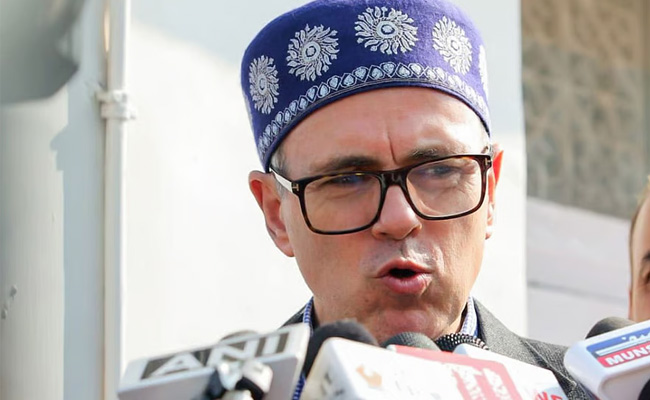
Srinagar (PTI): Terming the current administrative structure in Jammu and Kashmir the “worst form of government”, Chief Minister Omar Abdullah has called for an urgent shift toward full statehood while acknowledging that significant progress has been made in narrowing differences with the Centre over the transaction of business rules.
The chief minister also hit out at vested interests making efforts to create a political wedge between Jammu and Srinagar, saying “they have failed and they will continue to fail”, and highlighted the restoration of the traditional biannual shift of the capital known as ‘Darbar Move’ as a vital bridge in narrowing the emotional divide between the two regions.
Speaking with PTI, Abdullah argued that the logic behind treating a territory with 90 elected legislators on par with smaller regions like Puducherry, which has only 30, remains incomprehensible, and reiterated his earlier stand that a dual power system where two power structures exist is a "recipe for disaster”.
“Can you not see the difference between a tiny one with 30 MLAs and one with 90 MLAs? And you still believe that this current system is beneficial to Jammu and Kashmir after everything that happened last year?” the chief minister asked while referring to the Pahalgham tragedy, pointing out that keeping elected representatives out of the law and order situation was doing no good.
He specifically noted that the size and scale of Jammu and Kashmir demand a governance model where the elected representatives are fully responsible for administration.
“I continue to maintain that view. I continue to believe that a system of Union territory with an assembly is by far the worst form of government that you can come up with,” Abdullah told PTI here recently.
The chief minister highlighted that several key institutions, including universities, the Sher-e-Kashmir Institute of Medical Sciences, and the Power Development Corporation, should have automatically come under the domain of the elected government.
“I am not even arguing on the central services, law and order, and police. As a Union territory, those are automatically within the domain of the unelected government. But these were institutions that were previously the responsibility of the elected government. And they should be,” Abdullah said.
Despite these friction points, Abdullah expressed optimism, stating that his government and the Government of India are close to reaching an agreement on the rules of business and that a formal proposal for the appointment of a new advocate general has finally been dispatched to the appropriate authorities.
“Again, as I said, we have made significant progress on these issues,” he said.
On the long-standing issue of summary dismissals of government employees without judicial inquiry, Abdullah described the process as arbitrary, opaque and unlikely to withstand judicial scrutiny.
This practice did not originate with the current lieutenant governor's administration but was initiated during the previous BJP-PDP coalition government, he said.
“Look, everyone has the right to prove their innocence. For some reason, these employees were not given that opportunity. And I have no doubt that going ahead, many of these people will return to government service on the back of relief from the court.
“We will not be able to defend the dismissal of these employees in the courts. It will happen, you mark my words, because the process is arbitrary. The process is opaque. There is no clarity and transparency in the process. Ultimately, we will not be able to bear up to judicial scrutiny," he said.
Referring to the promises made by his party, the National Conference, Abdullah detailed the operationalisation of his poll promises, including 200 units of free electricity and six free cooking gas cylinders for the poorest households, underlining that power subsidy is being provided to the poorest of the poor.
He argued that anyone above the poverty line should pay market rates for electricity to ensure that state resources are prioritised for the most vulnerable.
“Rich people shouldn't even be getting subsidised electricity. If I could, though obviously I can't do it in a single stroke, I would like to remove subsidised electricity from all these rich people.
“Anybody above BPL (Below Poverty Line) should not be paying subsidised rates for electricity. They should pay the market rate,” he said.
Beyond direct welfare, Abdullah highlighted the restoration of the ‘Darbar Move’ and the introduction of free education and bus travel for women as key milestones in his 20-month-old administration.
Speaking on the composite culture of J-K, Abdullah said the traditional biannual shift of the capital has allowed a new generation of employees from Jammu, who had never worked in the Valley before, to bond with their Kashmiri counterparts.
“The distance between Jammu and Kashmir has reduced to a great extent,” Abdullah said, adding that the two regions historically come together during times of adversity, whether after natural disasters or security crises.
Replying to a query on Kashmiri Pandits who migrated to various camps in Jammu, Abdullah said the question needs to be asked of the BJP as to why they are still in camps.
“Please ask the BJP how many more elections do they want to exploit their (Kashmiri Pandits’) votes before actually doing something to bring them back,” Abdullah said.
Terming the migration “deeply unfortunate”, Abdullah said, “We want those who left in the late 80s, early 90s, to come back. I have always maintained that they left because their sense of security was snatched away. They will come back only when that sense of security is restored. And we have not been able to do that so far.”
Crediting former prime minister Manmohan Singh for building the Jagti township in Jammu for migrants and creating a job quota for them, Abdullah said that nothing more has been done for the community since then.
To a question on dynastic politics following the recent defeat of M K Stalin in Tamil Nadu, Abdullah dismissed the idea that the defeat of established leaders is a verdict on their lineage, and argued that belonging to a political family only "opens a door" but does not guarantee a seat at the table.
“What keeps it open is your own performance,” Abdullah said, pointing out that even non-dynastic leaders like Mamata Banerjee faced electoral setbacks.
He also dismissed rumours of an imminent Cabinet reshuffle in J-K as “absolute lies”.