Delhi Capitals beat CSK by 44 runs
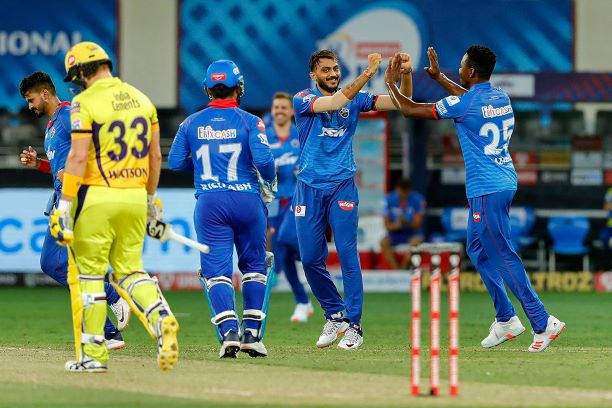
Dubai: Mahendra Singh Dhoni's decision to come down the order yet again backfired as Delhi Capitals rode on Prithvi Shaw's fluent fifty and a disciplined bowling effort to inflict a 44-run defeat on Chennai Super Kings, their second straight loss in the ongoing Indian Premier League here on Friday.
Young Shaw struck a fluent half-century and shared a 94-run opening stand with Shikhar Dhawan to guide Delhi Capitals to 175 for three.
Shaw made 64 off 43 balls in the company of Dhawan (35 off 27 balls, 3 fours, 1 six) to provide a superb start to DC's innings after being put into bat.
While defending, Delhi Capitals made full use of CSK's lacklustre batting performance to register their second consecutive win of the tournament, which took them to the top of the points table.
CSK skipper Dhoni did not push himself up the order on Friday, given the expectations after his decision to hold himself back in the game against Rajasthan Royals backfired, which meant the veteran again did not have enough time and balls to take his side home.
Coming in at No.6 in the 16th over with 78 runs needed from 4.2 overs while chasing 176, Dhoni could only make 15 runs (12 balls, 2 fours) in what was a below par performance from the two-time champions.
South African Faf du Plessis was the top-scorer with 43 while his compatriots Kagiso Rabada (3 for 26) and Anrich Nortje (2 for 21) shone with the ball to fashion a memorable win for Delhi Capitals.
CSK's veteran opener Murali Vijay's struggles continued as he could make only 10 (off 15 balls) for a third straight failure.
Fellow opener Shane Watson fell while attempting to break the shackles, caught in the deep by Shimron Hetmyer off Axar Patel, unable to capitalise on a reprieve by Shaw.
With the asking rate climbing up, Du Plessis could not force the pace against a disciplined DC bowling attack with the spin duo of Amit Mishra (4-0-23-0) and Axar Patel (4-0-18-1) keeping the CSK batsmen on a tight leash.
Young Ruturaj Gaikwad (5) and Kedar Jadhav (26 from 21 balls) could not provide the much-needed thrust as CSK's woes continued.
Earlier, Shaw and Dhawan started slowly, scoring just 36 runs of the first six overs of powerplay before opening up to stitch 94 runs for the opening wicket in 10.4 overs.
Shaw, who began by hitting two consecutive boundaries off Deepak Chahar in the first over of the match, didn't appear to rush things and played some attractive shots.
Once the CSK skipper Dhoni introduced the spin duo of Piyush Chawla and Ravindra Jadeja in the seventh over, both Shaw and Dhawan went on the offensive.
Chawla, who was taken apart by Sanju Samson in their previous game against Rajasthan Royals, came in for some rough treatment as did Jadeja who went wicketless in his four overs (0/44).
Dhawan after playing second fiddle for a while, joined the party and hit a couple of attractive boundaries and slogged Jadeja's first ball for a six over mid-wicket.
The DC openers hammered 58 in the next 4.4 overs after the slow start.
Chawla broke the dangerous-looking partnership by removing both Dhawan and Shaw in consecutive overs.
Rishabh Pant (37 not out, 25 balls) and captain Shreyas Iyer (26, 22 balls) pushed the scoreboard along before the latter was caught by a diving Dhoni off Sam Curran as CSK managed to pull things back.
Let the Truth be known. If you read VB and like VB, please be a VB Supporter and Help us deliver the Truth to one and all.
TN CM Vijay calls fuel price hike ‘unacceptable’, seeks rollback
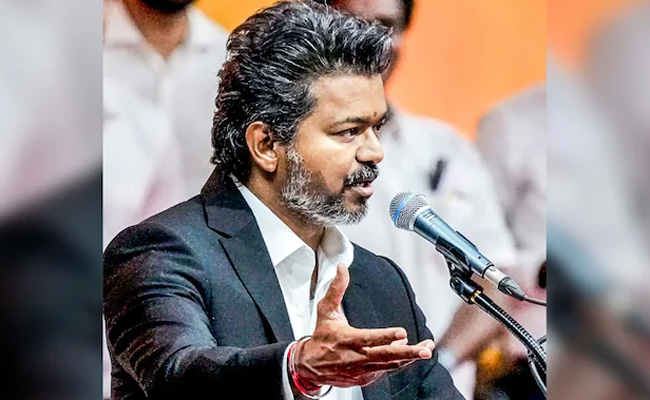
Chennai (PTI): Tamil Nadu Chief Minister C Joseph Vijay on Friday slammed the increase of Rs 3 per litre in petrol and diesel prices, calling it "unacceptable", and demanded its immediate rollback, claiming the revision would affect various sections of society.
He said oil marketing companies do not reduce prices in line with global crude price trends and "take the profits".
"Union government oil marketing companies have increased the price of petrol and diesel by Rs 3 per litre. This is not acceptable," Vijay said in a statement.
The hike has been effected after the "five-state polls" (four states and one union territory), he added.
This price rise will largely affect the income of the poor and middle class using two-wheelers and small vehicles, as well as others dependent on vehicles for their livelihood, the CM said.
It will ultimately result in an increase in the prices of daily commodities and also "affect the purchasing power of the poor," he added.
Citing the chain effect of the price revision, such as increased input costs for small units, he said it could lead to a "slowdown" in the market and exports.
"Therefore, I urge the union government to immediately roll back the price hike that will affect the poor and middle-class people and SMEs," Vijay added.
Global crude oil prices have surged more than 50 per cent since US-Israeli strikes on Iran on February 28 and Tehran’s subsequent retaliation, which disrupted energy flows through the Strait of Hormuz, a key artery for global oil shipments.
Petrol and diesel prices are now at their highest level since May 2022.