Double Olympic bronze medal-winning shooter Manu Bhaker returns home
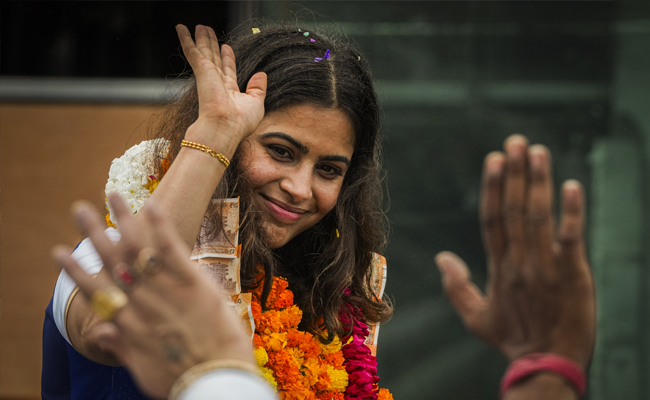
New Delhi (PTI): Star pistol shooter Manu Bhaker arrived home on Wednesday after her historic feat at the ongoing Paris Games where she became the first Indian in post Independence era to win two medals in a single edition of the Olympics.
The Air India direct flight (AI 142) which brought Bhaker from Paris to Delhi landed at the Indira Gandhi International Airport at around 9:20am, delayed by one hour from the earlier scheduled time.
Around 100 people waited at the airport long before her arrival despite the morning drizzle in the city.
Among them were Bhaker's parents -- Ram Kishan and Sumedha -- and sports enthusiasts and officials from neighbouring states, including from Uttarakhand, the home state of Bhaker's personal coach Jaspal Rana, who also came back along with here.
Rana's father was also among those present at the airport.
People gathered at the airport long before her arrival and they celebrated Bhaker's feat with song and dance, beating of drums, holding banners with photos of Bhaker and Rana.
Bhaker will go back to Paris on Saturday and will be the female flag bearer of the Indian contingent at the Paris Olympics Closing Ceremony on Sunday.
The 22-year-old Bhaker won a bronze each in the women's 10m air pistol and 10m air pistol mixed team event -- where she had paired with Sarabjot Singh -- to script Olympic history for the country.
Before her, British-Indian athlete Norman Pritchard had won two silver medals in 200m sprint and 200m hurdles at the 1900 Olympics but that achievement had come in the pre-Independence era.
Let the Truth be known. If you read VB and like VB, please be a VB Supporter and Help us deliver the Truth to one and all.
Ordinance issued to increase number of Supreme Court judges from 34 to 38
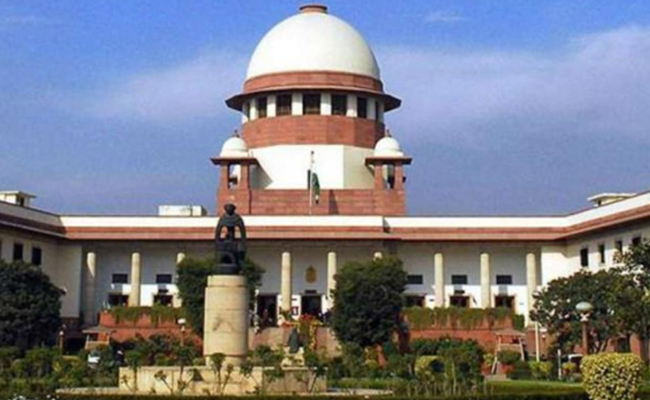
New Delhi (PTI): The government has promulgated an ordinance to increase the strength of the Supreme Court from the present 34 judges to 38, including the Chief Justice of India.
The law ministry notified the ordinance on Saturday, which amended the Supreme Court (Number of Judges) Act, 1956, to increase the sanctioned strength of the top court.
So far, the sanctioned strength of the top court was 34, including the Chief Justice of India (CJI). Now, the number of judges has been increased by four, taking the sanctioned strength to 38.
The top court will now have 37 judges, other than the CJI.
With the apex court having two vacancies at present, and the ordinance coming into force immediately, the Supreme Court Collegium will now have to recommend six names for appointment as judges in the top court.
A bill will be brought in the Monsoon Session of Parliament to convert the ordinance – an executive order – into a law passed by Parliament.
The Union Cabinet had cleared a draft bill on May 5 to increase the number of apex court judges.
The strength of the Supreme Court was last increased from 30 to 33 (excluding the CJI) in 2019.
The Supreme Court (Number of Judges) Act, as originally enacted in 1956, put the maximum number of judges (excluding the CJI) at 10.
This number was increased to 13 by the Supreme Court (Number of Judges), Amendment Act, 1960, and to 17 by another amendment to the law.
The Supreme Court (Number of Judges) Amendment Act, 1986, augmented the strength of judges from 17 to 25, excluding the CJI.
A fresh amendment in 2009 further increased the strength from 25 to 30.
Article 124(3) of the Constitution lists the qualifications required to become a Supreme Court judge.
An Indian citizen who has either served as a high court judge for at least five years, or as an advocate for 10 years, or is a distinguished jurist, can be appointed to the top court.
The strength of the Supreme Court is increased based on the recommendations of the CJI, who writes to the Union law minister. After consulting the finance ministry, the Department of Justice under the law ministry moves the Cabinet with a draft bill.