Double Olympic medallist Manu Bhaker to be India's flag bearer at closing ceremony in Paris
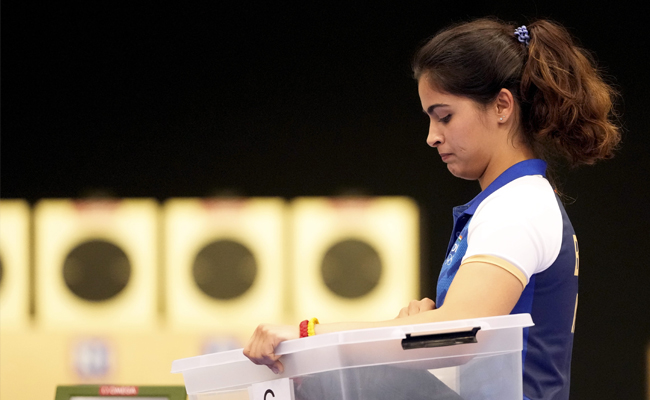
Paris (PTI): Star shooter Manu Bhaker, who created history by winning two bronze medals at the Paris Games, is set to be India's flag bearer at the Olympic closing ceremony here on Sunday.
Manu opened India's medal account at the ongoing Games by winning a bronze in individual 10m air pistol event, becoming the first markswoman from the country to win an Olympic medal.
She then joined forces with Sarabjot Singh to bag the 10m air pistol mixed team bronze.
"Yes, Manu has been chosen to be the flag bearer. She has done exceptionally well and deserves the honour," an IOA official told PTI.
The 22-year-old shooter from Haryana had earlier said it would be an honour to be India's as flag bearer.
"There are many in the contingent who are more deserving but it will be a real honour, if I am asked to," Manu had told PTI.
IOA has not named a male flag bearer yet but are likely announce one in the coming days.
Besides Manu's two medals, fellow shooter Swapnil Kushale clinched India's third medal also a bronze in the men's 50m Rifle Three Positions.
Shuttler Lakshya Sen will fight for bronze on Monday and the men's hockey team has also got closer to a medal by reaching the semifinals.
Nisha Dahiya will start India wrestlers' campaign today when she takes the mat in women's 68kg event. Reigning Olympic champion Neeraj Chopra will begin his campaign on August 6.
Let the Truth be known. If you read VB and like VB, please be a VB Supporter and Help us deliver the Truth to one and all.
Ordinance issued to increase number of Supreme Court judges from 34 to 38
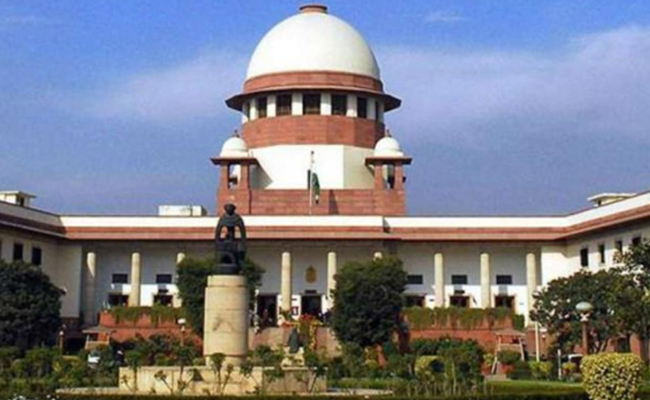
New Delhi (PTI): The government has promulgated an ordinance to increase the strength of the Supreme Court from the present 34 judges to 38, including the Chief Justice of India.
The law ministry notified the ordinance on Saturday, which amended the Supreme Court (Number of Judges) Act, 1956, to increase the sanctioned strength of the top court.
So far, the sanctioned strength of the top court was 34, including the Chief Justice of India (CJI). Now, the number of judges has been increased by four, taking the sanctioned strength to 38.
The top court will now have 37 judges, other than the CJI.
With the apex court having two vacancies at present, and the ordinance coming into force immediately, the Supreme Court Collegium will now have to recommend six names for appointment as judges in the top court.
A bill will be brought in the Monsoon Session of Parliament to convert the ordinance – an executive order – into a law passed by Parliament.
The Union Cabinet had cleared a draft bill on May 5 to increase the number of apex court judges.
The strength of the Supreme Court was last increased from 30 to 33 (excluding the CJI) in 2019.
The Supreme Court (Number of Judges) Act, as originally enacted in 1956, put the maximum number of judges (excluding the CJI) at 10.
This number was increased to 13 by the Supreme Court (Number of Judges), Amendment Act, 1960, and to 17 by another amendment to the law.
The Supreme Court (Number of Judges) Amendment Act, 1986, augmented the strength of judges from 17 to 25, excluding the CJI.
A fresh amendment in 2009 further increased the strength from 25 to 30.
Article 124(3) of the Constitution lists the qualifications required to become a Supreme Court judge.
An Indian citizen who has either served as a high court judge for at least five years, or as an advocate for 10 years, or is a distinguished jurist, can be appointed to the top court.
The strength of the Supreme Court is increased based on the recommendations of the CJI, who writes to the Union law minister. After consulting the finance ministry, the Department of Justice under the law ministry moves the Cabinet with a draft bill.