Duleep Trophy: Pacers shine as India B beat India A by 76 runs
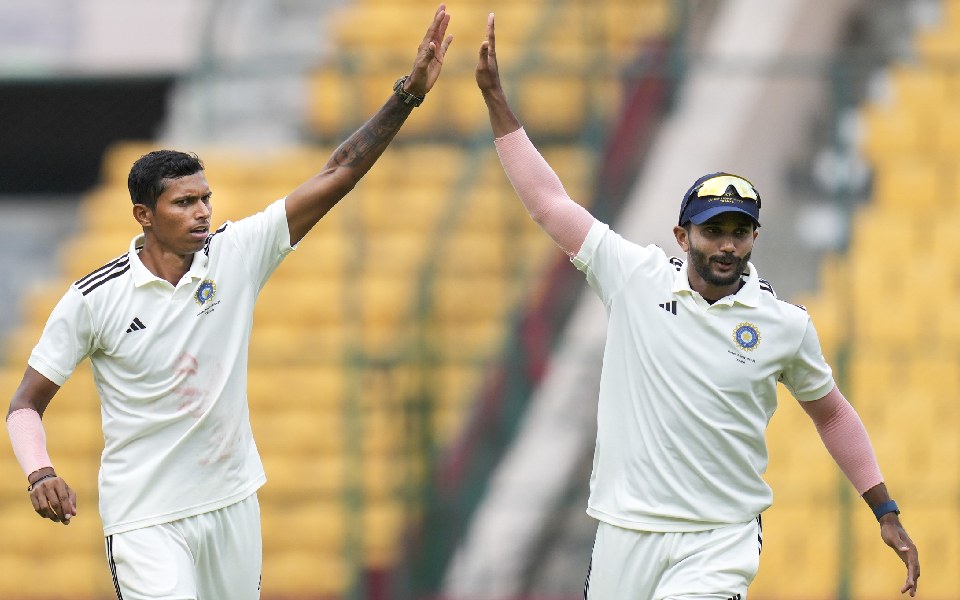
Bengaluru, Sep 8: KL Rahul's gumption, which helped him pile a patient fifty, found no resonance among his colleagues as India B pacers led by Yash Dayal pushed India A to a 76-run defeat on the fourth and final day of their Duleep Trophy match here on Sunday.
Chasing 275, India A were bundled out for 198 in their second innings as left-arm seamer Dayal (3/50), with able support from his colleagues Mukesh Kumar (2/50) and Navdeep Saini (2/41), led the India B attack.
Rahul top-scored for 'A' with a 51.
In the first session of the day, India B made 184 all out in their second essay to muster a handy overall lead of 274.
The India A chase began on a shaky note as Mayank Agarwal departed in the second over itself, wafting Dayal away from his body to Nitish Kumar Reddy, who made a wonderful diving catch at second slip.
That brought Riyan Parag to the middle and the right-hander followed the path set on Saturday by Rishabh Pant and Sarfaraz Khan.
Parag took on the bowlers and pacer Mukesh bore the brunt of his aggression, getting smoked for two sixes and the second maximum touched the roof of the Chinnaswamy Stadium over the mid-wicket region.
Parag added 48 runs for the second with a rather subdued Shubman Gill, who was dropped by Nitish Reddy at slips off Mukesh on 16, and 31 came off the former's bat in just 18 balls.
But the approach was tough to sustain considering the kind of assistance the bowlers were getting here, and soon his massive hoick off Dayal took an edge off Parag's bat en route to stumper Rishabh Pant.
Gill (21) departed soon, falling to Saini for the second time in the match and on this occasion, he edged the pacer to Pant.
Dhruv Jurel poked Dayal well outside off-stump to Yashasvi Jaiswal at gully, as India batters perished to a combination of bowlers' persistence on that channel and their own carelessness.
They took the lunch at a queasy 76 for four that soon transpired into 99 for six after the dismissal of Shivam Dube and Tanush Kotian, an hour into the lunch.
However, Rahul batted out 180 minutes 121 balls and milked 42 runs for the seventh wicket with Kuldeep Yadav to delay the inevitable.
The standout shot in an otherwise dour innings was a whistling on drive off Mukesh that fetched him a boundary.
But Mukesh had his revenge soon when Rahul feathered a cut off him to Pant, who completed five catches in this innings, soon after reaching his fifty with a single off Saini.
It effectively signalled the end of the road of for India A, though Akash Deep (43, 42b, 3x4, 4x6) gave a few moments of fun with a cavalier innings.
But beyond the entertainment value, it always was a case of when more than if.
Earlier, resuming from their overnight score of 150 for six India B could only 34 runs more to the total before getting bundled out.
Pacer Akash, whom Sarfaraz Khan carted around for five fours in a row the previous day, found his mojo to add the scalps of Washington Sundar and Saini to complete a five-wicket haul (5/56).
The spell will keep his name floating among the contenders when the selectors sit together soon to pick up squad for two-match Test series against Bangladesh.
Let the Truth be known. If you read VB and like VB, please be a VB Supporter and Help us deliver the Truth to one and all.
Neeraj Chopra, Sumit Antil complain of harassment by Dronacharya awardee coach
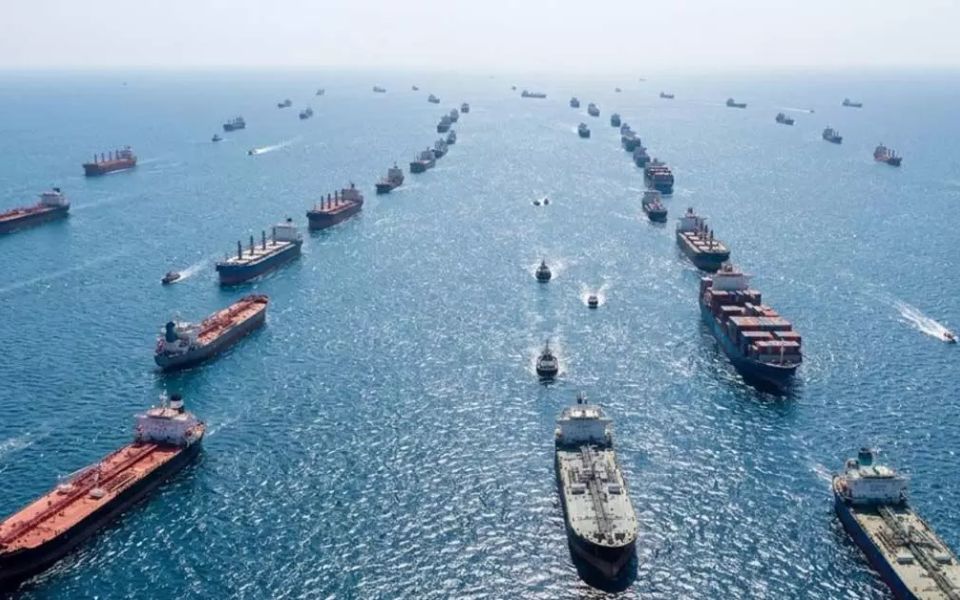
Cairo (AP): Iran swiftly reversed course on reopening the Strait of Hormuz, reimposing restrictions on the critical waterway on Saturday after the US said it would not end its blockade of Iran-linked shipping.
Iran's joint military command said on Saturday that “control of the Strait of Hormuz has returned to its previous state ... under strict management and control of the armed forces.” It warned that it would continue to block transit through the strait as long as the US blockade of Iranian ports remained in effect.
The announcement came the morning after US President Donald Trump said that even after Iran announced the strait's reopening on Friday, the American blockade “will remain in full force” until Tehran reaches a deal with the US, including on its nuclear programme.
The conflict over the chokepoint threatened to deepen the energy crisis roiling the global economy after oil prices began to fall again on Friday on hopes the US and Iran were drawing closer to an agreement. Roughly one-fifth of the world's oil passes through the strait, and further limits would squeeze already constrained supply, driving prices higher once again.
Control over the strait has proven to be one of Iran's main points of leverage and prompted the United States to deploy forces and initiate a blockade on Iranian ports as part of an effort to force Iran to accept a Pakistan-brokered ceasefire to end almost seven weeks of war that has raged between Israel, the US and Iran.
Iran said it fully reopened the Strait of Hormuz to commercial vessels after a 10-day truce was announced between Israel and the Iranian-backed Hezbollah militant group in Lebanon. But after Trump said the blockade would continue, top Iranian officials said his announcement violated last week's ceasefire agreement between Iran and the US and warned the strait would not stay open if the US blockade remained in effect.
A data firm, Kpler, said movement through the strait remained confined to corridors requiring Iran's approval.
US forces have sent 21 ships back to Iran since the blockade began on Monday, US Central Command said on X.
Truce in Lebanon could help US-Iran peace efforts
------------------------------------------------------------
The ceasefire in Lebanon could clear one major obstacle to an agreement. But it was unclear to what extent Hezbollah would abide by a deal it did not play a role in negotiating, and which will leave Israeli troops occupying a stretch of southern Lebanon.
Trump said in another post that Israel is “prohibited” by the US from further strikes on Lebanon and that “enough is enough” in the Israel-Hezbollah war.
The State Department said the prohibition applies only to offensive attacks and not to actions taken in self-defence.
Shortly before Trump's post, Israeli Prime Minister Benjamin Netanyahu said Israel agreed to the ceasefire in Lebanon “at the request of my friend President Trump,” but that the campaign against Hezbollah is not complete.
He claimed Israel had destroyed about 90 per cent of Hezbollah's missile and rocket stockpiles and added that Israeli forces “have not finished yet” with the dismantling of the group.
In Beirut, displaced families began moving toward southern Lebanon and Beirut's southern suburbs despite warnings by officials not to return to their homes until it became clear whether the ceasefire would hold.
The Lebanese army and UN peacekeepers in southern Lebanon reported sporadic artillery shelling in some parts of southern Lebanon in the hours after the ceasefire took effect.
An end to Israel's war with Hezbollah was a key demand of Iranian negotiators, who previously accused Israel of breaking last week's ceasefire with strikes on Lebanon. Israel had said that the deal did not cover Lebanon.
The fighting has killed at least 3,000 people in Iran, more than 2,290 in Lebanon, 23 in Israel and more than a dozen in Gulf Arab states. Thirteen US service members have also been killed.