'Embarrassed' AICF files police complaint after Chess Olympiad trophy goes missing

Chennai, Sep 21: An "embarrassed" All India Chess Federation (AICF) has filed a police complaint after a Chess Olympiad trophy its team won in the last edition of the tournament at home went missing from its office, forcing the sports body to arrange for a replica of the prized possession and tender an apology.
It is a rolling trophy, and the incident came at a time when the Indian men's team is closing in on the gold medal in the ongoing 45th edition of the Olympiad at Budapest.
AICF sources confirmed that the Gaprindashvili Trophy, given to the team with the best overall performance across open and women's divisions, has gone missing.
India was the last holder of the trophy, having won it here in 2022.
AICF vice-president Anil Kumar Raizada told PTI that the trophy has been missing for over a month and it came, after the International Chess Federation (FIDE) had asked for the trophy to be brought to Budapest.
"After we had received a request from FIDE for the trophy to be brought, we have been unable to trace it for over 30 days. As a result, we have filed an official police complaint, and an investigation will follow," he said.
A senior AICF official said that a "contingency plan is in place" and that "a replacement trophy" has already been ordered for the current edition.
"Yes, we tried to look for it all around following FIDE's request. However, we have been unable to locate it so far. It is indeed an embarrassing situation, and these things require utter responsibility," the senior official stated on the condition of anonymity.
"For now, a replacement trophy has been ordered. It won't be as unique as the original, but still, it will be close to the original one. We apologise for the mess."
The current edition of the Olympiad got underway on September 10 and is set to conclude on September 23.
A total of 197 teams representing 195 national federations are presently competing in the event.
For India, the open team consists of Arjun Erigaisi, Gukesh D, Praggnanandhaa R, Vidit Santosh Gujrathi and Harikrishna Pentala.
As for the women, the side includes Harika Dronavalli, Vaishali Rameshbabu, Divya Deshmukh, Vantika Agrawal and Tania Sachdev.
Let the Truth be known. If you read VB and like VB, please be a VB Supporter and Help us deliver the Truth to one and all.
Neeraj Chopra, Sumit Antil complain of harassment by Dronacharya awardee coach
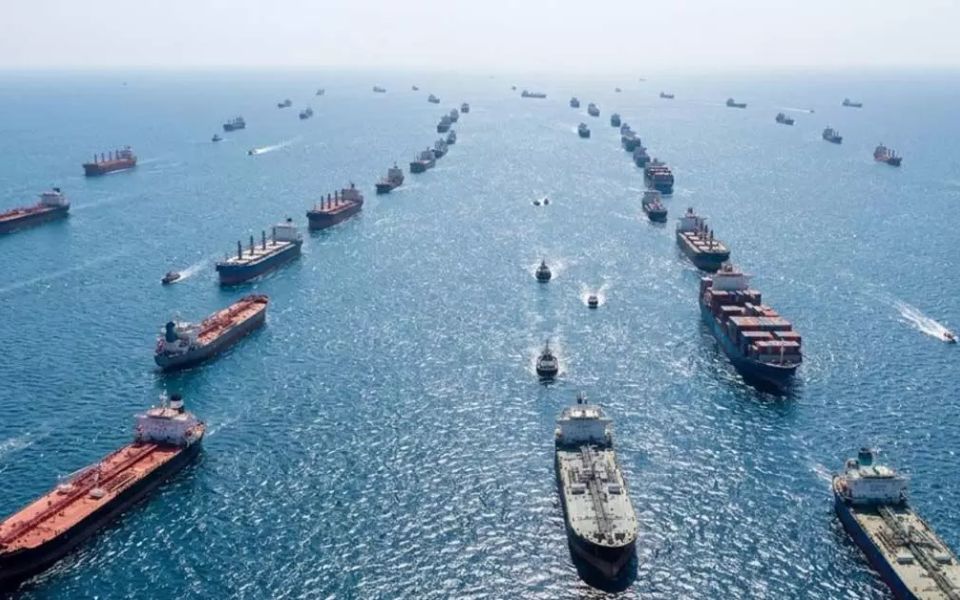
Cairo (AP): Iran swiftly reversed course on reopening the Strait of Hormuz, reimposing restrictions on the critical waterway on Saturday after the US said it would not end its blockade of Iran-linked shipping.
Iran's joint military command said on Saturday that “control of the Strait of Hormuz has returned to its previous state ... under strict management and control of the armed forces.” It warned that it would continue to block transit through the strait as long as the US blockade of Iranian ports remained in effect.
The announcement came the morning after US President Donald Trump said that even after Iran announced the strait's reopening on Friday, the American blockade “will remain in full force” until Tehran reaches a deal with the US, including on its nuclear programme.
The conflict over the chokepoint threatened to deepen the energy crisis roiling the global economy after oil prices began to fall again on Friday on hopes the US and Iran were drawing closer to an agreement. Roughly one-fifth of the world's oil passes through the strait, and further limits would squeeze already constrained supply, driving prices higher once again.
Control over the strait has proven to be one of Iran's main points of leverage and prompted the United States to deploy forces and initiate a blockade on Iranian ports as part of an effort to force Iran to accept a Pakistan-brokered ceasefire to end almost seven weeks of war that has raged between Israel, the US and Iran.
Iran said it fully reopened the Strait of Hormuz to commercial vessels after a 10-day truce was announced between Israel and the Iranian-backed Hezbollah militant group in Lebanon. But after Trump said the blockade would continue, top Iranian officials said his announcement violated last week's ceasefire agreement between Iran and the US and warned the strait would not stay open if the US blockade remained in effect.
A data firm, Kpler, said movement through the strait remained confined to corridors requiring Iran's approval.
US forces have sent 21 ships back to Iran since the blockade began on Monday, US Central Command said on X.
Truce in Lebanon could help US-Iran peace efforts
------------------------------------------------------------
The ceasefire in Lebanon could clear one major obstacle to an agreement. But it was unclear to what extent Hezbollah would abide by a deal it did not play a role in negotiating, and which will leave Israeli troops occupying a stretch of southern Lebanon.
Trump said in another post that Israel is “prohibited” by the US from further strikes on Lebanon and that “enough is enough” in the Israel-Hezbollah war.
The State Department said the prohibition applies only to offensive attacks and not to actions taken in self-defence.
Shortly before Trump's post, Israeli Prime Minister Benjamin Netanyahu said Israel agreed to the ceasefire in Lebanon “at the request of my friend President Trump,” but that the campaign against Hezbollah is not complete.
He claimed Israel had destroyed about 90 per cent of Hezbollah's missile and rocket stockpiles and added that Israeli forces “have not finished yet” with the dismantling of the group.
In Beirut, displaced families began moving toward southern Lebanon and Beirut's southern suburbs despite warnings by officials not to return to their homes until it became clear whether the ceasefire would hold.
The Lebanese army and UN peacekeepers in southern Lebanon reported sporadic artillery shelling in some parts of southern Lebanon in the hours after the ceasefire took effect.
An end to Israel's war with Hezbollah was a key demand of Iranian negotiators, who previously accused Israel of breaking last week's ceasefire with strikes on Lebanon. Israel had said that the deal did not cover Lebanon.
The fighting has killed at least 3,000 people in Iran, more than 2,290 in Lebanon, 23 in Israel and more than a dozen in Gulf Arab states. Thirteen US service members have also been killed.