India's rain-hit first T20I against SA called off
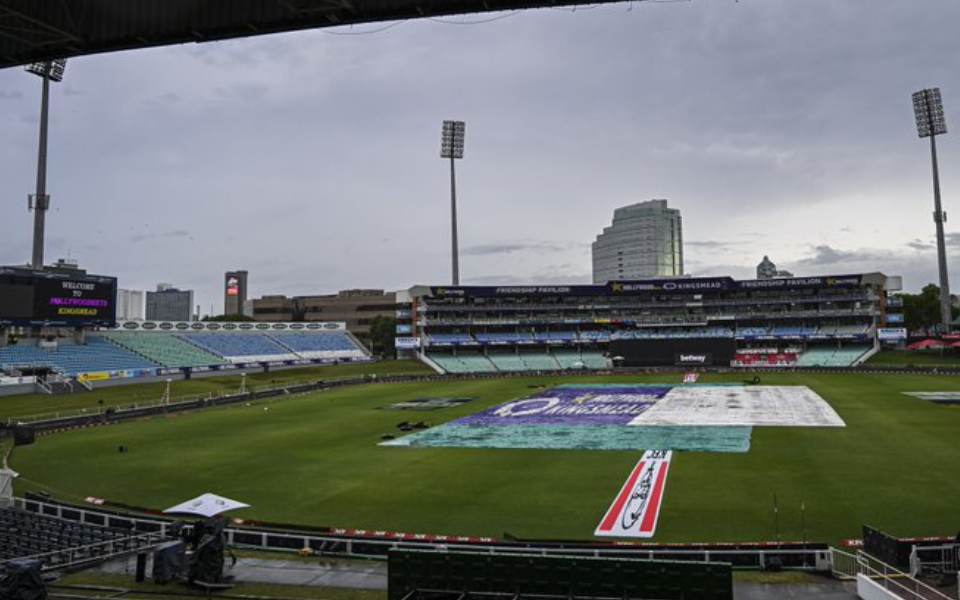
Durban, Dec 10: India's desire to start the process of finding an ideal combination for the T20 World Cup 2024 suffered a minor dent as their first match against South Africa was abandoned without a ball being bowled after persistent rain here on Sunday.
In fact, even the toss did not take place.
Now, the 'Men in Blue' are left with just five T20Is two more against the Proteas and three games against Afghanistan at home in January ahead of next year's showpiece in the West Indies and the USA.
In that context, India would have liked to make a head start to their search for a perfect blend at Kingsmead but rain put paid to those hopes temporarily.
With the IPL 2024 preceding the T20 World Cup, the Indian think-tank will certainly bank on the league to identify the ideal 15 for the marquee event.
India stand-in captain Suryakumar suggested as much.
"I feel there are limited T20s going forward, before the T20 World Cup. But then we play 14 league games in the IPL as well," Suryakumar had mentioned during his pre-match press meet on Saturday.
But then nothing really can supplant the confidence a player can accrue while performing well in international matches, and the weight of a good outing doubles if the touring destination is South Africa.
It also offers the management a more realistic yardstick about a player's ability.
The first-time visitors to the 'Rainbow Nation' such as Rinku Singh, Jitesh Sharma, Arshdeep Singh etc would have been eager to get that unique taste of cricket here and now they would have to wait till Tuesday for the second match at St George's Park at Gqeberha, formerly known as Port Elizabeth.
From a leadership perspective, Suryakumar has done a very fine job while stepping in for injured Hardik Pandya during the home T20I series against the Aussies.
Suryakumar led from the front in India's 4-1 series victory.
The 33-year-old would have liked to make a winning start here against the Proteas to underline his credentials to give the bigwigs another name potentially to consider for the captain's role, if it ever comes to that.
It wasn't entirely amusing then to hear the Mumbai man talking about his comfort while shepherding a young side.
"From personal point of view, it (captaincy) is a big responsibility. I really enjoyed it in the last series (against Australia). I would love to do the same (winning the series) in the coming series in South Africa.
"But from a larger perspective, we'll see what comes ahead but for now let's focus on the series," he had said on Saturday.
The Durban T20I could also have handed India a chance to test their options for the sixth bowler slot, something that assumes importance as Pandya's fitness continues to be iffy.
They, perhaps, could have tried the part-time spin of Tilak Varma, who recently bowled a few overs for Hyderabad in the Syed Mushtaq Ali Trophy, and Yashasvi Jaiswal.
Suryakumar did not provide a definite answer to the sixth bowling conundrum, but said they have enough personnel in their ranks to fill in that role.
"It is not like we don't have a sixth bowling option. When the right time comes, you will see the sixth bowler or maybe the seventh or eighth (bowler)," he had said.
But for now, India will have to hit the meeting room and reinforce their plans ahead of the second match.
Not so great news from Durban as the 1st T20I has been called off due to incessant rains.#SAvIND pic.twitter.com/R1XW1hqhnf
— BCCI (@BCCI) December 10, 2023
Let the Truth be known. If you read VB and like VB, please be a VB Supporter and Help us deliver the Truth to one and all.
Noida International Airport appoints Nitu Samra as interim CEO
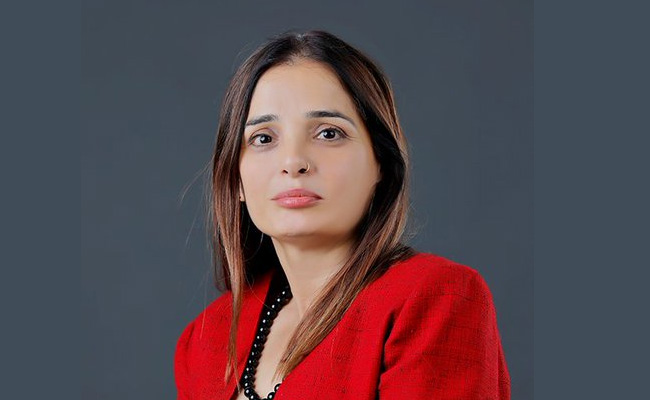
New Delhi (PTI): Noida International Airport on Friday announced the appointment of its Chief Financial Officer Nitu Samra as the interim Chief Executive Officer after authorities denied permission for foreign national Christoph Schnellmann to be at the helm.
"This change follows directions issued by the Bureau of Civil Aviation Security (BCAS) that the Chief Executive Officer of an airport in India is required to be an Indian national," NIA said in a statement.
Samra will replace Schnellmann, a Swiss national who has led Noida International Airport (NIA) as the CEO since August 2020.
The regulatory issue related to the requirement of having an Indian national as CEO has been delaying the start of commercial operations of the airport, which was inaugurated by Prime Minister Narendra Modi on March 28.
Schnellmann will join the airport's Board of Directors as Executive Vice Chairman. In this role, he will continue to support the project and its transition to operations, the statement said.
With immediate effect, NIA said Samra has been appointed as the CEO on an interim basis until the Board of Directors can conclude a formal selection process.
Samra has been serving as the CFO since October 2021 and was closely involved in the airport’s development journey, overseeing financial stewardship, governance, and strategic planning during a key phase of the project, the statement added.
NIA will be operated by Yamuna International Airport Pvt Ltd (YIAPL), a subsidiary of Zurich Airport International AG, under a public-private partnership.
Originally scheduled to commence passenger services in September 2024, NIA is being developed in four phases, along with a dedicated cargo terminal. It received an aerodrome license from the aviation regulator Directorate General of Civil Aviation (DGCA) in March.
YIAPL Chairman Daniel Bircher said that since the inauguration of the airport by the Prime Minister, the goal was to enable the start of operations as early as possible.
"This management change brings the airport into compliance with Bureau of Civil Aviation Security requirements while maintaining continuity in the airport’s leadership team. The newly structured team will support a smooth transition into operations, guided by clear and transparent governance and a strong corporate culture," he said.
On March 28, Civil Aviation Minister K Rammohan Naidu said commercial flight operations from the airport would start in the next 45 to 60 days.
Among the largest greenfield airport projects in the country, NIA will initially have a capacity to handle 12 million passengers per annum.
Once fully developed, the airport will have a total passenger handling capacity of 70 million.
The first phase of NIA has been developed at an investment of around Rs 11,200 crore. 'DXN' is the code for the airport.
The airport features a 3,900-metre runway capable of handling wide-body aircraft, along with modern navigation systems, including Instrument Landing System (ILS) and advanced airfield lighting.
The peak handling capacity in the first phase will be 30 flights per hour.
In the first phase, there will be 28 aircraft stands, and the projected cargo capacity is around 2.5 lakh tonnes.
Terminal 1 of the airport is spread across 1,37,985 square metres with 48 check-in counters. Over 40 acres of land have been earmarked for developing MRO (Maintenance, Repair and Overhaul) facilities at the airport.