From J&K battlefield to Paralympics bronze: Sema's inspirational journey through hardships
Paris (PTI): On a quiet October day in 2002, a young soldier’s dreams were shattered in a heartbeat in the volatile terrain of Jammu and Kashmir’s Chowkibal.
An unexpected explosion ended the ambition of Havildar Hokato Hotozhe Sema to join the Special Forces.
That landmine blast during an anti-terrorist operation claimed his left leg below the knee, inflicting immense physical pain and mental trauma.
Sema's world went dark, or everyone thought so.
But for Sema, it was the beginning of an extraordinary journey of resilience, courage, and fierce determination to rebuild life -- a process he went through at the Army Paralympic Node, BEG Centre in Pune.
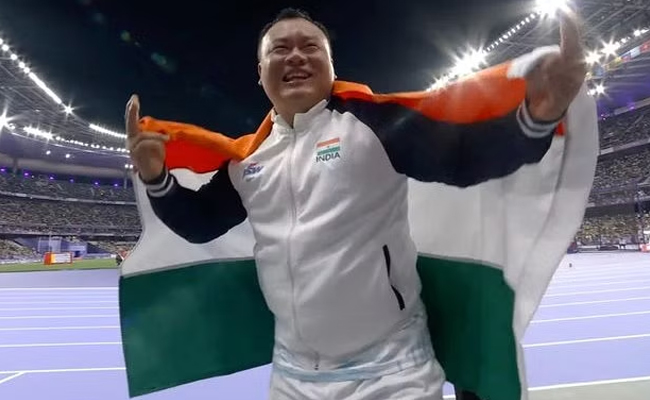
Twenty-two years later, at the swank State de France, the 40-year-old Indian shot-putter came up with his career-best throw of 14.65 metres to secure a bronze medal in the men's F57 category at the Paralympics to swell the country's medal haul to 27 (six gold, nine silver and 12 bronze).
His rise in para-athletics has been nothing short of inspiring.
He quickly distinguished himself with his sheer willpower in the F57 category, which includes athletes with limb deficiencies and impaired muscle power.
Sema was encouraged by senior army officials at the Pune-based Artificial Limb Centre to take up shot put after seeing his fitness as he embraced the sport in 2016 at the age of 32.
That year, he travelled to Jaipur to compete in the National Para Athletics Championships. A silver at the Morocco Grand Prix in 2022 was followed by a bronze medal at the Asian Para Games in Hangzhou.
He narrowly missed a medal at the 2024 World Championships, finishing fourth. But Sema's determination never wavered.
The defining moment came during his Paralympics debut, when he battled against a fiercely competitive field.
Strapped to a throwing chair, each of his six throws was a manifestation of grit and physical strength.
He touched the 14m mark on his second throw and then improved further with a heave of 14.40m.
Sema achieved his best throw in his fourth attempt, bettering his personal best to 14.49m en route to the bronze.
Iran's Yasin Khosravi, the 31-year-old two-time para world champion, clinched the top spot with a Paralympic record of 15.96m, while Brazil's Thiago Dos Santos took the silver (15.06m).
Prime Minister Narendra Modi described Sema's win a "proud moment" for the nation while hailing his incredible strength and determination.
"A proud moment for our nation as Hokato Hotozhe Sema brings home the Bronze medal in Men’s Shot Put F57! His incredible strength and determination are exceptional. Congratulations to him. Best wishes for the endeavours ahead," PM Modi wrote on X.
Sema has been supported by the Khelo India initiative and his training, boarding, and lodging were taken care of by the National Centre of Excellence (NCoE) scheme.
Let the Truth be known. If you read VB and like VB, please be a VB Supporter and Help us deliver the Truth to one and all.
PM Modi to address the nation tonight at 8.30 PM
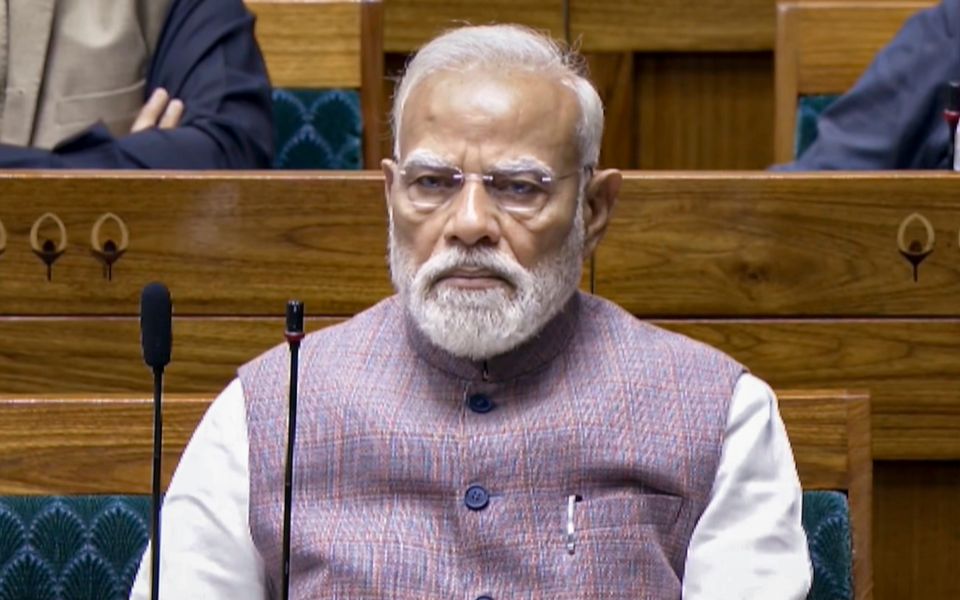
New Delhi (PTI): Prime Minister Narendra Modi will address the nation tonight at 8.30 PM, a day after a bill to implement women's reservation in legislatures was defeated in the Lok Sabha.
"The Prime Minister will address the nation at 8.30 PM (April 18, Saturday)," an official said.
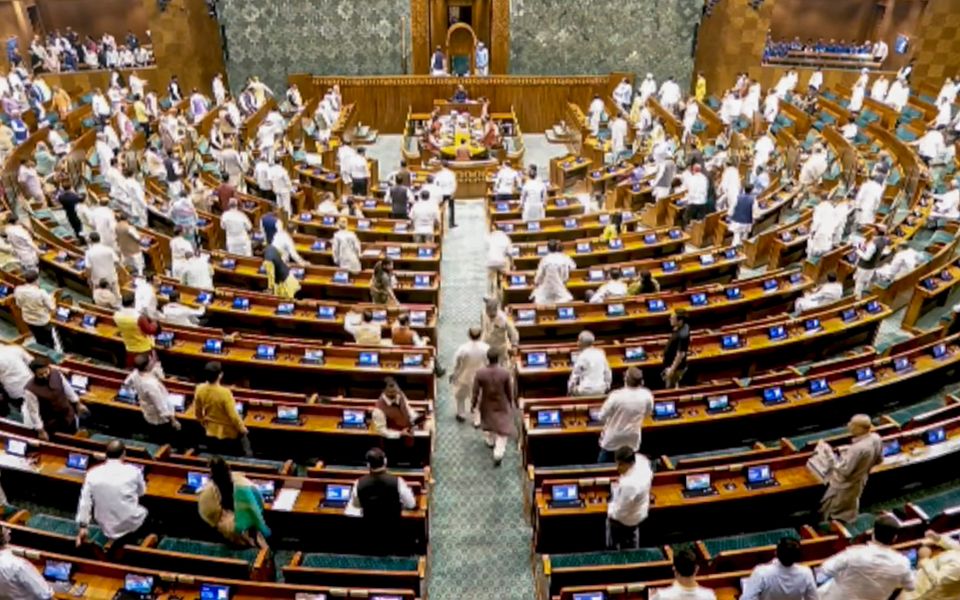
Modi is expected to delve into the issue of implementation of women's quota and the happenings in Parliament, where opposition parties on Friday voted against the Constitution (131st Amendment) Bill.
Under the Bill, Lok Sabha seats were to be increased up to 816 from the current 543 to "operationalise" the women's reservation law before the 2029 parliamentary polls, following a delimitation exercise based on the 2011 Census. Seats were also to be increased in state and UT assemblies to accommodate 33 per cent reservation for women.
A two-thirds majority was required for the passage of the crucial bill but the ruling BJP-led alliance could not muster the numbers.
During polling on the bill in the Lok Sabha on Friday night, 298 members voted in its support, while 230 MPs voted against it.
Out of 528 members who voted, the bill required 352 votes for a two-thirds majority.