Harmanpreet's brace hands India 2-1 win over Pakistan in Asian Champions Trophy hockey
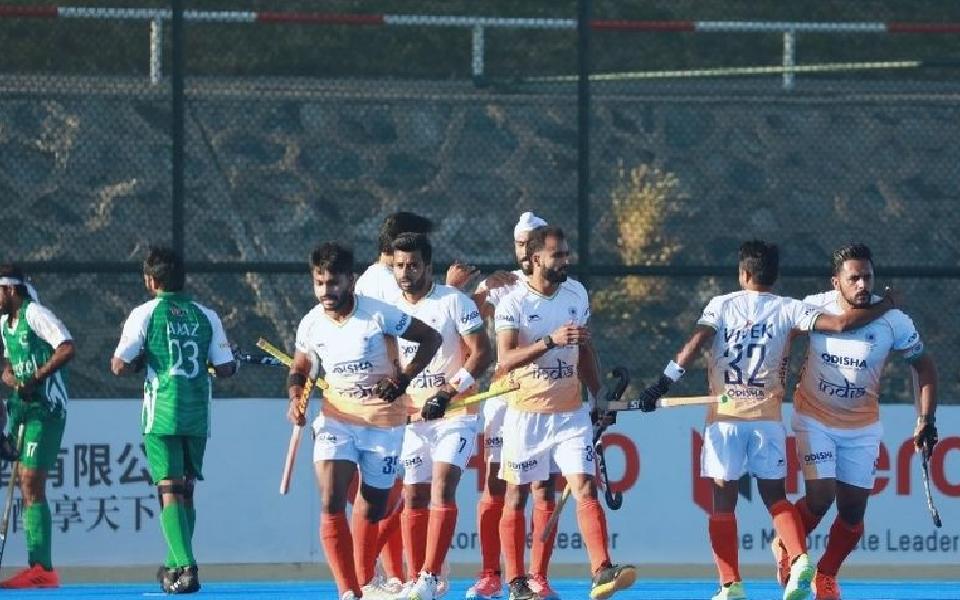
Hulunbuir (China), Sep 14: Skipper Harmanpreet Singh continued his golden run of form that he has been carrying since Paris Olympics, converting two penalty corners to become the chief architect of India's narrow 2-1 victory over arch-rivals Pakistan in their final league match of the Hero Asian Champions Trophy hockey tournament here on Saturday.
It was India's fifth consecutive win in the six-team round-robin competition.
Pakistan took the lead through Ahmad Nadeem (8th minute) before Harmanpreet (13th, 19th) converted two penalty corners to fashion India's victory over familiar foes. It was Pakistan's first loss in this tournament.
Both India and Pakistan have already qualified for the semifinals. The victory also enabled India to maintain their supremacy over Pakistan since 2016.
In their previous meeting at the Hangzhou Asian Games last year, India thrashed Pakistan 10-2. A few months before that, the Indians beat Pakistan 4-0 during the Chennai edition of the ACT.
At the Asia Cup in Jakarta (2022), a relatively young Indian side held Pakistan to a 1-1 draw while at the 2021 ACT in Dhaka, India defeated Pakistan 4-3 to clinch the bronze medal.
In other matches of the day, Malaysia and Korea played out a 3-3 draw, while hosts China beat Japan 2-0.
Paris Olympic bronze medallist and clear favourites, India will take on Korea in the semifinal, while Pakistan will face China.
As like any Indo-Pak hockey match, the first quarter saw end-to-end action with both the teams giving their all to gain the bragging rights.
The Indians started brightly dominating the early share of exchanges but Pakistan grew in confidence as the match progressed.
India were at the receiving end for the first time in the tournament when Pakistan drew the first blood.
It was a selfless Hannan Shahid whose brilliant work from the midfield split the Indian defence and Nadeem found himself at the right place to direct the ball into the Indian goal.
A stunned India kept up their composure and patiently built their attacks and secured their first penalty corner in the 13th minute. Skipper Harmanpreet scored with a powerful drag-flick to the left of a hapless Pakistan goalkeeper Munneb.
The Indians continued to press in the second quarter and gained their second penalty corner in the 19th minute and once again Pakistan defence had no answer as Harmanpreet was bang on target with India taking decisive 2-1 lead.
While India were the better side in terms of possession in the second quarter, Pakistan also had their chances, penetrating the rival circle on quite a few occasions.
Just 45 seconds from half-time Pakistan had an opportunity to draw level through a penalty corner but they wasted the chance as Sufyan Khan's flick, which hit the top of cross-bar, was rejected for a raised ball.
The Indians sustained possession after the change of ends and secured their third penalty corner in the 37th minute, but Pakistan defended bravely.
Thereafter, a sustained spell of attacks helped Pakistanis to bag four penalty corners in quick succession but lacked the firepower to breach the Indian defence.
In the last quarter, both the sides relentlessly attacked and India secured three more short corners but failed to convert anyone of them.
The match also witnessed a heated encounter between Harmanpreet and Pakistan's Ashraf Waheed Rana after the latter shouldered Jugraj Singh inside the Indian circle.
Jugraj was felled by the impact and was seen grimacing in pain. Harmanpreet and Jarmanpreet Singh were quick to counter the offender.
The on-field umpires and Pakistan captain Ammad Butt and other players of both teams rushed in to control the situation but Rana was shown yellow card, which resulted in a 10-minute suspension after the umpire went for a referral for a serious misconduct.
Let the Truth be known. If you read VB and like VB, please be a VB Supporter and Help us deliver the Truth to one and all.
Iran reimposes restrictions on Strait of Hormuz, accusing US of violating deal to reopen it
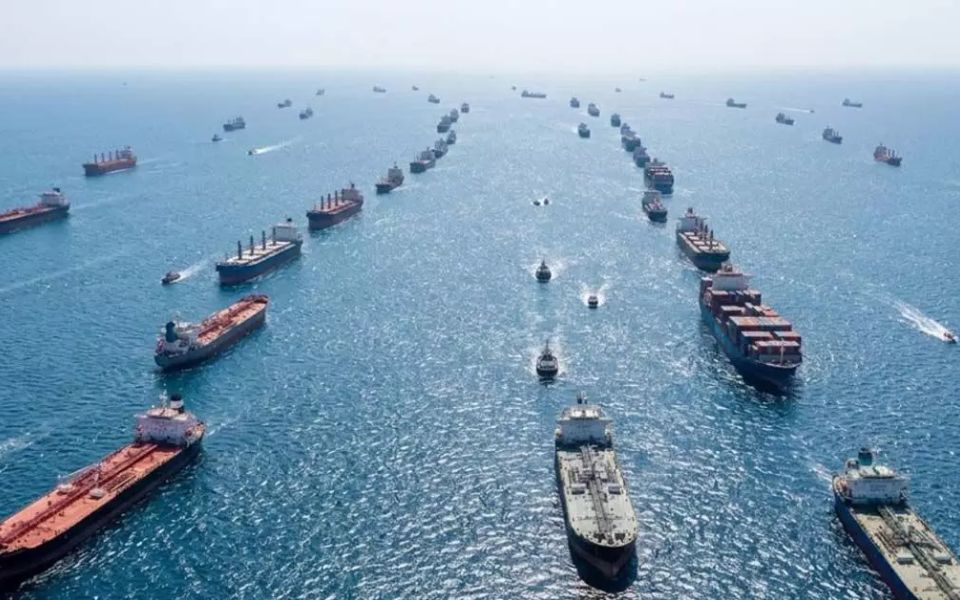
Cairo (AP): Iran swiftly reversed course on reopening the Strait of Hormuz, reimposing restrictions on the critical waterway on Saturday after the US said it would not end its blockade of Iran-linked shipping.
Iran's joint military command said on Saturday that “control of the Strait of Hormuz has returned to its previous state ... under strict management and control of the armed forces.” It warned that it would continue to block transit through the strait as long as the US blockade of Iranian ports remained in effect.
The announcement came the morning after US President Donald Trump said that even after Iran announced the strait's reopening on Friday, the American blockade “will remain in full force” until Tehran reaches a deal with the US, including on its nuclear programme.
The conflict over the chokepoint threatened to deepen the energy crisis roiling the global economy after oil prices began to fall again on Friday on hopes the US and Iran were drawing closer to an agreement. Roughly one-fifth of the world's oil passes through the strait, and further limits would squeeze already constrained supply, driving prices higher once again.
Control over the strait has proven to be one of Iran's main points of leverage and prompted the United States to deploy forces and initiate a blockade on Iranian ports as part of an effort to force Iran to accept a Pakistan-brokered ceasefire to end almost seven weeks of war that has raged between Israel, the US and Iran.
Iran said it fully reopened the Strait of Hormuz to commercial vessels after a 10-day truce was announced between Israel and the Iranian-backed Hezbollah militant group in Lebanon. But after Trump said the blockade would continue, top Iranian officials said his announcement violated last week's ceasefire agreement between Iran and the US and warned the strait would not stay open if the US blockade remained in effect.
A data firm, Kpler, said movement through the strait remained confined to corridors requiring Iran's approval.
US forces have sent 21 ships back to Iran since the blockade began on Monday, US Central Command said on X.
Truce in Lebanon could help US-Iran peace efforts
------------------------------------------------------------
The ceasefire in Lebanon could clear one major obstacle to an agreement. But it was unclear to what extent Hezbollah would abide by a deal it did not play a role in negotiating, and which will leave Israeli troops occupying a stretch of southern Lebanon.
Trump said in another post that Israel is “prohibited” by the US from further strikes on Lebanon and that “enough is enough” in the Israel-Hezbollah war.
The State Department said the prohibition applies only to offensive attacks and not to actions taken in self-defence.
Shortly before Trump's post, Israeli Prime Minister Benjamin Netanyahu said Israel agreed to the ceasefire in Lebanon “at the request of my friend President Trump,” but that the campaign against Hezbollah is not complete.
He claimed Israel had destroyed about 90 per cent of Hezbollah's missile and rocket stockpiles and added that Israeli forces “have not finished yet” with the dismantling of the group.
In Beirut, displaced families began moving toward southern Lebanon and Beirut's southern suburbs despite warnings by officials not to return to their homes until it became clear whether the ceasefire would hold.
The Lebanese army and UN peacekeepers in southern Lebanon reported sporadic artillery shelling in some parts of southern Lebanon in the hours after the ceasefire took effect.
An end to Israel's war with Hezbollah was a key demand of Iranian negotiators, who previously accused Israel of breaking last week's ceasefire with strikes on Lebanon. Israel had said that the deal did not cover Lebanon.
The fighting has killed at least 3,000 people in Iran, more than 2,290 in Lebanon, 23 in Israel and more than a dozen in Gulf Arab states. Thirteen US service members have also been killed.