I don't know how we are going to get Virat Kohli out: England all-rounder Moeen Ali
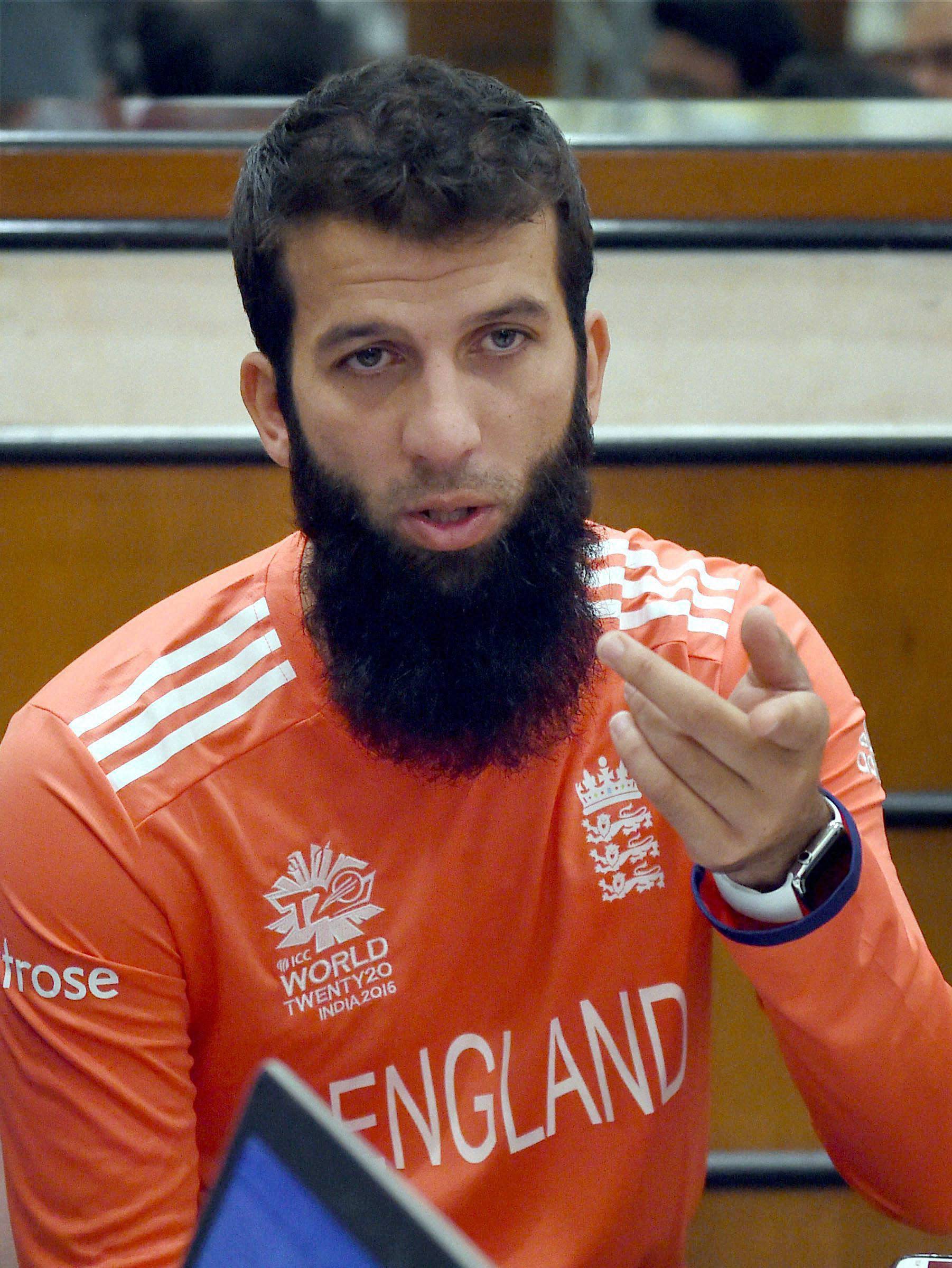
Chennai, Jan 31: England all-rounder Moeen Ali doesn't know how they are going to tackle Virat Kohli in the upcoming Tests against India and feels the batting maestro will be extra motivated to fire after missing his team's incredible triumph in Australia.
Kohli, who had returned home after the opening Test debacle against Australia for the birth of his child, is back to captain the side in the four-match series against England, beginning here on February 5.
"How do we get him out? He's obviously an amazing player, world-class, he's very motivated to do well and I'm sure he'll be even more motivated after they did well in Australia and he had to leave for the birth of his child," Moeen told reporters during a video conference.
"I don't know how we're going to get him out because I don't think he has any sort of weakness but we have a good bowling attack, some pace in the line-up.
"He's a great guy and a good friend of mine -- we don't talk too much about cricket. We do a little bit but not too much."
Back in the fold after recovering from COVID-19, Moeen said he has still got "match-winning performances" in him and is ready to take on India.
Besides the Tests, India and England will play three ODIs and five T20Is.
Moeen said playing Test cricket is his "biggest motivation" and he has "little targets", which he is wants to achieve in the upcoming series.
"Whether or not I get picked is another matter ... in terms of being ready to play, I think I'll be fine to play, I'll be ready. I've waited long enough," he said.
"I still feel I've got wickets and runs in me and match-winning performances within me. I have little targets I want to achieve first. I am not too far away from getting 200 wickets.
"I know people say they don't look at these things but it would be something I would look at. Then I would set another target after that."
The 33-year-old had tested positive for COVID-19 upon the England team's arrival in Sri Lanka and missed the two Tests there, which the visitors won for a series sweep.
"I'm all right now. Once I tested positive, I just wanted to get it over and done with really. It has been tough but I'm a big believer in 'after hardship comes ease'. Hopefully there is ease after this," said Moeen, who had just five or six net sessions due to the time he had to spend in quarantine.
Moeen, who has 181 wickets and 2782 runs in Test cricket, had taken a break from the traditional format after missing out on a full contract in 2019.
"I enjoyed the break and played a few leagues around the world ... but ultimately it was Test cricket that I missed.
"When you're playing Test cricket, you're on top of your game in terms of your batting and bowling; your technique. I don't think it's great when you're just playing white-ball," he said.
Moeen said red-ball cricket makes for a better T20 cricketer.
"When you are playing red-ball cricket, you are hitting a lot more balls, you're bowling a lot more too. With Twenty20 cricket, as much as it is hitting sixes, fours etc, the basis of your technique has to be good," he said.
"It doesn't surprise me that Jos Buttler and Ben Stokes are the two best T20 players around and they play Test cricket. Their defence is pretty solid and it gives you more confidence. When I was playing all forms, I felt was better with my white-ball."
He also asked people to not pay any heed to conspiracy theories and get vaccinated for the virus.
"There's a lot of conspiracy theories out there but it's just medicine evolving. In our community, people are sometimes a bit cautious. But for things to get back to normal, it's important that we do," he said.
Let the Truth be known. If you read VB and like VB, please be a VB Supporter and Help us deliver the Truth to one and all.
People are voting fearlessly in West Bengal this time: PM Modi
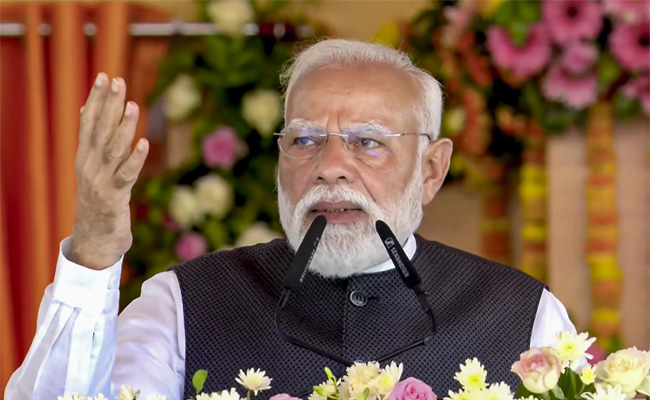
Hardoi (UP) (PTI): Prime Minister Narendra Modi on Wednesday said voters
are casting their vote in West Bengal this time in a "fearless atmosphere", which was unimaginable in the past six or seven decades.
He also asserted that the assembly poll results on May 4 will further strengthen the resolve of a developed India.
Voting is underway in 142 constituencies of West Bengal in the second and final phase of polling.
Addressing a gathering after the inauguration of the Ganga Expressway here, Modi said today marks an important day in the festival of democracy.
"Voting for the second phase is underway in Bengal, and reports indicate a massive turnout, with people stepping out in large numbers just like in the first phase. Images of long queues at polling stations are flooding social media, reflecting the enthusiasm of the people to exercise their democratic right," he said.
"What we are witnessing in Bengal today is unprecedented which was difficult to imagine in the past six to seven decades, a fearless environment where people are voting without fear," he said.
The prime minister said this is a powerful symbol of the country's Constitution and the strengthening of democracy.
"I express my gratitude to the great people of Bengal for being so aware of their rights and participating in large numbers," he said.
With several hours of voting still left, the prime minister urged the people of Bengal to continue participating in this democratic festival with the same enthusiasm.
Modi said in the recent Bihar Assembly elections, the BJP and NDA achieved a historic and decisive victory.
"Just yesterday, results of local body elections in Gujarat showed that the BJP secured victories in nearly 80 to 85 percent of municipalities and panchayats.
"The results on May 4 will further strengthen the resolve of a developed India and will infuse new energy into the pace of development of the country."
The first phase of polling for 152 seats -- out of the 294-member West Bengal assembly -- was held on April 23.
The counting of votes for assembly polls in Kerala, West Bengal, Puducherry, Assam and Tamil Nadu will take place on May 4.