India head coach Rahul Dravid hints at 'conversations' with Rishabh Pant over timing of his shots
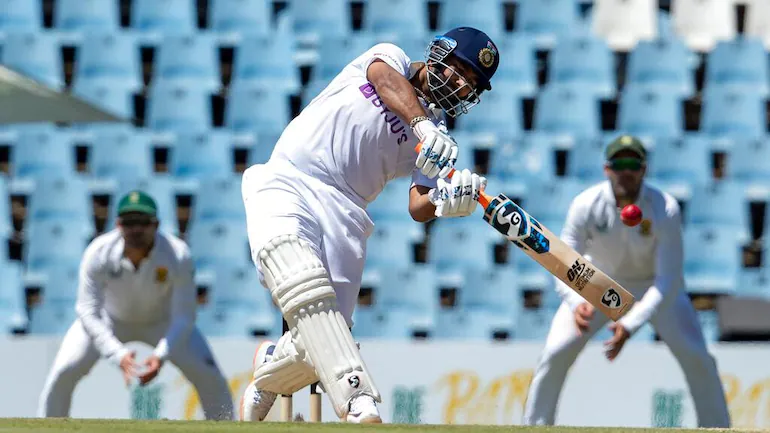
Johannesburg, Jan 7: India head coach Rahul Dravid has hinted at having a conversation with wicket-keeper batter Rishabh Pant over the timing of his shots, including the wild slog that led to his dismissal in the second innings of the lost second Test against South Africa here.
Speaking to media after India's seven-wicket defeat on Thursday, Dravid said he would always want Pant to play positive cricket but at times, the shot selection can be different.
"We know Rishabh plays positively and he plays in a particular manner and that has got him a little bit of success. But of course there are times when we are going to have to have some sort of level of conversations around that," he said.
"...it is just little bit or may be selection of the time to play that (shot)," Dravid added at the virtual post-match press conference.
Pant tried to smash Kagiso Rabada out of the ground on the third ball of his innings but ended up edging it to the wicketkeeper, drawing sharp criticism from all quarters.
"No one is going to ever tell Rishabh (Pant) not to be a positive player or not to be an aggressive player but sometimes it is just the question of picking and choosing the time to do that," Dravid said when specifically asked whether he was upset with Pant's shot.
Dravid, himself a veteran of 164 Tests, also said that Pant can change the course of the game very quickly.
"...maybe giving yourself a little more time might be a little bit more advisable but look I mean in the end, we know what we are getting with Rishabh," he explained.
"He is a really positive player, he is someone who can change the course of the game very quickly for us, so naturally we won't take that away from him and ask him to become something very different.
"But sometimes, it is just about figuring out what is the right time to maybe attack and play out (a) slightly difficult period that sets the game up for you or sets your innings up. So, I mean he (Pant) is learning.
"He plays in a particular way, so it's always something that he is going to keep learning, keep improving and keep getting better," elaborated Dravid.
Let the Truth be known. If you read VB and like VB, please be a VB Supporter and Help us deliver the Truth to one and all.
Woman's decomposed body found at rented flat in Bengaluru

Bengaluru (PTI): The body of a 34-year-old woman was found in a decomposed condition at her rented flat in Bengaluru, police said on Tuesday.
The deceased was identified as Pooja Dutta, a native of Dhanbad in Jharkhand, who was employed with a private company here, they said.
The incident in Adugodi came to light on Monday after neighbours alerted police about a foul smell emanating from her flat, police added.
Police said a team reached the spot, broke open the door and found Dutta's body in a nude and decomposed state, lying in a pool of blood. Preliminary suspicion is that the death may have occurred two to three days earlier, they said.
According to police, no death note was recovered from the spot, though torn papers were found scattered inside the house, prompting suspicion that she may have died by suicide after locking the door from inside.
The body has been sent for post-mortem examination to ascertain the exact cause of death. Once the autopsy report is received, it will be confirmed if it was a suicide or a murder, a senior police officer said, adding that all angles are being probed.
According to the landlady, Dutta had been living in the rented flat for the past three years and was last seen on April 23 when she went out to buy groceries.
The Adugodi police have registered a case of unnatural death, and further investigation is underway.