Indian wrestler Antim Panghal refutes rumours of French police arresting her, her sister

New Delhi: Indian wrestler Antim Panghal has refuted rumours of her and her sister Nisha being arrested in Paris for attempting to help her siser illegally enter the Olympic Games village, clarifying that the French police, who wanted to verify her true identity, took her sister to the police station.
After Panghal lost 0-10 to Turkey’s Yetgil Zeynep, there were reports of her attempting to sneak her sister into the games village with the help of her accreditation card but was detained by the French police, NDTV has said. Panghal, in a video clip shared by NNIS Sports on Thursday, clarified that, as she had fallen ill she had visited her sister’s hotel, where the trouble started, as she asked her sister Nisha to get the things she had forgotten at the games village.
She has insisted in the video clip that neither was she nor was her sister arrested, but rumours were being spread as Wednesday ‘was just not my day’, when she first lost badly and then the talks began about her being arrested. She further said that, when Nisha found that Panghal had developed a fever after losing the wrestling match, she wanted to take her to the hotel she was staying in. Panghal’s coaches permitted her to go to the hotel as she wasn’t feeling well.
While she slept at the hotel, her sister went towards the games village to get Panghal’s remaining things. At the games village, when Nisha asked the authorities if she could do so, the authorities snatched away the young wrestler’s accreditation card from her sister and took her to the police station to confirm her identity, said Panghal.
She added that her card was returned by the police officers duly after confirming the identity of the card-holder. The news that Panghal’s coaches had a fight with a cab driver was also fake, said the wrestler, stating that the cab was booked by her. She, however, admitted that a language barrier caused a bit of problem when the coaches journeyed to the hotel to get money.
Finally, in reference to her return from Paris, Panghal said that the flight was booked by the Indian Olympics Federation. She urged people not to spread rumours about her stay in Paris.
Let the Truth be known. If you read VB and like VB, please be a VB Supporter and Help us deliver the Truth to one and all.
Ordinance issued to increase number of Supreme Court judges from 34 to 38
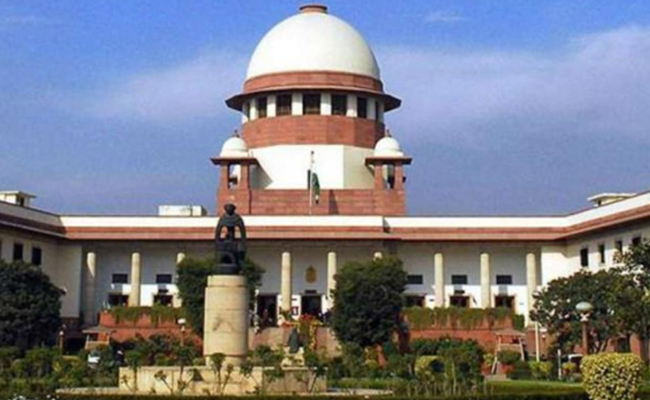
New Delhi (PTI): The government has promulgated an ordinance to increase the strength of the Supreme Court from the present 34 judges to 38, including the Chief Justice of India.
The law ministry notified the ordinance on Saturday, which amended the Supreme Court (Number of Judges) Act, 1956, to increase the sanctioned strength of the top court.
So far, the sanctioned strength of the top court was 34, including the Chief Justice of India (CJI). Now, the number of judges has been increased by four, taking the sanctioned strength to 38.
The top court will now have 37 judges, other than the CJI.
With the apex court having two vacancies at present, and the ordinance coming into force immediately, the Supreme Court Collegium will now have to recommend six names for appointment as judges in the top court.
A bill will be brought in the Monsoon Session of Parliament to convert the ordinance – an executive order – into a law passed by Parliament.
The Union Cabinet had cleared a draft bill on May 5 to increase the number of apex court judges.
The strength of the Supreme Court was last increased from 30 to 33 (excluding the CJI) in 2019.
The Supreme Court (Number of Judges) Act, as originally enacted in 1956, put the maximum number of judges (excluding the CJI) at 10.
This number was increased to 13 by the Supreme Court (Number of Judges), Amendment Act, 1960, and to 17 by another amendment to the law.
The Supreme Court (Number of Judges) Amendment Act, 1986, augmented the strength of judges from 17 to 25, excluding the CJI.
A fresh amendment in 2009 further increased the strength from 25 to 30.
Article 124(3) of the Constitution lists the qualifications required to become a Supreme Court judge.
An Indian citizen who has either served as a high court judge for at least five years, or as an advocate for 10 years, or is a distinguished jurist, can be appointed to the top court.
The strength of the Supreme Court is increased based on the recommendations of the CJI, who writes to the Union law minister. After consulting the finance ministry, the Department of Justice under the law ministry moves the Cabinet with a draft bill.