IOA dissolves ad-hoc committee for wrestling, WFI to take charge
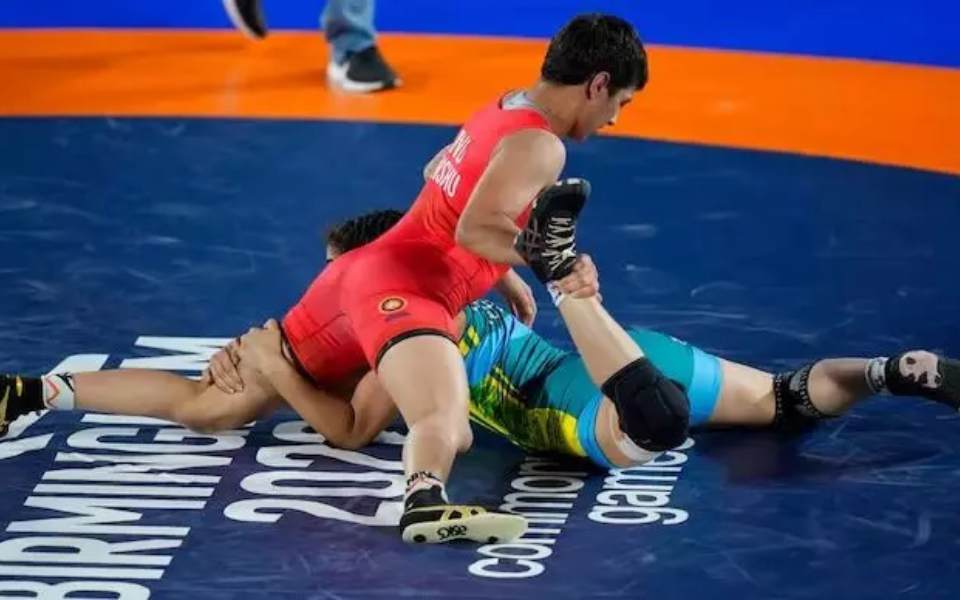
New Delhi, Mar 18: The Indian Olympic Association on Monday dissolved the ad-hoc committee for wrestling, saying "there is no further need" for it to continue after revocation of the suspension on the national federation, which now gets complete administrative control of the sport.
The IOA said that the decision was also guided by the successful conduct of the selection trials for next month's Olympic qualifying tournament for which the panel collaborated with the Wrestling Federation of India (WFI).
The ad-hoc committee was formed in December last year after the sports ministry suspended the WFI, which got a shot in the arm when the suspension imposed on it by the global governing body -- United World Wrestling -- was lifted in February.
"The decision to dissolve the Adhoc Committee comes in light of the lifting of the ban on the Wrestling Federation of India (WFI) by the United World Wrestling (UWW) and the successful completion of Selection Trials by the Adhoc Committee appointed by the IOA as per the directives of the Hon'ble High Court of Delhi," said the IOA order issued on March 10.
WFI chief Sanjay Singh thanked the Indian Olympic Association for giving his elected panel control of the national federation.
"We thank IOA for giving us full-fledged control of the WFI. We will give all facilities to the wresters. We will soon organise a national camp and if the wrestlers want to train abroad we will facilitate that as well. The focus is now on the Olympics. We are hoping that 5-6 wrestlers will qualify," Singh told PTI.
The three-member committee, under the chairmanship of Bhupender Singh Bajwa was constituted on December 23 after the newly-elected WFI, led by Sanjay Singh, had allegedly flouted its own rules.
Earlier this month, the ad-hoc panel organised the trials to select the teams for the Asian Championships and the Asian Olympic Qualifiers in Kyrgyzstan to be held next month.
The protesting duo of Vinesh Phogat and Bajrang Punia competed in the trials and the former made the cut for Olympic qualifiers in the 50kg category.
Following the successful completion of the trials, the reins of the sport have now been formally handed over to WFI despite the continuing suspension imposed by the sports ministry.
The IOA instructed WFI to appoint a "Safeguarding Committee" to address concerns of sexual harassment and other issues such as adherence to rules.
"...as instructed by the UWW, it is imperative that the WFI appoint a Safeguarding Committee / Officer at the earliest to address the concerns of abuse and harassment and to ensure adherence to all rules, regulations, and guidelines set forth by the UWW and other relevant authorities," the IOA letter added.
"Furthermore, the WFI is also directed to conduct the elections of the Athletes Commission in a time-bound manner, in accordance with the established procedures and guidelines.
"This step is essential to promote athlete representation and participation in the decision-making processes of the WFI."
The order also instructed the WFI to "repay the loan" provided by the IOA to the ad-hoc panel for managing wrestling affairs when the national body was under suspension.
"The day I won elections, you know that it was a crown of thorns for me. Despite limitations, we tried everything, whether it was organising the Nationals (in Pune), or providing officials and referees to the ad-hoc panel for the recent trials after (Delhi High Court) court stopped us from organising trials (in New Delhi). I am sure that it is the end of the struggle for us," added Sanjay Singh.
A source close to the developments said he was "surprised" by the IOA's move to dissolve the ad-hoc panel.
"The Sports Ministry had suspended the WFI in December last year and it hasn't yet issued orders for revoking the suspension. Besides, the case is sub-judice, so it's surprising why ad-hoc panel was dissolved by the IOA," he said.
Let the Truth be known. If you read VB and like VB, please be a VB Supporter and Help us deliver the Truth to one and all.
Chadha, others wouldn't have left AAP had it followed 'right' path: Anna Hazare
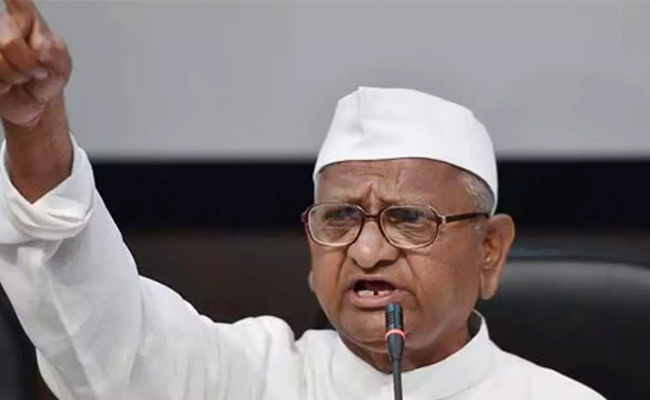
Mumbai (PTI): Social activist Anna Hazare has said Raghav Chadha and six other Aam Aadmi Party (AAP) Rajya Sabha members would not have quit the party had it followed the "right" path.
"Everyone has the right to hold an opinion in a democracy. They (Chadha and others) must have faced some trouble, which is why they left," Hazare told reporters on Friday in Ahilyanagar district of Maharashtra.
AAP Rajya Sabha members Raghav Chadha and Sandeep Pathak addressed a joint press conference in Delhi on Friday, announcing their exit from the Arvind Kejriwal-led party to join the BJP.
Chadha claimed that nearly two-thirds of AAP's Rajya Sabha members had quit the party and would function as a separate faction.
"It is their (AAP leadership’s) fault. Had that party followed the right way, they would not have left," Hazare said.
Hazare reiterated that Chadha and others must have faced difficulties within AAP, and that is why they left. "Had the party gone in the right direction, they would not have quit the party," he added.
"There must be some or the other reason (for their leaving AAP). In a democracy, every person has a view about where to stay and leave," Hazare said.
The Chadha-led exodus marks a significant setback for the Kejriwal-led party since its formation in 2012, which followed the momentum of Anna Hazare’s anti-corruption movement.