IPL Meeting: Governing Council allows 5 retentions and 1 RTM but with big rider
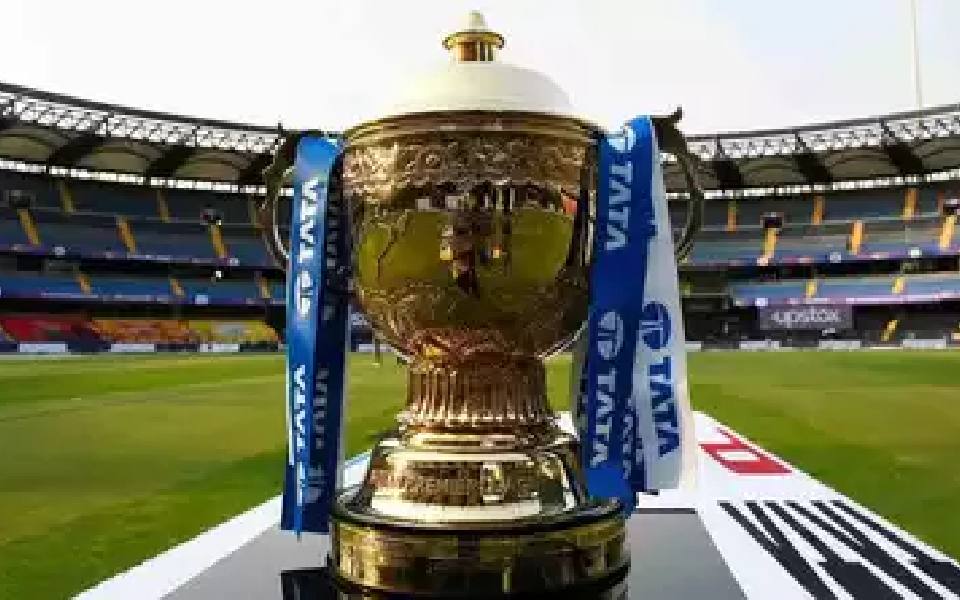
Bengaluru, Sep 28: The 10 IPL franchises will be allowed to retain a maximum of six players from their previous squads, which will include one Right To Match (RTM) card at the auction which will cost Rs 75 crore out of an enhanced team purse of Rs 120 crore, the Indian Premier League governing council decided on Saturday. A team was allowed up to four retentions in the last mega auction held in 2022.
On the day, BCCI secretary Jay Shah also announced a fixed match fee of Rs 7.50 lakh for all players selected to play the league games with an additional 1.05 crore income over and above their salaries.
A fixed salary purse of Rs 12.60 crore in addition to the auction cum retention purse of Rs 120 crore will have to be kept by the franchises for next season.
"The first retention will cost Rs 18 crore followed by second retention of Rs 14 crore and third retention of Rs 11 crore. However if a franchise opts for fourth and fifth retentions, they will again have to pay Rs 18 crore and Rs 14 crore respectively. So any franchise opts for all five retentions, then will have only Rs 45 crore to buy or even use their Right To Match (RTM) card to buy another 15 players and prepare a squad. There is no cap on Indian and Overseas retentions," a senior BCCI and IPL governing council member told PTI on conditions of anonymity.
It is understood that most of the stronger franchises like Mumbai Indians, Kolkata Knight Riders and Sunrisers Hyderabad were in favour of six to eight retentions as opposed to likes of some other franchises which don't have too much star power.
"We introduced more deductions for retentions four and five to ensure level playing field. You can go ahead and retain five but then you will have less than Rs 50 crore to deal with at auction table. Also if franchises opt for only three retentions, then more star value will be added to auction," the source said.
An example can be furnished how BCCI planned to make it interesting.
Therefore if Mumbai Indians want to retain Hardik Pandya, Rohit Sharma, Suryakumar Yadav, Jasprit Bumrah and Thilak Varma, they will have Rs 75 crore deducted from its purse. And then with Rs 45 crore at auctions, what happens if Ishan Kishan's price skyrockets to Rs 15 crore and they are forced to use a Right To Match card. Then it effectively boils down to Rs 30 crore to select 14 more players.
One needs to note that retention price is only a deduction from the team purse for the auction but it may or may not be the actual salary of the player which is a player-franchise separate contract.
Meanwhile Shah took to twitter to announce the per match fee which effectively means that an uncapped Indian player, who can play three games of IPL stands to earn Rs 22.5 lakh apart from a minimum base price of Rs 20 lakh. So he can earn 42.5 lakh in a season by playing just three games of three hours whereas if he plays 10 Ranji Trophy games in a season, he stands to earn Rs 24 lakh only.
"In a historic move to celebrate consistency and champion outstanding performances in the IPL, we are thrilled to introduce a match fee of INR 7.5 lakhs per game for our cricketers! A cricketer playing all league matches in a season will get Rs. 1.05 crores in addition to his contracted amount," Shah tweeted.
"Each franchise will allocate INR 12.60 crores as match fees for the season! This is a new era for the IPL and our players," he added.
Let the Truth be known. If you read VB and like VB, please be a VB Supporter and Help us deliver the Truth to one and all.
Defeated delimitation bill in Parliament to defend idea of India: Cong leader Rahul Gandhi
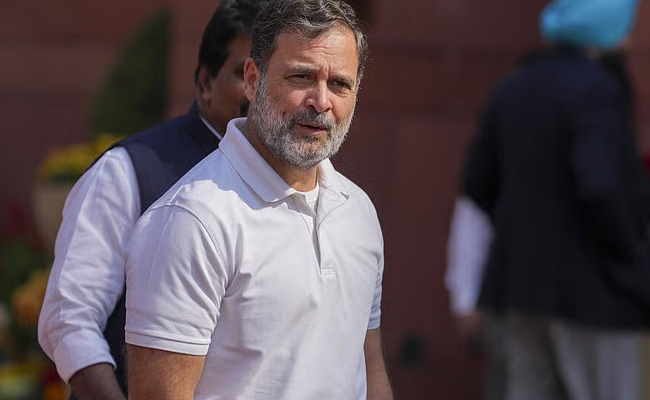
Chennai (PTI): Congress leader Rahul Gandhi on Saturday said the opposition parties defeated the delimitation bill in the Parliament on Friday to defend the "idea of India."
Addressing a poll rally at Ponneri here, he said the BJP-led government at the Centre brought a new bill on April 16, and said they were trying to pass the women's bill, which he said was passed in 2023.
"In the so-called Women's Bill, delimitation was hidden. The idea was to reduce Tamil Nadu's representation in the Union of India... the delimitation move by BJP was to weaken the strength of southern states, small states, north eastern states," he alleged.
"We defeated in Parliament, a bill in which delimitation was hidden; we defeated it to defend the idea of India."
Rahul added that India that is Bharat, is a union of states, and every single state should have a voice, be free to express itself, and protect its tradition.