It'll be tough without Rohit and Virat but also an opportunity for others, says Gautam Gambhir
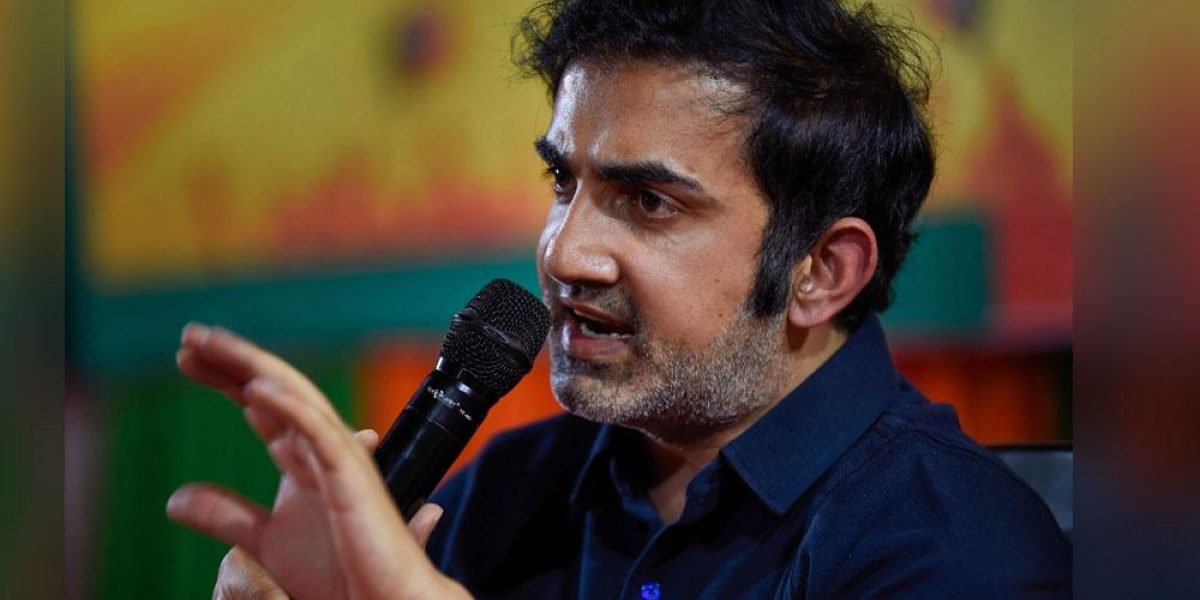
New Delhi, May 23 (PTI): India head coach Gautam Gambhir has admitted that dealing with the absence of Virat Kohli and Rohit Sharma will be a significant challenge for the team but their Test retirement has also opened the door for others to step up and take responsibility.
Kohli and Rohit bid farewell to Test cricket within a week of each other earlier this month. The announcements came ahead of the marquee five-match series in England next month, the squad for which will be announced on Saturday in Mumbai.
"I think, when you start the game and when you want to finish, it's a very individual decision. No one has the right. Be it the coach, the selector, be it anyone in this country has any right to tell someone when to retire and when not to retire. So it comes from within," Gautam Gambhir told CNN-News18.
With their exit, India will not only need a new Test captain but will also be without two of their most seasoned players, a leadership and experience void, Gambhir admits, won't be easy to fill.
"And yes, we've got to be without two senior players to really experience players. And sometimes I believe that it's the opportunity for some other people to put their hand up and say, 'Okay, I am ready for it'."
He drew a parallel with India's Champions Trophy triumph, which came despite the absence of pace spearhead Jasprit Bumrah.
"So yes, it will be tough, but then there'll be people putting their hand up for sure because this question was asked to me before. Champions Trophy as well.
"When Jasprit Bumrah wasn't there and I said exactly the same thing, someone missing out might give another person an opportunity to do something special for the country, hopefully, there’ll be other guys waiting for that opportunity," he said.
While Kohli and Rohit have bid adieu to the Test and T20 format, they will still be available for India in the 50-over game.
Asked if the two can make the team for the 2027 ODI World Cup, Gambhir said "Look, it's still a long way away. We still have a T20 World Cup before that, and that is again a huge tournament that is going to happen in India, which is in February-March," he pointed out.
"So the entire focus at the moment, after England, will be on the T20 World Cup, and November-December 2027 is still two-and-a-half years away. And I've always said one thing – if you keep performing, age is just a number," he added.
Let the Truth be known. If you read VB and like VB, please be a VB Supporter and Help us deliver the Truth to one and all.
Ordinance issued to increase number of Supreme Court judges from 34 to 38
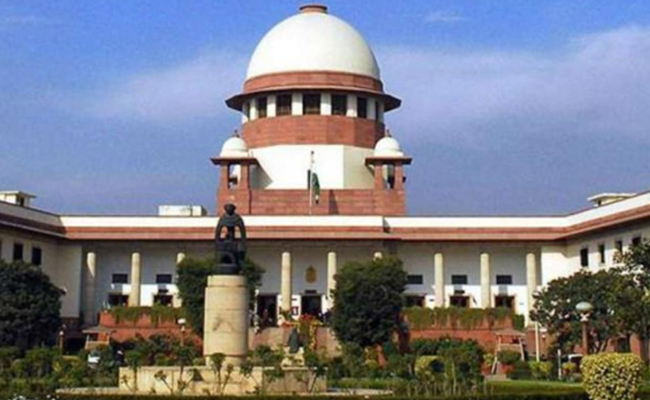
New Delhi (PTI): The government has promulgated an ordinance to increase the strength of the Supreme Court from the present 34 judges to 38, including the Chief Justice of India.
The law ministry notified the ordinance on Saturday, which amended the Supreme Court (Number of Judges) Act, 1956, to increase the sanctioned strength of the top court.
So far, the sanctioned strength of the top court was 34, including the Chief Justice of India (CJI). Now, the number of judges has been increased by four, taking the sanctioned strength to 38.
The top court will now have 37 judges, other than the CJI.
With the apex court having two vacancies at present, and the ordinance coming into force immediately, the Supreme Court Collegium will now have to recommend six names for appointment as judges in the top court.
A bill will be brought in the Monsoon Session of Parliament to convert the ordinance – an executive order – into a law passed by Parliament.
The Union Cabinet had cleared a draft bill on May 5 to increase the number of apex court judges.
The strength of the Supreme Court was last increased from 30 to 33 (excluding the CJI) in 2019.
The Supreme Court (Number of Judges) Act, as originally enacted in 1956, put the maximum number of judges (excluding the CJI) at 10.
This number was increased to 13 by the Supreme Court (Number of Judges), Amendment Act, 1960, and to 17 by another amendment to the law.
The Supreme Court (Number of Judges) Amendment Act, 1986, augmented the strength of judges from 17 to 25, excluding the CJI.
A fresh amendment in 2009 further increased the strength from 25 to 30.
Article 124(3) of the Constitution lists the qualifications required to become a Supreme Court judge.
An Indian citizen who has either served as a high court judge for at least five years, or as an advocate for 10 years, or is a distinguished jurist, can be appointed to the top court.
The strength of the Supreme Court is increased based on the recommendations of the CJI, who writes to the Union law minister. After consulting the finance ministry, the Department of Justice under the law ministry moves the Cabinet with a draft bill.