Jay Shah elected unopposed as next ICC chairman
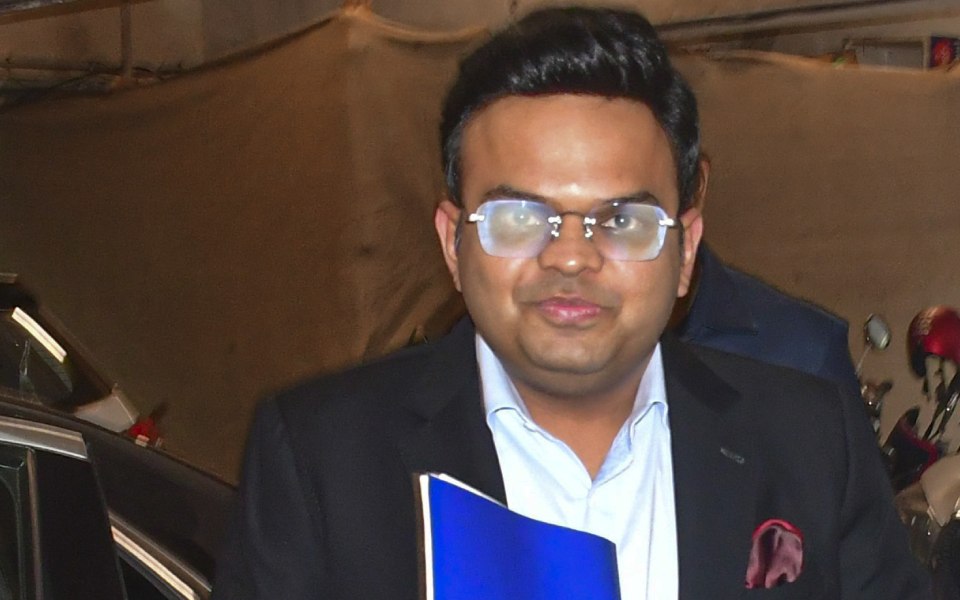
Dubai, Aug 27: BCCI secretary Jay Shah will take over as the next ICC chairman on December 1 after being elected unopposed for the top post here on Tuesday, making him the fifth Indian to reach the pinnacle of global cricket administration.
The 35-year-old Shah, who has been the BCCI secretary since 2019, will take over from 62-year-old incumbent Greg Barclay after the New Zealander decided against running for a third consecutive term of two years.
Shah, who is the son of union home minister Amit Shah, will relinquish his position in India at the BCCI's Annual General Meeting likely to be held towards the end of next month or in October.
Shah became the youngest Indian among late Jagmohan Dalmiya, Sharad Pawar, N Srinivasan and Shashank Manohar to take over high-profile job.
The Ahmedabad-based administrator, who was the sole nominee for the chairmanship, emphasised his commitment to expanding the global reach and popularity of cricket, especially with its upcoming inclusion in the Los Angeles 2028 Olympics.
"I am humbled by the nomination as the Chair of the International Cricket Council," Shah stated in an ICC release.
He also acknowledged that international cricket stands at a critical juncture and it would be important to balance the coexistence of multiple formats, promote the adoption of advanced technologies, and introduce marquee events to new global markets.
"I am committed to working closely with the ICC team and our member nations to further globalise cricket. Our goal is to make cricket more inclusive and popular than ever before," he was quoted as saying in the release.
Being a powerful decision-maker in the richest cricket board of the world, which contributes more than 75 per cent of the revenue for the global body, Shah's election was never in doubt once he threw his hat in the ring.
It is understood that one among the powerful SENA cricket boards (South Africa, England, New Zealand and Australia) was Shah's proposer and another one of these countries seconded the nomination. And he remained the lone contender on the last day of nominations.
As per the ICC constitution, there are 17 votes -- 12 full Test playing nations, chairman, deputy chairman, two associate member nominees and one independent female director.
That he is a likely choice was evident when he was appointed the head of ICC's most powerful sub-committee -- the Finance and Commercial Affairs (F&CA) in 2022.
The timing couldn't have been better for Shah, who would have had to go on a mandatory cooling off period in 2025 for a period of three years till 2028.
The BCCI constitution allows office-bearers to stay in office for a cumulative period of 18 years -- nine in national board and nine in state units.
But at a stretch, a person can remain office-bearer for a period of only six years after which a three-years cooling off period is necessary.
Shah, if all goes well, can have two terms in the ICC and come back to complete his remaining four years in BCCI in 2028 albeit as president of the board.
Let the Truth be known. If you read VB and like VB, please be a VB Supporter and Help us deliver the Truth to one and all.
Women’s Reservation Bill: K'taka CM accuses PM Modi of adopting 'double standard'
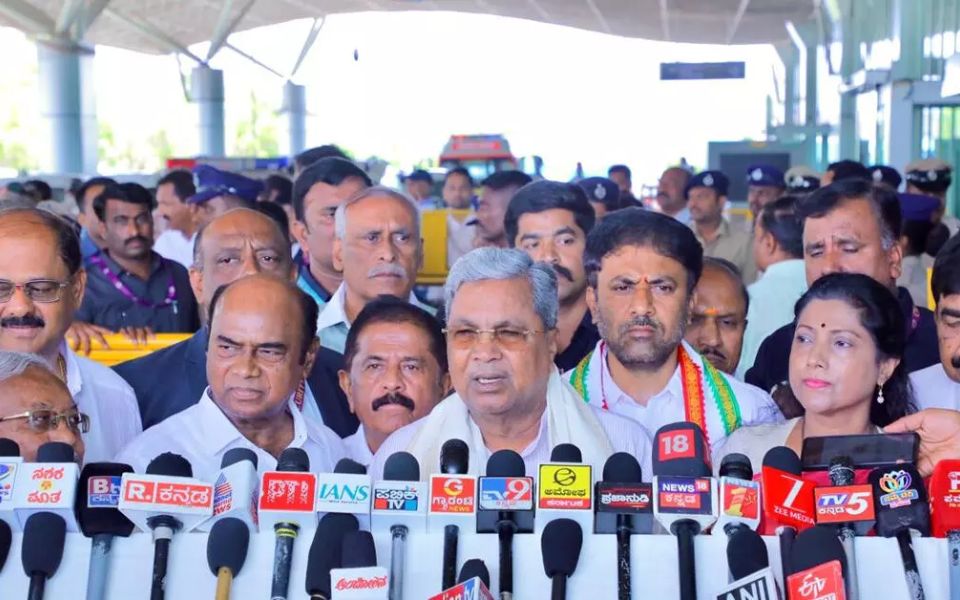
Mysuru (Karnataka) (PTI): Karnataka Chief Minister Siddaramaiah on Monday accused Prime Minister Narendra Modi of adopting a “double standard” on women’s reservation, alleging that the Centre had delayed implementation despite having the opportunity to act earlier.
Addressing reporters here, Siddaramaiah said the BJP and Modi had earlier opposed welfare guarantees and were now replicating them, while also questioning the timing and intent behind the women’s reservation move.
“That’s what I call double standards. Narendra Modi is not for social justice. If he was, this would have been done long ago. How many years has he been in power? It’s been 12 years. Why hasn’t it been done so far?” he asked.
The Chief Minister reiterated that the Congress had consistently supported women’s reservation and accused the Centre of "politicising" the issue.
“We spoke about women’s reservation. The Prime Minister asked me what our stand was. I said we are in favour of women’s reservation,” he said, referring to recent discussions with the PM.
He maintained that delimitation should only be carried out after a fresh Census to ensure equitable representation among states.
“In my view, delimitation should be done after a new census. That is why we opposed it. We have not opposed women’s reservation. We have always supported it,” he said.
Highlighting Congress’ past role, he said, “Who brought the 73rd and 74th amendments? Rajiv Gandhi and the Congress party. Those amendments ensured 50 per cent reservation for women in local bodies. Why would we oppose it?”
Siddaramaiah further questioned the union government’s delay in implementation. “Narendra Modi indulged in politics and got it passed in 2023. Why didn’t he implement it immediately? Then why did he wait so long? He could have implemented it immediately. If he is committed to women’s reservation, he should have implemented it,” he said.
On the linkage between delimitation and reservation, he asked, “Why did the Centre link it with delimitation? Why did it go for a constitutional amendment?” adding that such a move could disadvantage southern states that have successfully controlled population growth.
“Southern states have controlled population well, but northern states haven’t. Naturally, it benefits them and disadvantages us,” he said.
Responding to BJP’s criticism that women would “teach Congress a lesson,” Siddaramaiah said, “They are doing politics. If Modi had brought this earlier, who would have opposed women’s reservation?”
On electoral prospects elsewhere, he said he had no direct information on Tamil Nadu but was optimistic about ruling DMK's victory.
"According to the information I have, DMK and its alliance are likely to win,” while asserting that Kerala would also be won by the opposition.
In a major setback to the BJP-led Central government, a Constitution Amendment Bill to implement 33 per cent reservation for women in legislatures in 2029 and increase the number of Lok Sabha seats to 816 was defeated on Friday, with the ruling dispensation asserting that the struggle to give the rights to women will continue.
While 298 members voted in support of the bill in Lok Sabha, 230 MPs voted against it. Out of 528 members who voted, the bill required 352 votes for a two-third majority.
According to the Constitution (131st Amendment) Bill, Lok Sabha seats were to be increased to 816 from the current 543 to "operationalise" the women's reservation law before the 2029 parliamentary polls, following a delimitation exercise based on the 2011 Census.
Seats were also to be increased in state and Union territory assemblies to accommodate 33 per cent reservation for women.