Kapil Parmar wins historic judo bronze for India at Paralympics
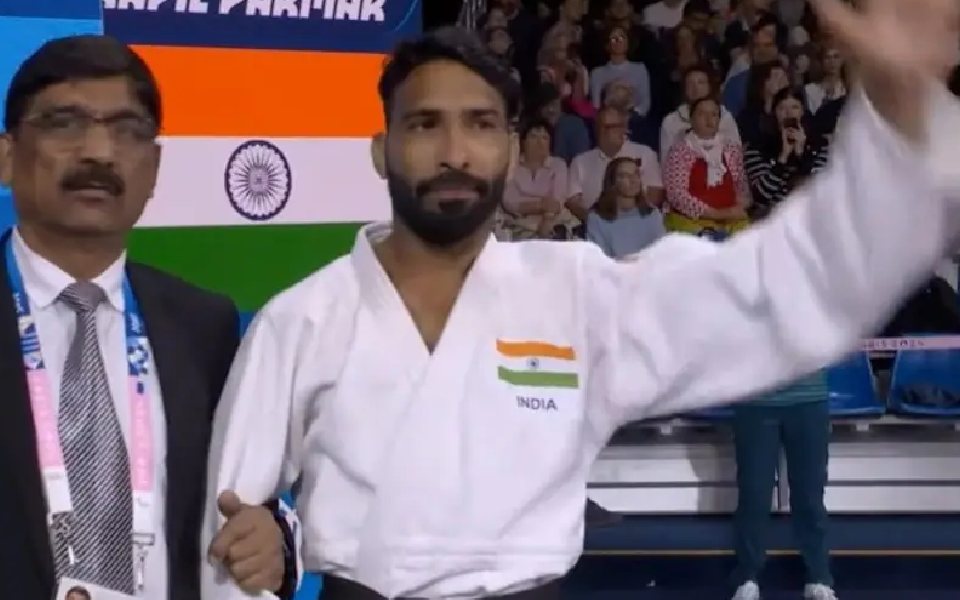
Paris, Sep 5: Kapil Parmar bagged India's first-ever Paralympic medal in judo, winning a bronze in the men's 60kg (J1) after convincingly defeating Brazil's Elielton de Oliveira in the play-off here on Thursday.
Parmar produced a superlative performance, dominating his opponent from start to finish to record a 10-0 win in the bronze medal contest.
He had earlier lost to S Banitaba Khorram Abadi in the semifinals, beaten 0-10 by his Iranian opponent.
The J1 class in para judo is for the athletes who suffer from no to very low visual activity. Athletes in this category wear red circles to indicate that they may need guided support before, during and after a contest.
Parmar, who won the silver medal at the 2022 Asian Games in the same category, had earlier beaten Venezuela's Marco Dennis Blanco 10-0 in the quarterfinals.
Parmar was, however, handed a yellow card in each of the two contests on Thursday.
Yellow cards in judo are given for minor violations such as passivity or using a technique that might hinder the opponent or cause injury.
Parmar hails from a small village named Shivor in Madhya Pradesh. As a child, Parmar had a life-altering accident when he was playing in the fields of his village and accidentally touched a water pump, resulting in a severe electric shock.
He was found unconscious by a villager and taken to the hospital, where he remained in coma for six months.
He is the youngest of four brothers and a sister. His middle brother, who is also into judo, often trains with him. Parmar's father works as a taxi driver, while his sister runs a primary school.
Despite the setback, Parmar never gave up his love for judo. He continued to pursue his passion in blind judo, thanks to his mentor and coaches Bhagwan Das and Manoj.
It was not end of the struggle for Parmar who used to run a tea stall with his brother Lalit to make ends meet.
Lalit, his source of inspiration, even now remains his main source of financial support.
Let the Truth be known. If you read VB and like VB, please be a VB Supporter and Help us deliver the Truth to one and all.
PM Modi to address the nation tonight at 8.30 PM
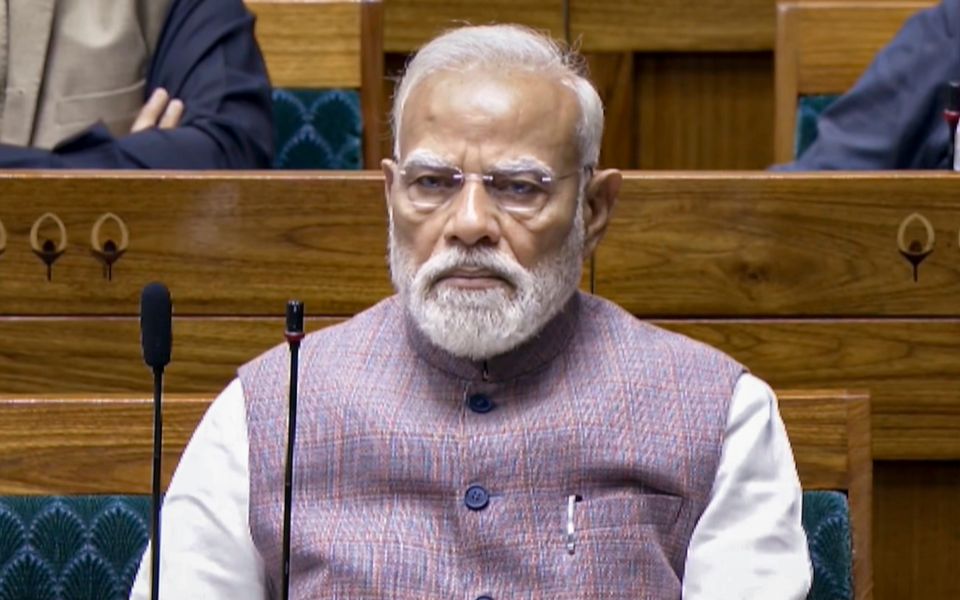
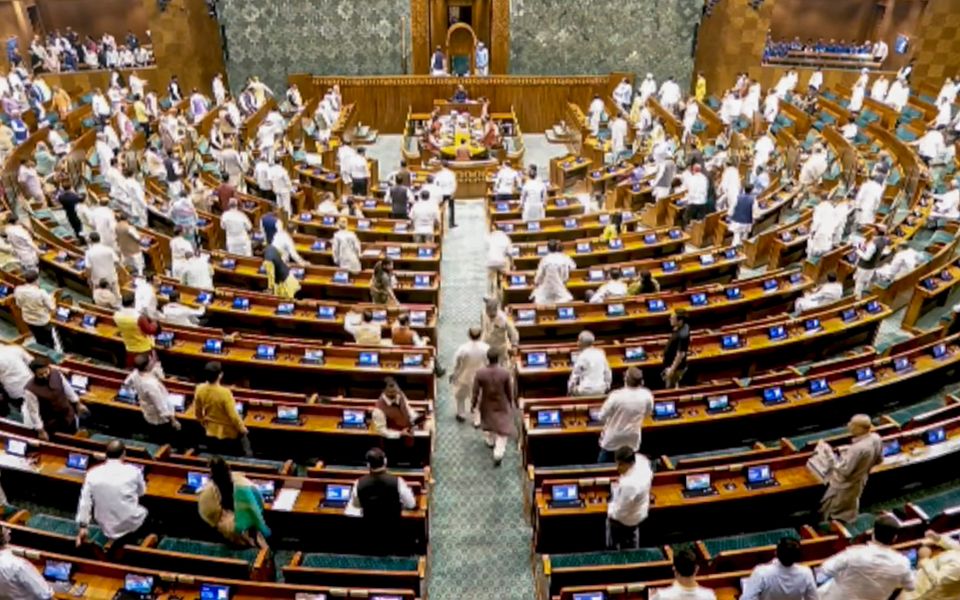
New Delhi (PTI): Prime Minister Narendra Modi will address the nation tonight at 8.30 PM, a day after a bill to implement women's reservation in legislatures was defeated in the Lok Sabha.
"The Prime Minister will address the nation at 8.30 PM (April 18, Saturday)," an official said.
Modi is expected to delve into the issue of implementation of women's quota and the happenings in Parliament, where opposition parties on Friday voted against the Constitution (131st Amendment) Bill.
Under the Bill, Lok Sabha seats were to be increased up to 816 from the current 543 to "operationalise" the women's reservation law before the 2029 parliamentary polls, following a delimitation exercise based on the 2011 Census. Seats were also to be increased in state and UT assemblies to accommodate 33 per cent reservation for women.
A two-thirds majority was required for the passage of the crucial bill but the ruling BJP-led alliance could not muster the numbers.
During polling on the bill in the Lok Sabha on Friday night, 298 members voted in its support, while 230 MPs voted against it.
Out of 528 members who voted, the bill required 352 votes for a two-thirds majority.