Kotian makes hundred as Mumbai seal 15th Irani Cup after 27 years
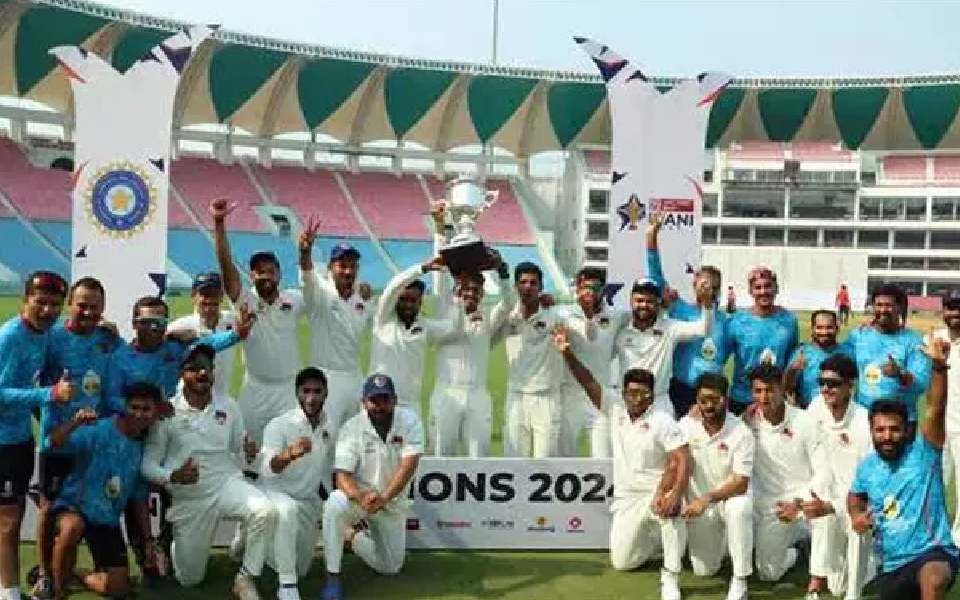
Lucknow, Oct 5: Tanush Kotian’s gritty unbeaten hundred laced Mumbai’s 15th Irani Cup victory which was sealed by virtue of their first innings lead over Rest Of India on the fifth and final day here on Saturday.
Mumbai’s last Irani Cup victory came 27 years ago during the 1997-98 season and since then the domestic powerhouse appeared in eight more finals without success and the last of which was in the 2015-16 season.
Mumbai, who started the final day from overnight 153 for six, declared their second innings at 329 for eight for an overall lead of 450 runs.
Kotian, who scored 64 in the first innings and resumed his innings on 20, remained not out on 114 off 150 balls, hitting 10 fours and a six.
Knowing the futility of chasing 451 in little over a session, the Rest of India skipper Ruturaj Gaikwad shook hands with his opposite number Ajinkya Rahane, signalling the draw and victory for Mumbai, the defending Ranji Trophy champions, at the same time.
Kotian, who showed remarkable maturity to steer Mumbai innings after the early departure of Sarfaraz Khan (17) and Shardul Thakur (2), received good support from No. 10 Mohit Avasthi.
Mumbai were 171 for seven at that stage.
Avasthi remained unbeaten on 51 off 93 balls, striking four fours and a six, and helped Kotian to add valuable 158 runs for the ninth wicket.
Off-spinner Saransh Jain took six wickets (6/121) but his efforts could only delay the inevitable.
Mumbai skipper Rahane was understandably delighted. “Winning the trophy after 27 years feel amazing. It was a red-soil wicket. I will like to pick Tanush Kotian for his performances in the previous season and this match.
“The Ranji Trophy and Irani Cup belong to everyone – from the maidan cricketers to everyone playing cricket in Mumbai.”
Sarfaraz was adjudged player of the match for his double hundred in Mumbai’s first innings.
“I follow the process well and came into the tournament with practice. You build up experience by playing in different grounds. You get a knowledge on how to play on different pitches.
“I have a lot to learn by being around the Test team and can improve every facet of my game,” said Sarfaraz.
Mumbai Cricket Association president Ajinkya Nayak lauded the team for the win.
“Congratulations to the Mumbai Team for clinching the Irani Cup! Once again, Mumbai demonstrated an outstanding example of grit and determination,” said Nayak.
Brief scores:
Mumbai: 537 all out and 329/8 declared in 78 overs (Tanush Kotian 114 not out, Mohit Avasthi 51 not out, Prithvi Shaw 76; Saransh Jain 6/121) drew
Rest of India: 416 all out.
Let the Truth be known. If you read VB and like VB, please be a VB Supporter and Help us deliver the Truth to one and all.
Defeated delimitation bill in Parliament to defend idea of India: Cong leader Rahul Gandhi
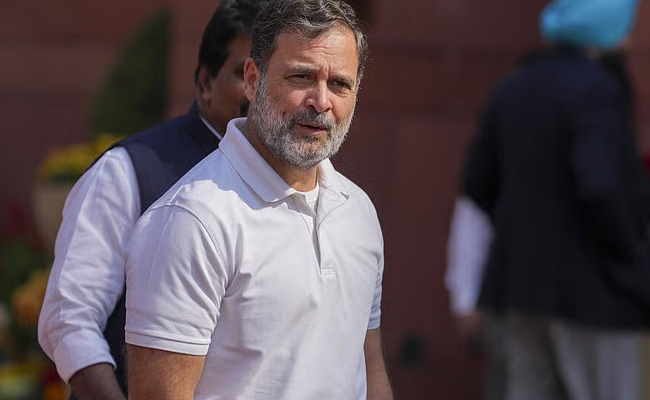
Chennai (PTI): Congress leader Rahul Gandhi on Saturday said the opposition parties defeated the delimitation bill in the Parliament on Friday to defend the "idea of India."
Addressing a poll rally at Ponneri here, he said the BJP-led government at the Centre brought a new bill on April 16, and said they were trying to pass the women's bill, which he said was passed in 2023.
"In the so-called Women's Bill, delimitation was hidden. The idea was to reduce Tamil Nadu's representation in the Union of India... the delimitation move by BJP was to weaken the strength of southern states, small states, north eastern states," he alleged.
"We defeated in Parliament, a bill in which delimitation was hidden; we defeated it to defend the idea of India."
Rahul added that India that is Bharat, is a union of states, and every single state should have a voice, be free to express itself, and protect its tradition.