Moeen Ali criticises ODI rules, says format has 'died'

London: Former England all-rounder Moeen Ali has criticised the current rules of One Day International (ODI) cricket, stating that they favour batters and have contributed to the decline of the format. He claimed that ODIs have "almost completely died out" except for major tournaments like the World Cup and Champions Trophy.
Speaking to Talksport Cricket, Moeen, who retired from international cricket last year, called the 50-over format the "worst to play" and blamed rule changes for making batting easier while diminishing the role of bowlers.
"In the earlier times, after the first powerplay, five fielders were allowed outside the circle, but now it's four, which makes batting easier in the middle overs. Additionally, the use of two new balls has reduced the chances of reverse swing," he said.
Moeen, who played 138 ODIs for England, highlighted that the current rules allow batters to dominate, leading to higher averages and reduced wicket-taking opportunities for bowlers.
"The extra fielder rule is terrible for building pressure and taking wickets. Players now average 60 or 70 in ODIs. When you try to put pressure on a batter, he just reverse-sweeps, and instead of a single, it goes for four," he added.
He also warned that the financial incentives in T20 franchise leagues could lead to more players retiring prematurely from international cricket.
"Franchise cricket is sadly eating up the format. The money on offer is so huge that players find it difficult to turn down. Many might retire from international cricket in the coming years to focus on T20 leagues," Moeen said.
Moeen, who will play for Kolkata Knight Riders in the upcoming IPL, has featured in 68 Tests and 138 ODIs for England, amassing over 5,000 international runs and taking more than 300 wickets.
Let the Truth be known. If you read VB and like VB, please be a VB Supporter and Help us deliver the Truth to one and all.
Telangana survey flags 89,000 child labourers, highlights caste disparities in employment
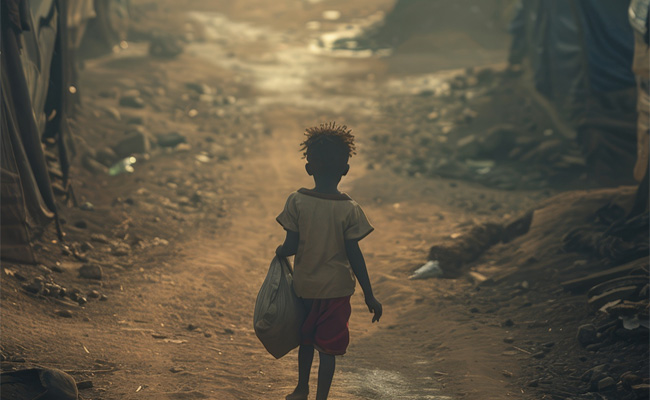
Hyderabad: A caste-based survey conducted by the Telangana government for 2024–25 has identified around 89,000 children engaged in labour across the state, with a large share belonging to Scheduled Caste (SC) and Scheduled Tribe (ST) communities.
The findings are part of the Socio, Economic, Educational, Employment, Political and Caste (SEEEPC) Survey, which covered about 3.5 crore people across 242 caste groups. According to the report, nearly one per cent of individuals below 18 years are involved in daily wage work. While the percentage appears small, officials noted that the absolute number reflects a serious concern.
The survey found that 11 per cent of identified child labourers belong to the ST Lambadi community, while 14 per cent are from the SC Madiga community. The highest incidence was reported among the ST Kolam group, where 7.2 per cent of minors are engaged in daily wage labour.
The data also revealed wider socio-economic disparities. Nearly half of the Scheduled Caste population is dependent on daily wage work, while only around 5 per cent are employed in the private sector, compared to about 30 per cent among General Castes.
State Welfare Minister Ponnam Prabhakar said the findings show that SC and ST communities remain three times more backward than General Castes, while Backward Classes are about 2.7 times more disadvantaged.
The report further noted that, on average, 31.3 per cent of people in the 25–65 age group depend on daily wage work. Among communities, the BC-A Odde group recorded the highest share at 55 per cent. In contrast, only 2.6 per cent of OC Brahmins rely on such work.
Several SC and ST communities, including Kolam, Beda, Madiga, Koya, Gond, Yerukulas and Mala Sale, were found to have among the highest proportions of daily wage earners. On the other hand, most General Caste communities and some Backward Class groups such as Goldsmiths and BC-C Christians showed lower dependence on daily wage employment.
The survey also pointed to inequalities in access to formal employment. Communities such as OC Rajus, OC Brahmins and Kapus were found to have a higher presence in private sector jobs, with up to 27 per cent of their population employed in such roles.