Neeraj Chopra finishes second in Doha Diamond League
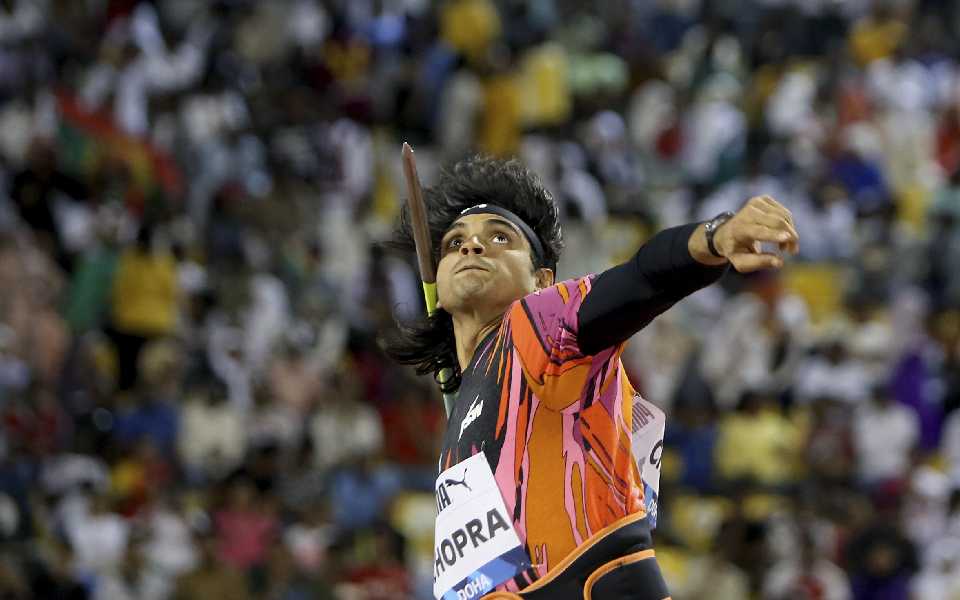
Doha, May 10: Olympic and world champion Neeraj Chopra finished second at the Doha Diamond League meeting javelin throw event as his big final effort of 88.36m fell short by two centimeters of Jakub Vadlejch's winning effort here on Friday.
The 26-year-old Chopra trailed Czech Republic veteran Vadlejch -- who won the title with his third round throw of 88.38m -- all through the competition.
Chopra made a last ditch effort but his final round throw fell 2cm short of Vadlejch's mark as the Indian superstar failed to defend the title he had won won last year .
Two-time world champion Anderson Peters took the third sport with a best throw of 86.62m.
Kishore Jena's Diamond League debut ended in disappointment as he was eliminated after three rounds of throws, with 76.31m being his best. He began with a 75.72m, then fouled his second effort, before coming up with 76.31m to be at ninth after three throws each by all the 10 competitors.
The 28-year-old Jena has a personal best of 87.54m, a performance that fetched him a silver medal in the Hangzhou Asian Games last year, but it was not his day on Friday.
Vadlejch had won a silver in the Tokyo Olympics and a bronze in the 2023 World Championships, the two events in which Chopra had won gold.
Chopra had won the 2023 Doha Diamond League with a throw of 88.67m, ahead of Vadlejch (88.63) and Peters (85.88m).
The next Diamond League meeting which has men's javelin as a discipline will be in Paris on July 7.
At each DL meeting, athletes are awarded 8, 7, 6, 5, 4, 3, 2 or 1 points for ranking first to to eighth respectively. The top six javelin throwers will compete in the Diamond League Finals in Brussels on September 13-14 and the winner will lift the DL champion's trophy.
Let the Truth be known. If you read VB and like VB, please be a VB Supporter and Help us deliver the Truth to one and all.
No unannounced load shedding in Kerala, outages due to overload, says Minister
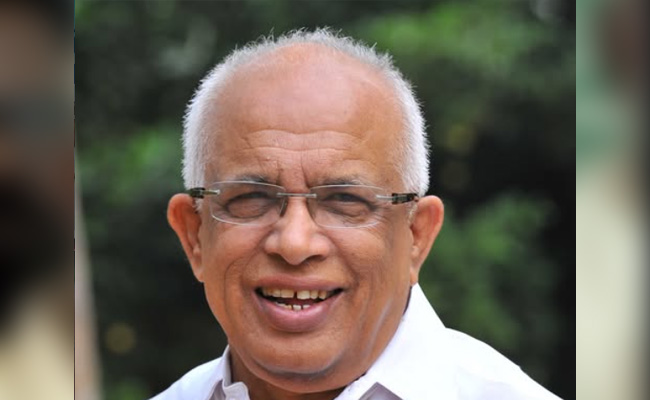
Palakkad (PTI): Kerala Electricity Minister K Krishnankutty on Saturday said there was no unannounced load shedding in the state, attributing recent power interruptions to temporary overload caused by high consumption.
Clarifying concerns raised from various parts of the state, the minister said the disruptions are not deliberate but occur when demand peaks, particularly between 10 pm and 11 pm.
"It is not being done intentionally. Power consumption has risen sharply, and when there is excessive and indiscriminate usage, the system experiences overload, leading to natural supply interruptions," he told reporters here.
His remarks come amid complaints that several areas have been witnessing frequent power cuts, often lasting around 15 minutes and occurring multiple times during the night.
Krishnankutty said the state's power demand has crossed 6,195 MW, putting pressure on the supply system. He added that around 70 per cent of Kerala's electricity is procured from outside, and existing power banking arrangements have been exhausted.
"We have approached the Regulatory Commission seeking permission to purchase more power. However, this will come at a higher cost," he said.
The minister said the government is trying to avoid increasing electricity tariffs and urged consumers to exercise restraint in usage to help manage the situation.
Responding to opposition criticism over the ruling LDF's earlier claims of a decade without power cuts, he said the current situation is not unique to Kerala.
A power crisis is emerging across the country, he said, and sarcastically asked the Opposition to take note of the role of natural factors in this.
Krishnankutty expressed confidence that the situation would improve within two days, while cautioning that long-term energy security would depend on enhancing in-state power generation.
He also warned that future generations could face serious challenges if adequate electricity production capacity is not developed within Kerala.