Neeraj Chopra reveals he took part in Diamond League final with fracture in left hand
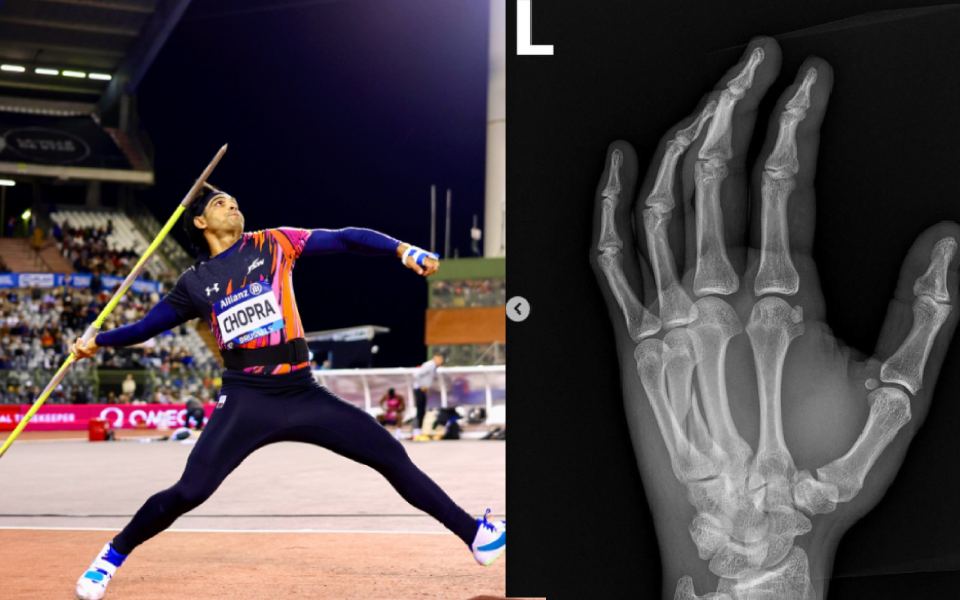
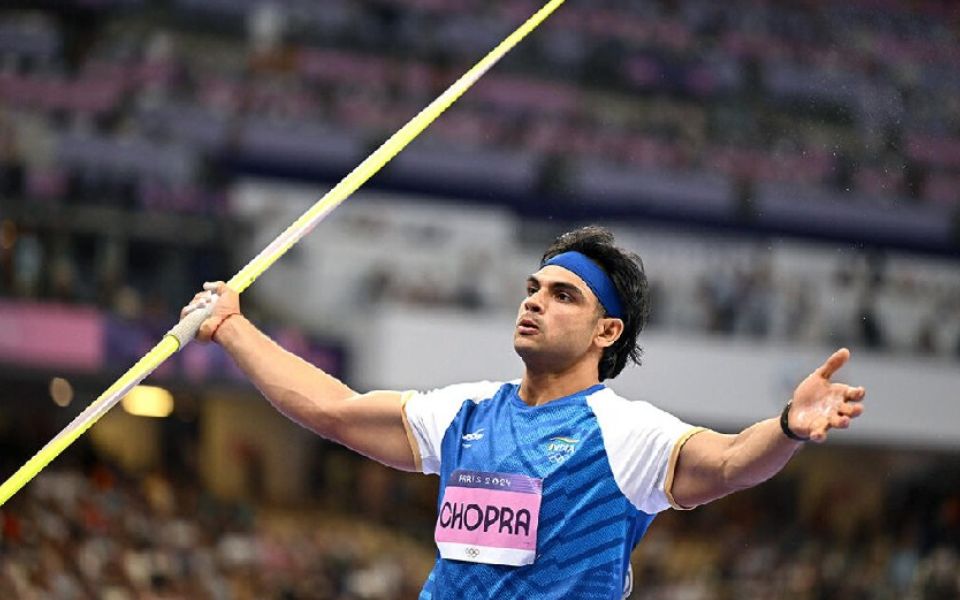
Brussels, Sep 15: Double Olympic medallist javelin thrower Neeraj Chopra on Sunday revealed that he took part in the Diamond League season finale here despite a fracture in his non-throwing left hand which he sustained during a training session.
On Saturday, Chopra came agonisingly close to winning the Diamond League crown before missing it by a single centimeter to finish as runner-up for the second consecutive year with a throw of 87.86m here.
"On Monday, I injured myself in practice and x-rays showed that I had fractured the fourth metacarpal in my left hand. It was another painful challenge for me. But with the help of my team, I was able to participate in Brussels," the 26-year-old said on his social media handle.
Metacarpals, also known as palm bones, are the bones that lie between the fingers and the wrist in a human hand. There are five metacarpals in each hand, with each bone being associated with a specific finger.
Chopra, who throws with his right hand, was beaten for the gold by two-time world champion Anderson Peters of Grenada who sent his spear to 87.87m in his first attempt. This was Chopra's second consecutive Diamond League runner-up finish after winning the crown in 2022.
He normally falls down with his left palm touching the ground in the follow through after releasing the spear. On Saturday, in all his six attempts, Chopra avoided falling down and touching the ground with his left palm.
The Haryana athlete had been struggling with his fitness this year and is expected to meet a doctor soon to rectify a groin injury that has affected him all season and came in the way of his quest to hit the elusive 90m mark.
This hand injury is a new one and he did not elaborate much on it. This fracture may need a few months to heal.
Chopra, who added a silver to his Olympic medal tally in Paris following a historic gold at the Tokyo Games, thus ended his season on a high.
But he admitted that he could not meet his own expectations in the season.
"This was the last competition of the year, and I wanted to end my season on the track. While I couldn’t meet my own expectations, I feel this was a season in which I learned a lot. I am now determined to return, fully fit and ready to go," he said.
Reflecting on his season, he said, "As the 2024 season ends, I look back on everything I’ve learned through the year - about improvement, setbacks, mentality and more.
"I want to thank all of you for your encouragement. 2024 has made me a better athlete and person. See you in 2025."
The Haryana athlete remained consistent throughout the season, though he won just one international event this season, the Paavo Nurmi Games in Turku, Finland on June 18.
He had made the Diamond League final cut after finishing fourth in the overall standings with 14 points from his two second-place finishes in DL one-day meets in Doha and Lausanne on May 10 and August 22 respectively.
Next season's major event is the World Championships in Tokyo (September 13-21) where Chopra would aim to defend the gold he had won in 2023. He has already qualified for the World Championships after breaching the entry mark of 85.50m.
The window for achieving the qualification standard is August 1, 2024 to August 24, 2025.
View this post on Instagram
Let the Truth be known. If you read VB and like VB, please be a VB Supporter and Help us deliver the Truth to one and all.
PM Modi to address the nation tonight at 8.30 PM
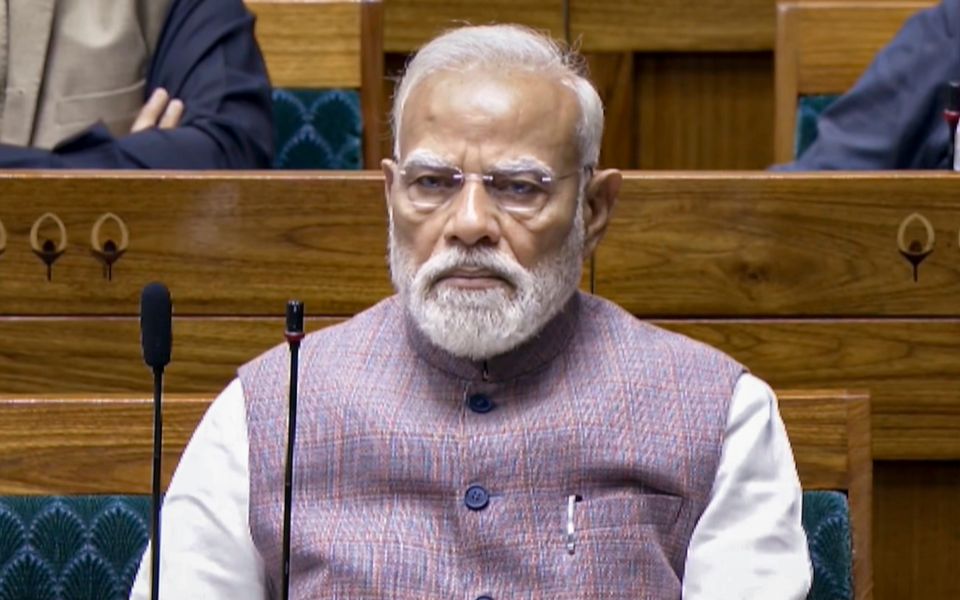
New Delhi (PTI): Prime Minister Narendra Modi will address the nation tonight at 8.30 PM, a day after a bill to implement women's reservation in legislatures was defeated in the Lok Sabha.
"The Prime Minister will address the nation at 8.30 PM (April 18, Saturday)," an official said.
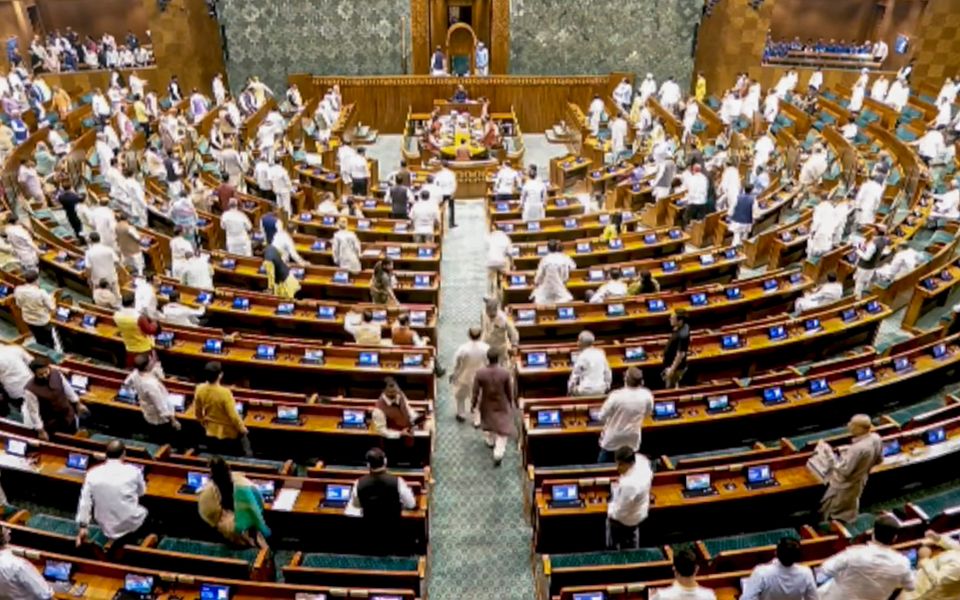
Modi is expected to delve into the issue of implementation of women's quota and the happenings in Parliament, where opposition parties on Friday voted against the Constitution (131st Amendment) Bill.
Under the Bill, Lok Sabha seats were to be increased up to 816 from the current 543 to "operationalise" the women's reservation law before the 2029 parliamentary polls, following a delimitation exercise based on the 2011 Census. Seats were also to be increased in state and UT assemblies to accommodate 33 per cent reservation for women.
A two-thirds majority was required for the passage of the crucial bill but the ruling BJP-led alliance could not muster the numbers.
During polling on the bill in the Lok Sabha on Friday night, 298 members voted in its support, while 230 MPs voted against it.
Out of 528 members who voted, the bill required 352 votes for a two-thirds majority.