Never take away a World Cup final from Mumbai: Aaditya Thackeray takes swipe at BCCI
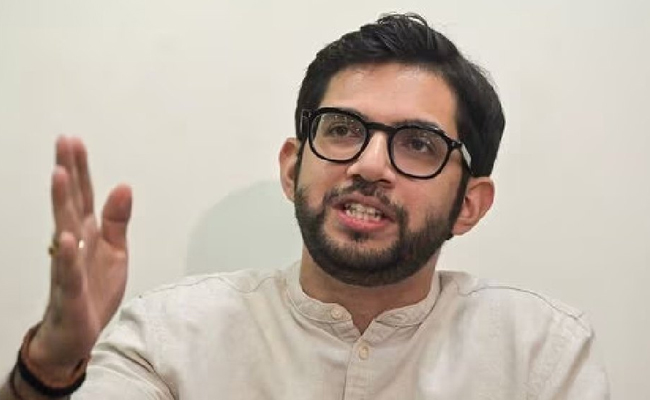
Mumbai (PTI): Shiv Sena (UBT) leader Aaditya Thackeray on Friday said the grand welcome accorded to the T20 World Cup winning Indian cricket team in Mumbai was also a message to the BCCI to never take away the final match of a major tournament from the country's financial capital.
Thackeray's remarks appear to be criticism of the Board of Control for Cricket in India (BCCI) for hosting the ICC ODI World Cup 2023 final in Ahmedabad instead of Mumbai. India had lost the 50-over World Cup final to Australia in November last year.
"Yesterday's celebration in Mumbai is also a strong message to the BCCI... Never take away a World Cup final from Mumbai," the former Maharashtra minister said in a post on X.
Thackeray's comments came a day after thousands of cricket fans thronged the Marine Drive in South Mumbai to witness the victory parade of the T20 World Cup winning Indian team, which returned home from the West Indies on Thursday morning. India lifted the T20 World Cup after defeating South Africa at Bridgetown (Barbados) late last month.
The open bus parade started from the National Centre for Performing Arts (NCPA) in Nariman Point after 7.30 pm and went till the Wankhede Stadium. Although it usually takes five minutes to cover the distance between these two points, it took more than one-and-a-half-hour for the parade to do so due to the large gathering of fans.
Let the Truth be known. If you read VB and like VB, please be a VB Supporter and Help us deliver the Truth to one and all.
Three footballers of Indian origin named in squads for FIFA World Cup 2026
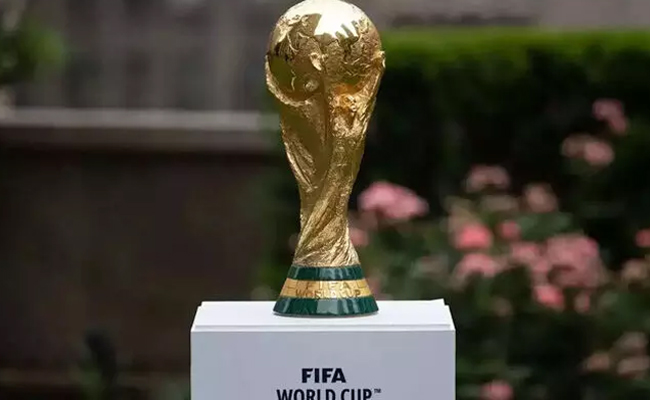
New Delhi: Three footballers of Indian origin have been named in preliminary or final squads for the upcoming FIFA World Cup 2026, scheduled to be held across the United States, Mexico and Canada from June 11 to July 19.
According to a report published by Mathrubhumi, Sarpreet Singh was included in the New Zealand national football team squad which was announced on Wednesday.
Born in Auckland to Indian parents, Singh was eligible to represent India through his family roots but chose to play for New Zealand. The 27-year-old attacking midfielder made his senior international debut in 2018 and has since become a regular member of the national side.
Singh has made 26 appearances for New Zealand and has scored three goals while providing seven assists.
Julen Lopetegui has included two players of Indian origin: Niall Mason and Tahsin Mohammed, in Qatar’s selections for the tournament.
Mason, a defender whose mother is Indian, previously trained in the youth academies of Real Madrid, Southampton FC and Aston Villa FC. Although he received his first senior call-up earlier this year, the Qatar defender is yet to make his senior international debut.
Tahsin Mohammed, 19, was born to parents from Kerala’s Kannur district. His father Jamshid is from Thalassery, while his mother Shaima belongs to Valapattanam. The winger became the first player of Indian origin to feature in the Qatar Stars League, Qatar’s premier domestic football competition.
Mohammed has made two appearances for the senior Qatar side, including in a World Cup qualifier against Afghanistan in June 2024.
The FIFA World Cup 2026 will be jointly hosted by United States, Mexico and Canada.