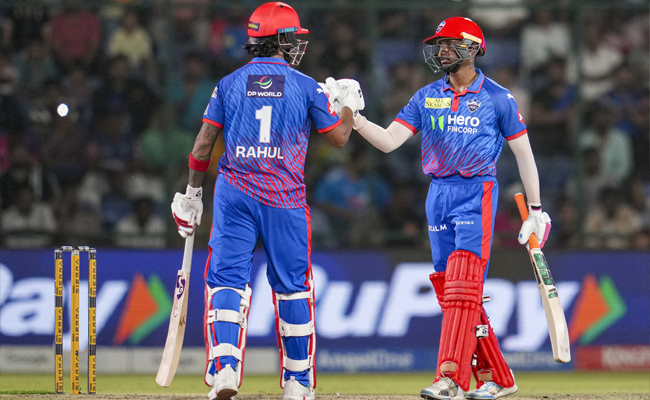
Nissanka, Wellalage fifties help Sri Lanka score 230/8 against India in 1st ODI
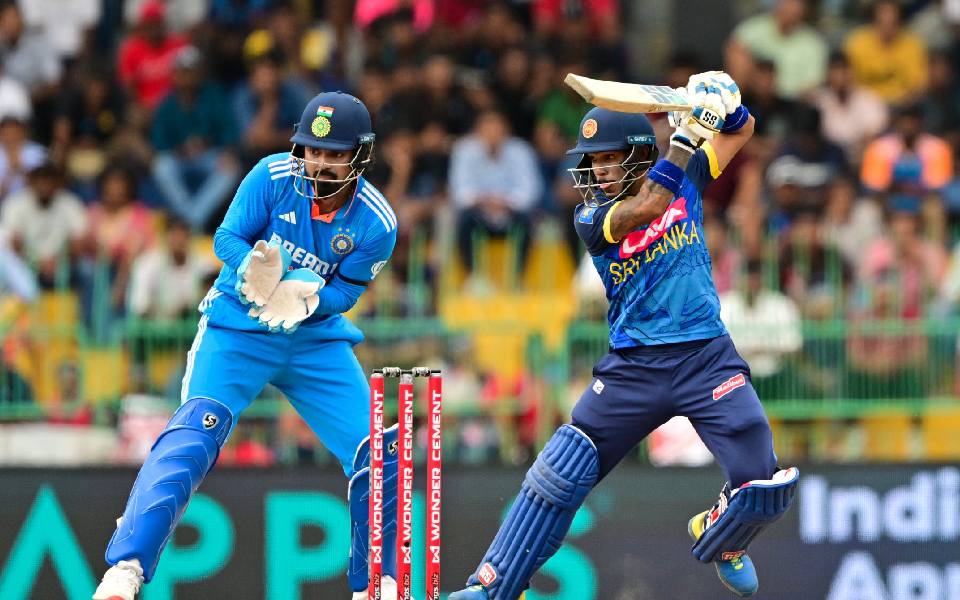
Colombo, Aug 2: Sri Lankan top-order crumbled against accurate Indian bowlers but intelligent fifties by Pathum Nissanka and Dunith Wellalage carried them to a fighting 230 for eight in the first ODI here on Friday.
Nissanka (56, 75b, 9x4) was a picture of concentration and Wellalage (67 not out, 65b, 7x4, 2x6) of confidence on a pitch that offered some turn after Lanka skipper Charith Asalanka opted to bat first, but several of their colleagues were unwilling to mimic them.
Lanka had a shaky start to their innings when Mohammed Siraj ousted Avishka Fernando but Nissanka and Kusal Mendis (14) added 39 runs for a steady second wicket as the hosts staged a mini-recovery.
Just as it happened in the preceding T20I series, the Islanders showed the propensity to throw their wickets away from that point.
This is not to undermine the excellent effort put in by the Indian bowlers, who elicited several false shots from the Lankan batters.
Mendis fell leg before to Shivam Dube, who made his return to one-day cricket after a hiatus of five years with that scalp.
From a relatively comfortable 46 for two, the Lankan innings soon crash-landed to 101 for five in the 27th over.
Sadeera Samarawickrama, Lanka’s best batter in ODIs for a while now, was never really able to read the spinners during his painful eight off 18 balls.
His dismissal underlined that point. The right-hander looked to push left-arm spinner Axar Patel (2/33) on the front foot but was too early into his shot, eventually chipping the ball to Shubman Gill at short cover.
Asalanka helped Nissanka to raise 31 runs for the fourth wicket but Kuldeep Yadav’s stock ball did him in. The left-hander guided the ball that spun away from him to his counterpart Rohit Sharma at first slip.
Amidst the constant turbulence at the other end, Nissanka stood like a rock and played a few delectable shots like a well-connected loft off Kuldeep Yadav to long-off for a boundary.
But Washington Sundar, who bowled his off-spin beautifully without much luck, finally managed to enter the wicket-takers’ list and he caught the big fish too.
A delivery that spun in from the off-stump trapped Nissanka in front of the wicket to reduce Lanka to 101 for five.
Wellalage and Janith Liyanage (20) added 41 runs off 43 balls for the sixth wicket to show some positive intent despite often failing to pick the Indian spinners.
Rohit’s inexplicable call to give an over to Gill for his dibbly-dobbly spin too added to the pair’s growing comfort, as Liyanage pulled a short-pitched ball for a six.
But a perplexing decision by Liyanage to walk off without taking the DRS ended the alliance.
The right-hander stepped out to whack Axar but the sharply-turned ball ended in the hands of Rohit at first slip.
There was a massive appeal from the Indians, and Liyanage trudged off the field, forcing the on-field umpire to raise his finger. It was clear from the replays that the ball did not take any edge off the bat.
From there, Wellalage and Wanindu Hasaranga (24, 35b, 1x4, 2x6) batted with purpose that some of their top-order comrades lacked, milking 36 runs for the seventh wicket.
Wellalage was quite impressive after his initial struggles against Kuldeep. The crunchy backfoot punch through the covers for four off Washington and a few other ramps and scoops testified the youngster’s potential.
The left-hander, who added another 46 with Akila Dhananjaya for the eighth wicket, brought up his maiden ODI fifty in 59 balls, also assisting his side to go past the 200-run mark that once appeared far away.
Let the Truth be known. If you read VB and like VB, please be a VB Supporter and Help us deliver the Truth to one and all.
Ordinance issued to increase number of Supreme Court judges from 34 to 38
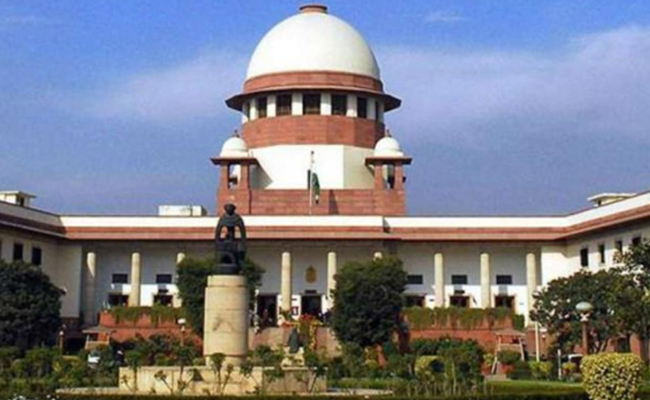
New Delhi (PTI): The government has promulgated an ordinance to increase the strength of the Supreme Court from the present 34 judges to 38, including the Chief Justice of India.
The law ministry notified the ordinance on Saturday, which amended the Supreme Court (Number of Judges) Act, 1956, to increase the sanctioned strength of the top court.
So far, the sanctioned strength of the top court was 34, including the Chief Justice of India (CJI). Now, the number of judges has been increased by four, taking the sanctioned strength to 38.
The top court will now have 37 judges, other than the CJI.
With the apex court having two vacancies at present, and the ordinance coming into force immediately, the Supreme Court Collegium will now have to recommend six names for appointment as judges in the top court.
A bill will be brought in the Monsoon Session of Parliament to convert the ordinance – an executive order – into a law passed by Parliament.
The Union Cabinet had cleared a draft bill on May 5 to increase the number of apex court judges.
The strength of the Supreme Court was last increased from 30 to 33 (excluding the CJI) in 2019.
The Supreme Court (Number of Judges) Act, as originally enacted in 1956, put the maximum number of judges (excluding the CJI) at 10.
This number was increased to 13 by the Supreme Court (Number of Judges), Amendment Act, 1960, and to 17 by another amendment to the law.
The Supreme Court (Number of Judges) Amendment Act, 1986, augmented the strength of judges from 17 to 25, excluding the CJI.
A fresh amendment in 2009 further increased the strength from 25 to 30.
Article 124(3) of the Constitution lists the qualifications required to become a Supreme Court judge.
An Indian citizen who has either served as a high court judge for at least five years, or as an advocate for 10 years, or is a distinguished jurist, can be appointed to the top court.
The strength of the Supreme Court is increased based on the recommendations of the CJI, who writes to the Union law minister. After consulting the finance ministry, the Department of Justice under the law ministry moves the Cabinet with a draft bill.