Olympics pre-race triathlon event in Seine River canceled over water quality concerns
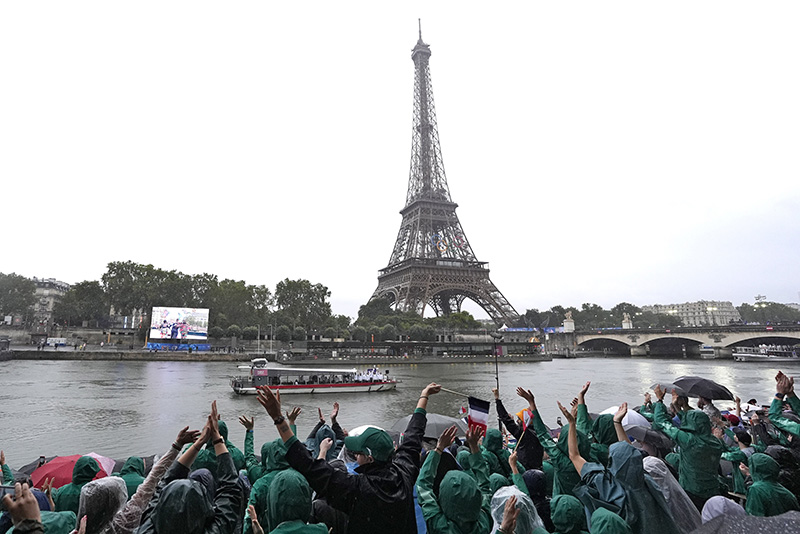
Paris: Concerns over the water quality of Paris' Seine River have continued into the 2024 Olympics, with a pre-race triathlon event there canceled Sunday.
Organizers said they nixed the swimming leg of the triathlon familiarization scheduled for Sunday morning after a meeting about water quality among authorities tasked with carrying out water quality tests. That included representatives of World Triathlon, as well as city and regional authorities.
Swimming in the Seine has been banned for over a century in big part due to poor water quality. Organizers have invested $1.5 billion to prepare the Seine for these Games, and the government has said the river would be clean enough to hold events, including the swimming portion of the triathlon and the marathon swimming event.
Daily water quality tests in early June indicated unsafe levels of E. coli bacteria, followed by recent improvements. Parisian Mayor Anne Hidalgo took a famous dip in the river less than two weeks before Olympic events were set to start, fulfilling a promise to show that the long-polluted waterway was clean enough to host swimming competitions.
Heavy rain during the opening ceremony revived concerns over whether the long-polluted waterway will be clean enough to host swimming competitions, since water quality is deeply linked with the weather in the French capital.
Since 2015, organizers have invested heavily to prepare the Seine for the Olympics and to ensure Parisians have a cleaner river after the Games. The plan included constructing a giant underground water storage basin in central Paris, renovating sewer infrastructure and upgrading wastewater treatment plants.
Triathleletes have expressed hope that the waters would be clean enough for them to swim in.
“Hopefully we get to swim, bike and run because I don't swim this much to just run and bike," Spanish triathlete Alberto Gonzalez said.
Let the Truth be known. If you read VB and like VB, please be a VB Supporter and Help us deliver the Truth to one and all.
JD(S) wants changes in certain provisions in One Nation-One Election proposal
Bengaluru (PTI): The JD(S) has requested its ally BJP to make changes in certain provisions of the proposed 129th Constitutional Amendment Bill linked to the ONOE proposal, particularly the special powers proposed to be given to the ECI to recommend postponement of elections in any state.
The Parliamentary Joint Committee held discussions with political parties in Bengaluru on Saturday regarding the Constitution Amendment Bill connected to 'One Nation-One Election' and sought their suggestions and opinions.
The JD(S) said suitable amendments had been proposed to the provisions empowering the Election Commission of India to recommend to the President the deferment of state elections, while also seeking legal safeguards for the stability of coalition governments and protection for regional parties during simultaneous elections.
"With regard to the Bill, the JD(S) extended support to the Constitutional amendment with certain conditions and amendments, while suggesting safeguards to ensure that regional parties are not adversely affected by the aggressive election campaigns of national parties during simultaneous elections," the statement said.
The party stated that coalition governments have been formed and functioning at both the state and national levels for several decades in recent years, and "there is a need for legal protection to ensure their stability".
"Therefore, it also suggested incorporating legal safeguards for the stability of coalition governments in the proposed Constitutional amendment," the party, headed by former Prime Minister H D Deve Gowda, said.
The proposed Constitutional amendment grants special powers to the ECI to recommend to the President the postponement of elections in any state. Suitable amendments to these special powers have been proposed, the party said.
"On the above stated subjects, suitable submissions were made to the JPC," the party said in a statement, which has been posted on its 'X' handle.
According to the statement, the JD(S) delegation was led by M Mallesh Babu and included former MP D Kupendra Reddy, former Assembly Deputy Speaker M Krishna Reddy, former minister Venkatrao Nadagouda, MLA T N Javarayi Gowda, former MLA K A Tippeswamy and party legal cell president A P Ranganath.