Wrestler Aman Sehrawat loses Paris Olympics semifinal bout, to fight for bronze
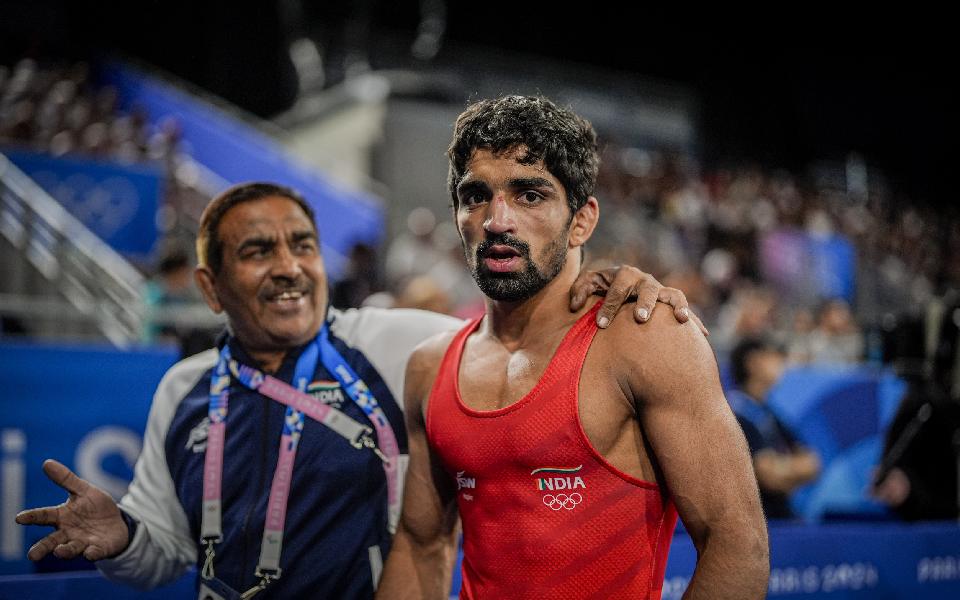
Paris, Aug 8: Young Indian grappler Aman Sehrawat lost to Japanese top-seed Rei Higuchi in the 57kg free-style semifinal bout as the country's hopes of winning a gold from wrestling suffered a big blow at the Olympics here on Thursday.
The 21-year-old Aman will now play for the bronze medal.
Aman, who had raised hopes of securing a place in the final following two big victories against celebrated opponents in the earlier rounds, was no match for the 28-year-old Higuchi -- the 2016 Rio Olympics silver medallist -- as the Japanese toyed with the Indian to stamp his technical superiority with a 10-0 win in just over two minutes.
Higuchi's superior technique was evident in the first few seconds when he attacked Aman's legs to take a 4-0 lead.
The Japanese, a former world champion in 2022 at Belgrade in the 61kg category, kept up the pressure on the Indian, targeting Aman's legs and effecting regular throw downs with ease to garner six more points to end the contest.
Aman had earlier rekindled the country's hopes, demolishing former world champion Zelimkhan Abakarov of Albania by technical superiority to seal a place in the semifinal.
Aman was in imperious form as he toyed with Abakarov in the second round. Aman locked the opponent's legs at the start of the second round and flipped him over multiple times to earn eight straight points to secure a 12-0 victory.
The bout started with Aman earing a passivity point after his Russian-turned-Albanian opponent did not initiate any attacking move.
Moments later, the Indian effected a left-leg hold to earn two more points to showcase his dominance by going 3-0 up at the end of round 1.
Aman was on song in round 2 and Abakarov, world champion in 2022, bore the brunt. The Indian's superb agility against the 31-year-old Albanian was on display as he attacked the left leg to bring him down.
He then effected a 'fitley' (leg lace), turning the Albanian around several times to end the contest with more than two minutes to go.
Abakarov contested the last two points awarded to Aman but the referee ruled in favour of the Indian and awarded him a point.
Aman will meet Japanese top seed Rei Higuchi in the last-four round later in the day.
Aman's pre-quarterfinal round was also a cakewalk as he ensured an easy passage into the last-eight with a dominating performance against North Macedonian rival Vladimir Egorov.
Aman, an Asian Championship gold medallist and the only male wrestler from the country to qualify for the Olympics, was amazingly agile as he kept his defence intact while regularly overpowering his 29-year-old former European champion with leg holds to win the bout on technical superiority (10-0).
Egorov seemed to be in a bit of bother after the first round, requiring medical attention on his knee following Aman's all-out attack.
But the Macedonian could not stage a comeback with Aman effecting a takedown to earn two more points and go 10-0 up with more than two minutes remaining on the clock.
Let the Truth be known. If you read VB and like VB, please be a VB Supporter and Help us deliver the Truth to one and all.
Ordinance issued to increase number of Supreme Court judges from 34 to 38
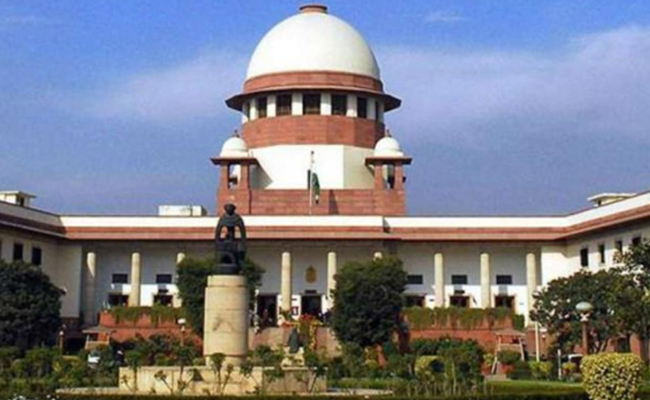
New Delhi (PTI): The government has promulgated an ordinance to increase the strength of the Supreme Court from the present 34 judges to 38, including the Chief Justice of India.
The law ministry notified the ordinance on Saturday, which amended the Supreme Court (Number of Judges) Act, 1956, to increase the sanctioned strength of the top court.
So far, the sanctioned strength of the top court was 34, including the Chief Justice of India (CJI). Now, the number of judges has been increased by four, taking the sanctioned strength to 38.
The top court will now have 37 judges, other than the CJI.
With the apex court having two vacancies at present, and the ordinance coming into force immediately, the Supreme Court Collegium will now have to recommend six names for appointment as judges in the top court.
A bill will be brought in the Monsoon Session of Parliament to convert the ordinance – an executive order – into a law passed by Parliament.
The Union Cabinet had cleared a draft bill on May 5 to increase the number of apex court judges.
The strength of the Supreme Court was last increased from 30 to 33 (excluding the CJI) in 2019.
The Supreme Court (Number of Judges) Act, as originally enacted in 1956, put the maximum number of judges (excluding the CJI) at 10.
This number was increased to 13 by the Supreme Court (Number of Judges), Amendment Act, 1960, and to 17 by another amendment to the law.
The Supreme Court (Number of Judges) Amendment Act, 1986, augmented the strength of judges from 17 to 25, excluding the CJI.
A fresh amendment in 2009 further increased the strength from 25 to 30.
Article 124(3) of the Constitution lists the qualifications required to become a Supreme Court judge.
An Indian citizen who has either served as a high court judge for at least five years, or as an advocate for 10 years, or is a distinguished jurist, can be appointed to the top court.
The strength of the Supreme Court is increased based on the recommendations of the CJI, who writes to the Union law minister. After consulting the finance ministry, the Department of Justice under the law ministry moves the Cabinet with a draft bill.