Paris Olympics: Manika-led India beat Romania 3-2 to enter quarterfinals of women's TT team event
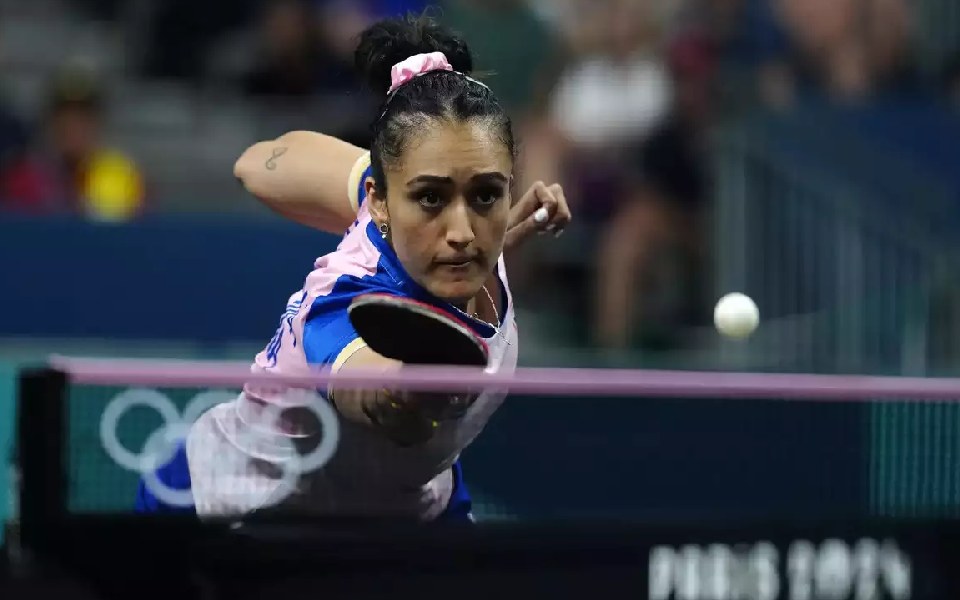
Paris, Aug 5: Star player Manika Batra led from the front as India prevailed over higher-ranked Romania 3-2 in a thrilling tie and made a memorable entry into the quarterfinals of the women's table tennis team competition at the Paris Olympics here on Monday.
Leading 2-0, India saw Romania fight back to draw level at 2-2 but in the decider, Manika delivered for her side.
Sreeja Akula and Archana Kamath started the proceedings with a 11-9 12-10 11-7 win over Adina Diaconu and Elizabeta Samara in a doubles match.
Manika made short work of higher-ranked Bernadette Szocs in a 11-5 11-7 11-7 victory as India took a comfortable 2-0 lead in the tie against their fourth-seeded opponents. India are seeded 11th in the competition.
In the second singles match however, things did not go in India's favour as Sreeja went down 2-3 (11-8 4-11 11-7 6-11 8-11) to European champion Samara after winning the first game.
Sreeja's defeat paved the way for a face-off between Archana and Bernadette and the latter won the first game 11-5, but the Indian bagged the second 11-8 to restore parity. However, Bernadette won the next two games 11-7 11-9 to clinch the match and send the tie to the decider.
Manika then blanked Adina 3-0 (11-5 11-9 11-9) to seal the tie in India's favour.
"The first match was very crucial. I think we pulled out a very good match. We share a very good bonding and we trust each other. We are really happy that we won this match. Let's focus on quarters and like today we will give our best in quarters," Sreeja said.
"Now we just prepare, we learn whatever mistakes we have done, we learn from this and just prepare for the next match."
India will be up against either the USA or Germany in the quarter-finals.
Japan, Poland, France and Thailand are also on the same side of the draw.
Last week, both Manika and Sreeja scripted table tennis history by becoming the first Indian players to reach the round of 16 in the individual event at the Olympics. The two, however, could not progress beyond that stage, losing to higher-ranked opponents.
Sreeja had lost 0-4 to world number one Yingsha Sun of China in the pre-quarterfinals of the women's singles.
"I was a little upset only for one day, but then again I had to give my best for my country and for all of them who are supporting us. So yeah, I think I just gave my best today.
"I was not thinking of winning or losing. Of course, we wanted to win, but yeah, at that time I was just giving my best for every point I was playing with Bernie and Adina.
"So I am happy with my performance, how I played and of course how we all played and we started really well with the doubles and that gave me confidence," Sreeja concluded.
Let the Truth be known. If you read VB and like VB, please be a VB Supporter and Help us deliver the Truth to one and all.
Ordinance issued to increase number of Supreme Court judges from 34 to 38
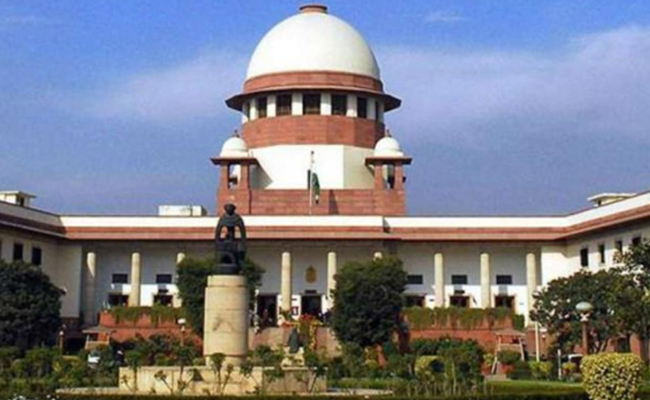
New Delhi (PTI): The government has promulgated an ordinance to increase the strength of the Supreme Court from the present 34 judges to 38, including the Chief Justice of India.
The law ministry notified the ordinance on Saturday, which amended the Supreme Court (Number of Judges) Act, 1956, to increase the sanctioned strength of the top court.
So far, the sanctioned strength of the top court was 34, including the Chief Justice of India (CJI). Now, the number of judges has been increased by four, taking the sanctioned strength to 38.
The top court will now have 37 judges, other than the CJI.
With the apex court having two vacancies at present, and the ordinance coming into force immediately, the Supreme Court Collegium will now have to recommend six names for appointment as judges in the top court.
A bill will be brought in the Monsoon Session of Parliament to convert the ordinance – an executive order – into a law passed by Parliament.
The Union Cabinet had cleared a draft bill on May 5 to increase the number of apex court judges.
The strength of the Supreme Court was last increased from 30 to 33 (excluding the CJI) in 2019.
The Supreme Court (Number of Judges) Act, as originally enacted in 1956, put the maximum number of judges (excluding the CJI) at 10.
This number was increased to 13 by the Supreme Court (Number of Judges), Amendment Act, 1960, and to 17 by another amendment to the law.
The Supreme Court (Number of Judges) Amendment Act, 1986, augmented the strength of judges from 17 to 25, excluding the CJI.
A fresh amendment in 2009 further increased the strength from 25 to 30.
Article 124(3) of the Constitution lists the qualifications required to become a Supreme Court judge.
An Indian citizen who has either served as a high court judge for at least five years, or as an advocate for 10 years, or is a distinguished jurist, can be appointed to the top court.
The strength of the Supreme Court is increased based on the recommendations of the CJI, who writes to the Union law minister. After consulting the finance ministry, the Department of Justice under the law ministry moves the Cabinet with a draft bill.