Paris Paralympics: Sensational Praveen Kumar strikes gold in T64 high jump
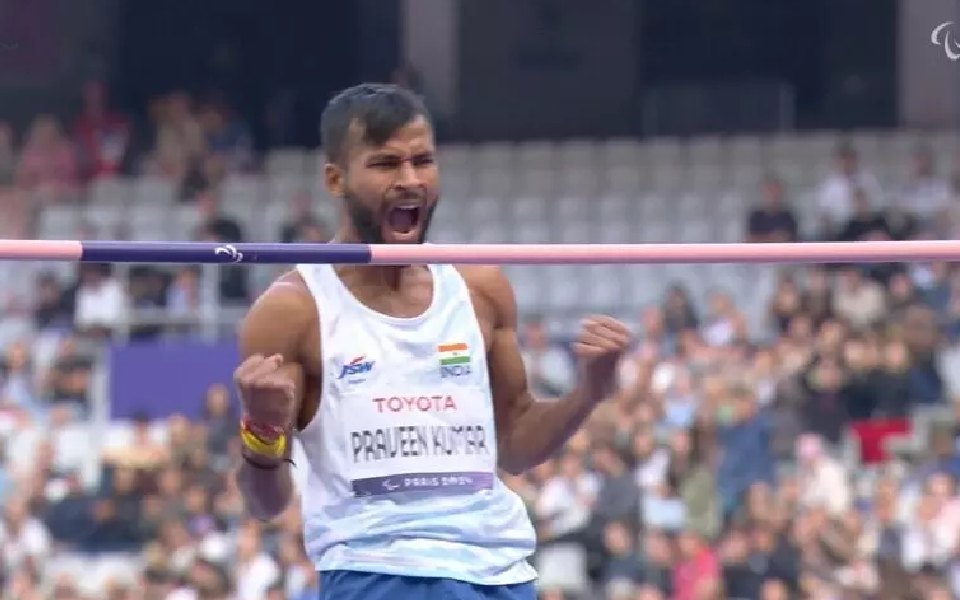
Paris, Sep 6: India's Praveen Kumar dazzled with a record-breaking performance in the men's high jump T64 event, adding a Paralympic gold to his Tokyo Games silver here on Friday.
The 21-year-old from Noida, who was born with a short leg, smashed the Asian record with a best jump of 2.08m in the six-men field to finish on top of the podium.
USA's Derek Loccident claimed the silver with a jump of 2.06m while Uzbekistan's Temurbek Giyazov, who notched a personal best 2.03m, finished third.
India jumped to the 14th spot in the pecking order after Praveen's win.
The country has so far won six gold, nine silver and 11 bronze medals to achieve its best-ever haul at a single edition of the Paralympic Games.
India surpassed its Tokyo Games gold medal tally after Praveen's triumph in the men's high jump T64 event. At the Tokyo Paralympics, India had won five gold, six silver, and eight bronze medals.
Praveen won the country its sixth gold medal after clearing 2.08m.
Opting to start from 1.89m, Kumar aced seven jumps in his first attempt to put himself in pole position to grab the coveted gold medal.
The bar was then raised to 2.10m, with both Kumar and Loccident fighting for the top spot on the podium but failed to clear the mark.
This was also the 2023 world championship bronze medallist's personal best performance.
T64 is for athletes with movement moderately affected in one lower leg or the absence of one or both legs below the knee. While T44, under which Praveen is categorised, is for athletes with movement affected at a low or moderate degree in one lower leg.
His impairment, which is congenital, affects the bones that connect his hip to his left leg.
Kumar's odyssey toward becoming a para-athlete was marked by considerable trials. He often grappled with profound feelings of inadequacy in comparison to his peers as a child.
He started playing sports to counter these insecurities and found a passion for volleyball.
His life changed when he took part in a high jump event at an able-bodied athletics competition.
This experience exposed him to the vast opportunities available for athletes with disabilities, igniting a new and inspiring trajectory in his journey.
He is the third high jumper after Sharad Kumar and Mariyappan Thangavelu to secure a medal in Paris.
Sharad and Thangavelu won silver and bronze in the men's high jump T63 event on September 3.
Congratulations to Praveen Kumar for scaling new heights and winning a Gold in the Men's High Jump T64 at the #Paralympics2024!
— Narendra Modi (@narendramodi) September 6, 2024
His determination and tenacity have brought glory to our nation.
India is proud of him! #Cheer4Bharat pic.twitter.com/ICR7BvhruJ
Let the Truth be known. If you read VB and like VB, please be a VB Supporter and Help us deliver the Truth to one and all.
PM Modi to address the nation tonight at 8.30 PM
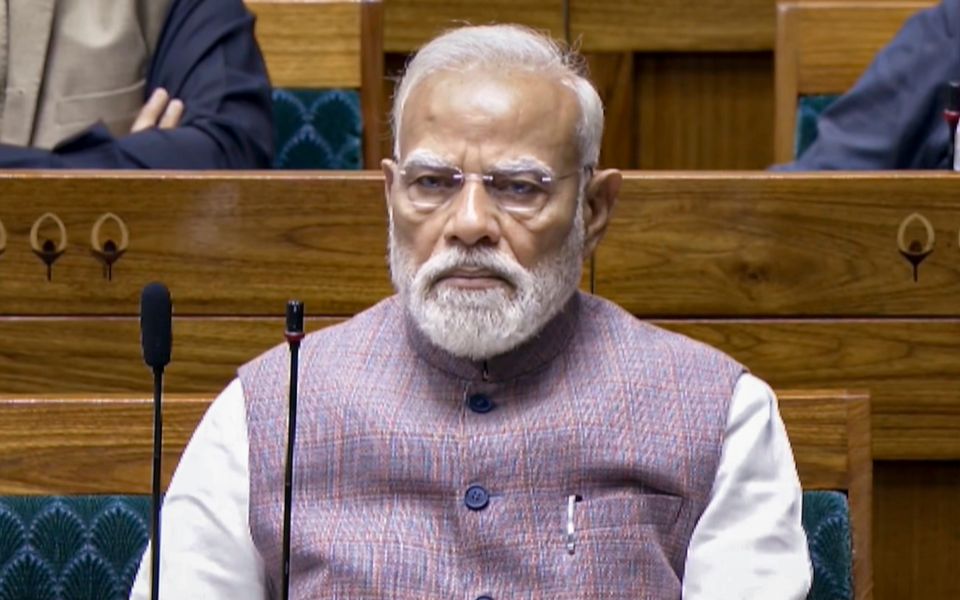
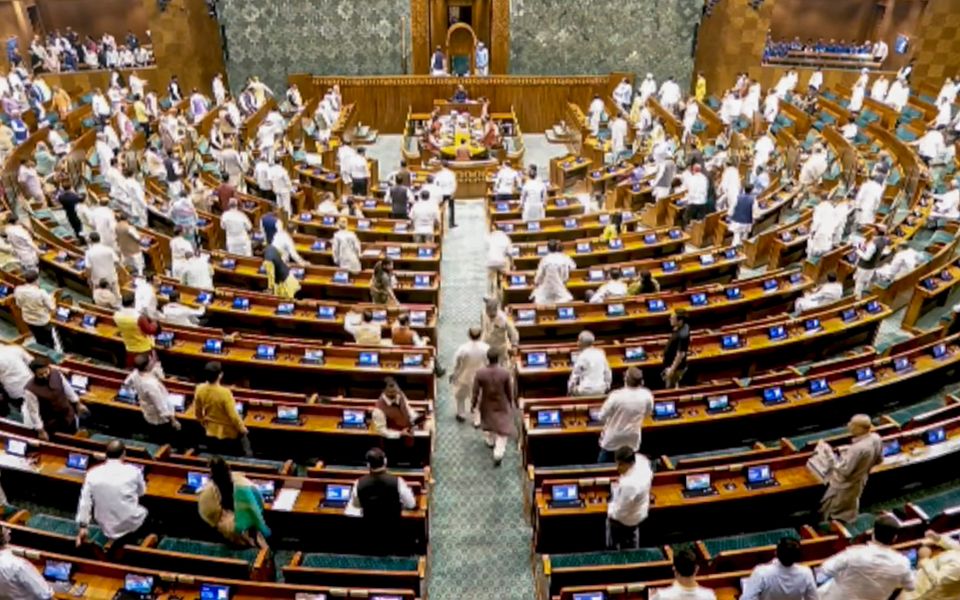
New Delhi (PTI): Prime Minister Narendra Modi will address the nation tonight at 8.30 PM, a day after a bill to implement women's reservation in legislatures was defeated in the Lok Sabha.
"The Prime Minister will address the nation at 8.30 PM (April 18, Saturday)," an official said.
Modi is expected to delve into the issue of implementation of women's quota and the happenings in Parliament, where opposition parties on Friday voted against the Constitution (131st Amendment) Bill.
Under the Bill, Lok Sabha seats were to be increased up to 816 from the current 543 to "operationalise" the women's reservation law before the 2029 parliamentary polls, following a delimitation exercise based on the 2011 Census. Seats were also to be increased in state and UT assemblies to accommodate 33 per cent reservation for women.
A two-thirds majority was required for the passage of the crucial bill but the ruling BJP-led alliance could not muster the numbers.
During polling on the bill in the Lok Sabha on Friday night, 298 members voted in its support, while 230 MPs voted against it.
Out of 528 members who voted, the bill required 352 votes for a two-thirds majority.