Preethi Pal wins bronze in T35 100m for India's first track medal at Paralympics
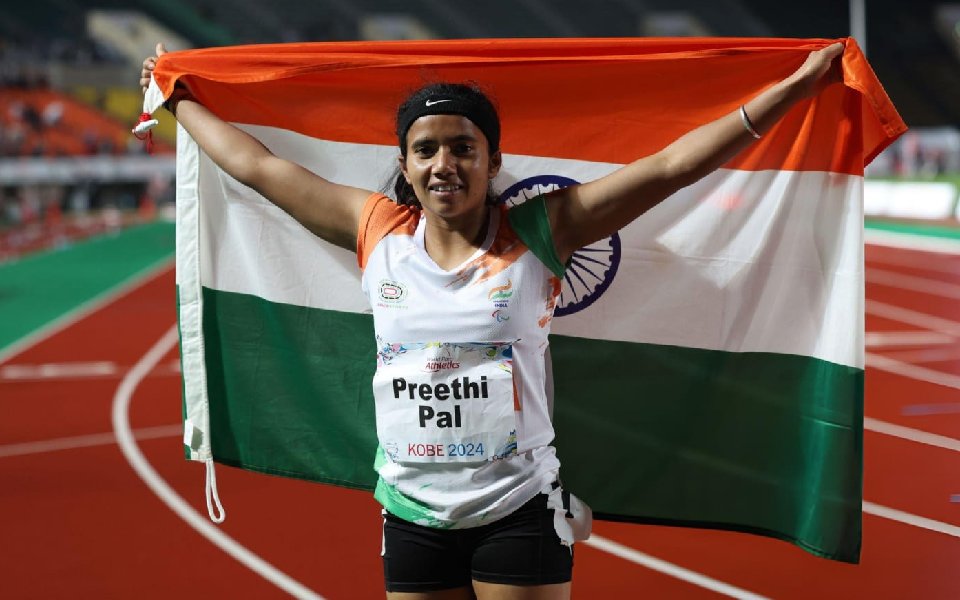
Paris, Aug 30: Preethi Pal won India's first athletics medal in a Paralympics track event as she clinched a bronze in the women's T35 100m competition with a personal best time of 14.21 seconds at the Paris Games on Friday.
All the athletics medals India had won since the 1984 edition of the Paralympics have come from field events.
The 23-year-old Preethi, a farmer's daughter from Muzaffarnagar in Uttar Pradesh, opened India's athletics medal account on the second day of competitions.
Preethi had come to Paris after winning a bronze in the same event at the World Para Athletics Championships in May.
China's Zhou Xia (13.58) and Guo Qianqian (13.74) won the gold and silver respectively.
"More glory for India as Preeti Pal wins a Bronze medal in the 100m T35 event at the #Paralympics2024. Congratulations to her. This success will certainly motivate budding athletes," Prime Minister Narendra Modi tweeted.
The result was a repeat of the 2024 World Para Athletics Championships in Kobe, Japan, as the same Chinese runners Xia and Qianqian had won gold and silver there too.
T35 classification is meant for athletes who have coordination impairments such as hypertonia, ataxia and athetosis.
"This was my first Paralympics and I am still yet to believe that I have won a medal," she said.
"I am feeling proud that I have won India's first track medal in the Paralympics."
Preethi will also compete in the T35 200m event in which she also won a bronze in World Para Athletics Championships.
She was born to a farmer's family in Muzaffarnagar, Uttar Pradesh. She faced significant physical challenges when she was born as her lower body was plastered for six days after birth. Weak legs and an irregular leg posture made her prone to various diseases.
She underwent various traditional treatments to strengthen her legs, including wearing calipers for eight years from the age of five.
At 17, Preethi's perspective began to change when she watched the Paralympic Games on social media. But her life-changing moment came when she met Paralympic athlete Fatima Khatoon, who introduced her to para-athletics.
With Fatima's support, Preethi competed in the state championships and national events from 2018 onwards. She qualified for the Asian Para Games last year in China, where she finished fourth in both the 100m and 200m sprints.
She moved to Delhi to train under coach Gajender Singh and fine tuned her running techniques, leading to her winning a bronze medal each in 100m and 200m in World Para Athletics Championships.
She also received out of pocket allowance under Target Olympic Podium Scheme of the government and other financial assistance for training and competition.
BRONZE 🥉 For INDIA 🇮🇳
— Doordarshan Sports (@ddsportschannel) August 30, 2024
🏃♀️ Preethi Pal wins bronze medal in the Women's 100m T35 Final.#Paris2024 #Cheer4Bharat #Paralympics2024 #ParaAthletics @mansukhmandviya @MIB_India @PIB_India @IndiaSports @ParalympicIndia @PCI_IN_Official @Media_SAI @AkashvaniAIR @DDNational… pic.twitter.com/igEYUhtpmu
Let the Truth be known. If you read VB and like VB, please be a VB Supporter and Help us deliver the Truth to one and all.
Women’s Reservation Bill: K'taka CM accuses PM Modi of adopting 'double standard'
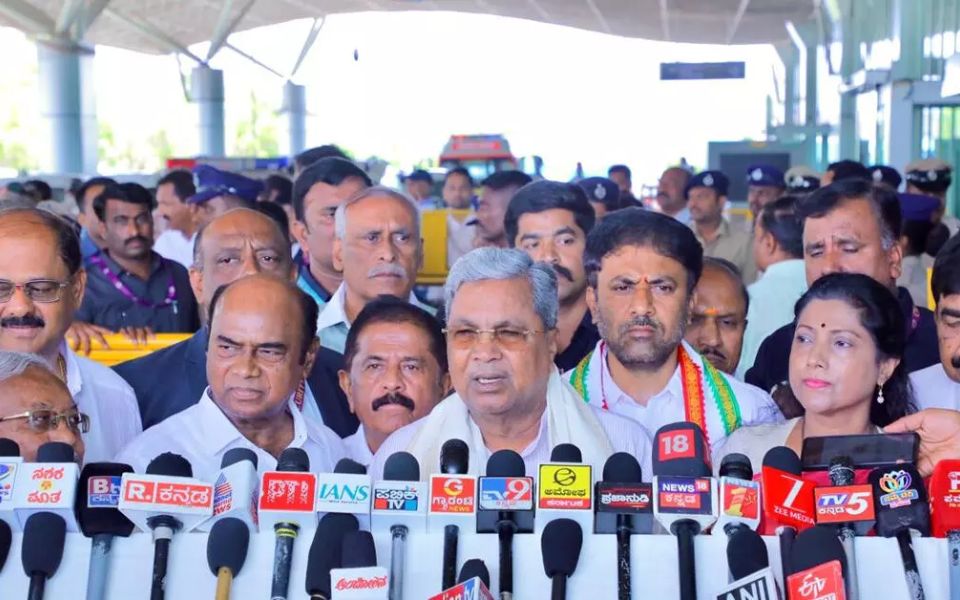
Mysuru (Karnataka) (PTI): Karnataka Chief Minister Siddaramaiah on Monday accused Prime Minister Narendra Modi of adopting a “double standard” on women’s reservation, alleging that the Centre had delayed implementation despite having the opportunity to act earlier.
Addressing reporters here, Siddaramaiah said the BJP and Modi had earlier opposed welfare guarantees and were now replicating them, while also questioning the timing and intent behind the women’s reservation move.
“That’s what I call double standards. Narendra Modi is not for social justice. If he was, this would have been done long ago. How many years has he been in power? It’s been 12 years. Why hasn’t it been done so far?” he asked.
The Chief Minister reiterated that the Congress had consistently supported women’s reservation and accused the Centre of "politicising" the issue.
“We spoke about women’s reservation. The Prime Minister asked me what our stand was. I said we are in favour of women’s reservation,” he said, referring to recent discussions with the PM.
He maintained that delimitation should only be carried out after a fresh Census to ensure equitable representation among states.
“In my view, delimitation should be done after a new census. That is why we opposed it. We have not opposed women’s reservation. We have always supported it,” he said.
Highlighting Congress’ past role, he said, “Who brought the 73rd and 74th amendments? Rajiv Gandhi and the Congress party. Those amendments ensured 50 per cent reservation for women in local bodies. Why would we oppose it?”
Siddaramaiah further questioned the union government’s delay in implementation. “Narendra Modi indulged in politics and got it passed in 2023. Why didn’t he implement it immediately? Then why did he wait so long? He could have implemented it immediately. If he is committed to women’s reservation, he should have implemented it,” he said.
On the linkage between delimitation and reservation, he asked, “Why did the Centre link it with delimitation? Why did it go for a constitutional amendment?” adding that such a move could disadvantage southern states that have successfully controlled population growth.
“Southern states have controlled population well, but northern states haven’t. Naturally, it benefits them and disadvantages us,” he said.
Responding to BJP’s criticism that women would “teach Congress a lesson,” Siddaramaiah said, “They are doing politics. If Modi had brought this earlier, who would have opposed women’s reservation?”
On electoral prospects elsewhere, he said he had no direct information on Tamil Nadu but was optimistic about ruling DMK's victory.
"According to the information I have, DMK and its alliance are likely to win,” while asserting that Kerala would also be won by the opposition.
In a major setback to the BJP-led Central government, a Constitution Amendment Bill to implement 33 per cent reservation for women in legislatures in 2029 and increase the number of Lok Sabha seats to 816 was defeated on Friday, with the ruling dispensation asserting that the struggle to give the rights to women will continue.
While 298 members voted in support of the bill in Lok Sabha, 230 MPs voted against it. Out of 528 members who voted, the bill required 352 votes for a two-third majority.
According to the Constitution (131st Amendment) Bill, Lok Sabha seats were to be increased to 816 from the current 543 to "operationalise" the women's reservation law before the 2029 parliamentary polls, following a delimitation exercise based on the 2011 Census.
Seats were also to be increased in state and Union territory assemblies to accommodate 33 per cent reservation for women.