Preity Zinta moves court against Punjab Kings co-owners over disputed meeting

New Delhi: In a legal development surrounding the Indian Premier League (IPL), Bollywood actress and Punjab Kings co-owner Preity Zinta has filed a court case in Chandigarh against her fellow co-directors, Mohit Burman and Ness Wadia. All three are directors of KPH Dream Cricket Private Limited, the entity that owns the Punjab Kings franchise.
Zinta has contested the legality of an Extraordinary General Meeting (EGM) held on April 21, 2025. According to her petition, the meeting violated procedural requirements under the Companies Act, 2013, and relevant secretarial standards. She claims to have raised objections via email on April 10, which were allegedly ignored.
Despite her and director Karan Paul’s presence at the EGM, Zinta has urged the court to declare the meeting invalid. A central point of contention is the appointment of Muneesh Khanna as a director, which Zinta and Paul opposed.
Zinta's petition seeks an injunction restraining Khanna from acting as a director and preventing the company from implementing any decisions taken at the disputed meeting. She has further requested that no board or general meetings be conducted in the absence of both her and Karan Paul, and that Muneesh Khanna be excluded from such meetings until the matter is resolved.
Meanwhile, Preity Zinta has continued to be seen supporting Punjab Kings during the ongoing IPL 2025 season. The team, under captain Shreyas Iyer, has already secured a spot in the playoffs for the first time since 2014. With 17 points from 12 matches, the team sits in third place and is eyeing a top-two finish.
Punjab Kings are set to face Delhi Capitals in Jaipur on Saturday, May 24, followed by their final league fixture against Mumbai Indians on Monday, May 26.
Let the Truth be known. If you read VB and like VB, please be a VB Supporter and Help us deliver the Truth to one and all.
Ordinance issued to increase number of Supreme Court judges from 34 to 38
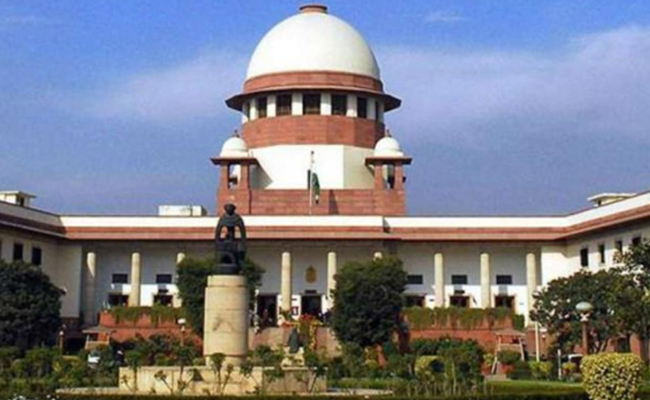
New Delhi (PTI): The government has promulgated an ordinance to increase the strength of the Supreme Court from the present 34 judges to 38, including the Chief Justice of India.
The law ministry notified the ordinance on Saturday, which amended the Supreme Court (Number of Judges) Act, 1956, to increase the sanctioned strength of the top court.
So far, the sanctioned strength of the top court was 34, including the Chief Justice of India (CJI). Now, the number of judges has been increased by four, taking the sanctioned strength to 38.
The top court will now have 37 judges, other than the CJI.
With the apex court having two vacancies at present, and the ordinance coming into force immediately, the Supreme Court Collegium will now have to recommend six names for appointment as judges in the top court.
A bill will be brought in the Monsoon Session of Parliament to convert the ordinance – an executive order – into a law passed by Parliament.
The Union Cabinet had cleared a draft bill on May 5 to increase the number of apex court judges.
The strength of the Supreme Court was last increased from 30 to 33 (excluding the CJI) in 2019.
The Supreme Court (Number of Judges) Act, as originally enacted in 1956, put the maximum number of judges (excluding the CJI) at 10.
This number was increased to 13 by the Supreme Court (Number of Judges), Amendment Act, 1960, and to 17 by another amendment to the law.
The Supreme Court (Number of Judges) Amendment Act, 1986, augmented the strength of judges from 17 to 25, excluding the CJI.
A fresh amendment in 2009 further increased the strength from 25 to 30.
Article 124(3) of the Constitution lists the qualifications required to become a Supreme Court judge.
An Indian citizen who has either served as a high court judge for at least five years, or as an advocate for 10 years, or is a distinguished jurist, can be appointed to the top court.
The strength of the Supreme Court is increased based on the recommendations of the CJI, who writes to the Union law minister. After consulting the finance ministry, the Department of Justice under the law ministry moves the Cabinet with a draft bill.